Start with the big idea: a pond is a tiny living world
A pond ecosystem observation handout becomes much more interesting when it shows that a pond is not just water. It is a small world where many living things depend on one another. A simple opening line such as A pond may look quiet, but it is full of life can help set the theme.
You can begin by describing the pond as a whole. What did you notice first? What was on the water, near the edge, or flying above it? This makes the handout feel like a real observation, not just copied information.
Best content to include on the page
Living things in the pond
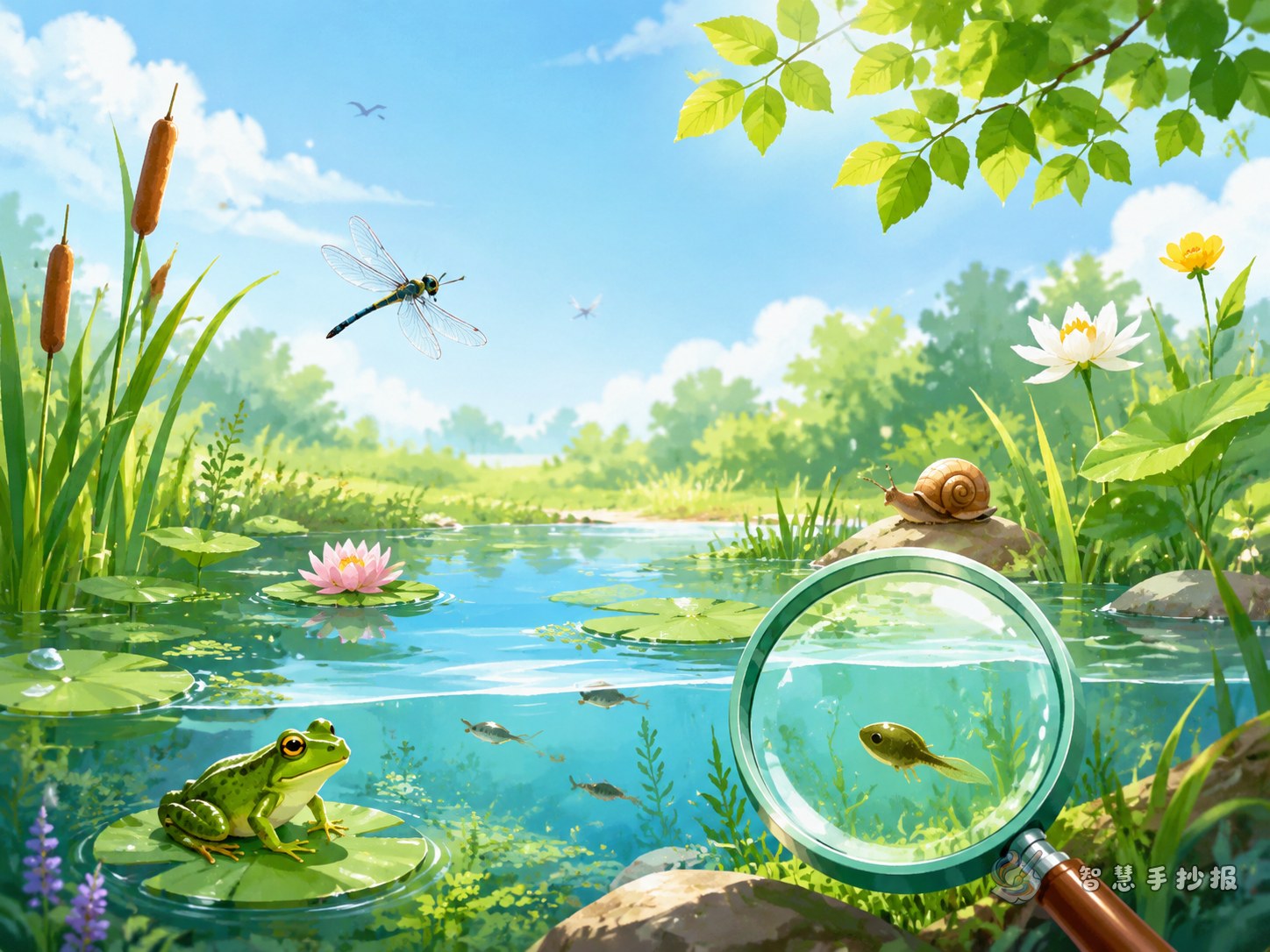
- Plants: lotus leaves, water grass, duckweed, reeds
- Small animals: fish, tadpoles, frogs, dragonflies, pond skaters, snails
- Creatures around the pond: birds, insects, wild grass by the bank
Useful observation sentences
- The pond is quiet in the morning, and circles spread across the water from time to time.
- Duckweed looks like tiny green disks floating on the surface.
- Tadpoles swim in groups like little commas with tails.
- Dragonflies sometimes rest on leaves and sometimes skim quickly over the water.
- Water plants do more than make the pond pretty. They also give small creatures places to hide.
How to explain the ecosystem in a simple way
The word ecosystem may sound difficult, but for a handout it can be explained very simply. Students only need to show that living things are connected. Plants provide oxygen and shelter, insects may become food for fish or frogs, and a clean pond helps many species survive.
- Sunlight helps pond plants grow.
- Water plants and duckweed provide space for small creatures.
- Insect larvae and tiny bugs can become food for fish or frogs.
- Trash and pollution can damage the pond environment.
This part can be shown as a short relationship chain to give the handout a stronger science focus.
A layout idea that stays neat and readable
- Title area: use a title like Pond Ecosystem Observation or My Little Pond World.
- Observation notes: record time, weather, place, and what you saw.
- Pond residents: introduce plants and animals in separate groups.
- Connections and discoveries: show food relationships, habits, or interesting patterns.
- Protect the pond: add short suggestions about keeping the water clean and not disturbing animals.
If you have extra space, add a small box called My Favorite Pond Corner to make the handout feel more personal.
Colors and decorations that fit the theme
Blue and green are the best main colors for this topic. Blue can represent the water, green can show plants, and a little yellow can brighten the title or borders. Good decorative elements include ripples, lotus leaves, fish, dragonflies, and reeds.
Keep the title lively, but make sure the text areas stay clear and easy to read. A few simple drawings beside each section can make the whole page feel complete without looking crowded.
A natural way to end the handout
The ending can return to your feelings after observing. For example, a pond is not just an ordinary patch of water. It is a home shared by many living things. When we observe carefully, we can discover many wonderful secrets in nature.
If you already have your ideas but want to refine the title, section labels, and page design, you can continue creating in the Zhihui Shouchaobao WeChat mini program.