Focus the theme: cyberbullying makes the topic clearer
If a “cyber safety and responsible internet use” handwritten newspaper feels too broad, narrow it down to Say No to Cyberbullying, Be a Respectful Young Netizen. This angle is easy for students to understand and helps turn general internet safety ideas into practical content. It connects online behavior with respect, self-protection, and healthy communication.
Useful sections for the page
- What is cyberbullying? Explain it with simple examples such as insults, mocking comments, rumors, name-calling, and repeated hurtful messages.
- Why is it harmful? It can hurt feelings, damage friendships, and affect learning and confidence.
- Three rules for kind online speaking: think first, speak politely, and stick to facts.
- What should I do if I face mean comments? Do not argue angrily, save evidence, tell parents or teachers, and block or report when needed.
- My online promise: add a short personal pledge to make the page more complete.
Text materials students can copy
Words have power online just as they do in real life. A friendly message can make someone feel respected, while a cruel comment may leave lasting harm. Responsible internet use is not only about avoiding mistakes ourselves, but also about not joining in ridicule, not spreading harmful posts, and not hiding unkindness behind a screen.
When we see upsetting comments online, we should stay calm and avoid following the crowd. The internet is not a place without rules. Every comment, repost, and reaction can affect others. Learning to speak kindly, think carefully, and protect ourselves is an important part of being safe online.
Layout ideas that look neat and easy to read
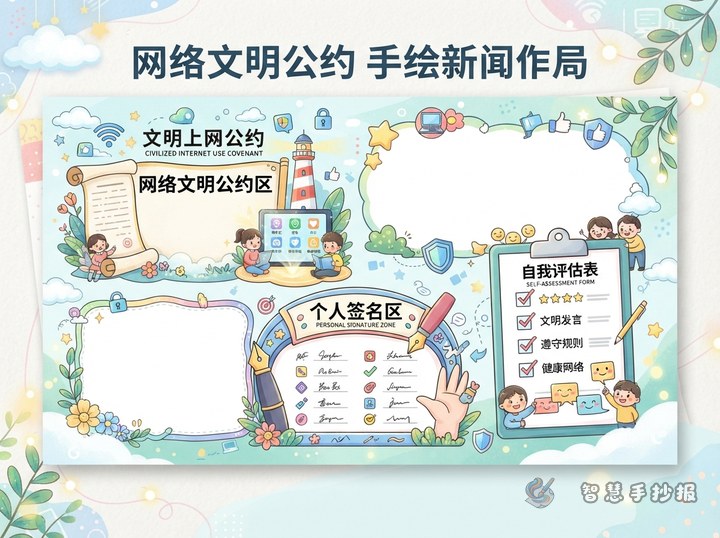
A two-column layout works well for this topic. Put the main title at the top center. On one side, place “What is cyberbullying?” and “Why is it harmful?” On the other side, place “How to respond” and “Three rules for kind online speaking.” At the bottom, add a small box for slogans or a personal online pledge.
Keep the writing in short blocks instead of long paragraphs. Simple decorations like speech bubbles, phones, keyboards, shields, or computer screens can match the topic well. Blue, green, and orange are good color choices because they look bright and clear.
Slogans that fit the theme
- Civil online speech begins with every comment.
- Do not be a bystander to online bullying.
- Kind words make the internet brighter.
- No rumors, no insults, no crowd bullying.
- Think before you type.
A simple ending for the handwritten newspaper
You can end with a short appeal: Let us start with ourselves, respect others online, speak calmly, refuse cyberbullying, and ask for help in time when needed. In this way, we can help build a safer, friendlier, and cleaner online environment. If you want to keep improving the layout and text, you can continue creating in the Zhihui Shouchaobao WeChat mini program.