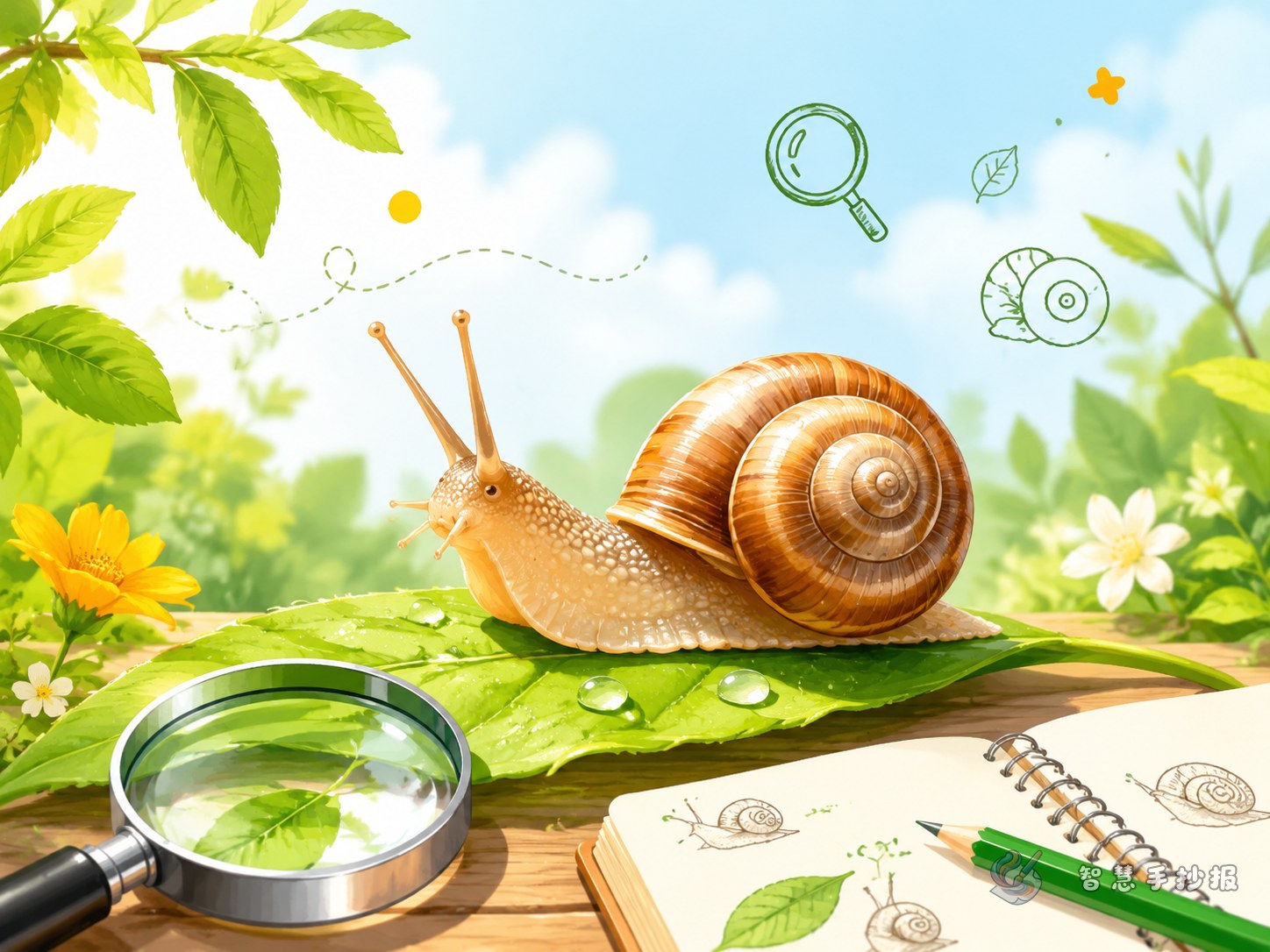
Start with a clear theme like “My Snail Observation”
This kind of handwritten newspaper does not need to sound like a textbook. The most important thing is to show that you really observed a snail. You can choose a specific angle such as snails after the rain, a snail on the balcony, or my snail observation diary.
If this is a science or classroom project, think of the page as a small report: where you found the snail, what you noticed, and what you learned from watching it.
Useful sections to include on the page
Snail Profile
- Appearance: shell, soft body, long feelers
- Color: brown, gray, or patterned
- Movement: slow and leaves a trail
- Habitat: damp, shady places with plants
My Observation Notes
Write a short paragraph about what happened during the observation. For example, you may have seen the snail crawl slowly along a leaf, move its feelers, or pull back into its shell when touched lightly. This kind of real detail makes the work feel vivid and authentic.
Fun Things I Found
- Snails are easier to spot after rain
- They like damp environments
- They leave a shiny trail behind
- They hide in their shells when frightened
Kindness to Small Creatures
Add a short note about not stepping on them, not squeezing them, and gently returning them to nature after observing. This gives the page a caring message as well.
How to make the writing sound natural
Instead of using stiff scientific language, try simple first-person lines such as “I saw,” “I found,” or “I noticed.” For example:
- After the rain, I found a small snail near the flower bed.
- It carried a tiny shell and moved very slowly.
- When I got closer, its feelers moved gently.
- The most interesting thing was the shiny trail it left behind.
These short sentences are easy for children to use directly in the handwritten newspaper.
Create a fresh layout with a soft nature feeling
This theme works well with light green, pale yellow, light blue, and brown. These colors suggest leaves, wet grass, and soil after rain. Rounded title lettering can make the page feel friendlier and more childlike.
- Put the main title at the top with a small snail drawing
- Use the left side for the snail profile
- Place the observation diary in the center
- Use the right side for fun facts or rainy-day behavior
- Add care tips at the bottom
You can decorate the border with leaves, raindrops, vines, tiny stones, or curved snail trail lines.
Small details that make the work stronger
- Write the observation time, such as after the rain or in the evening
- Name the place, such as a flower bed, garden, or wall corner
- Describe one clear action, like stretching feelers or hiding in the shell
- Add one personal feeling, such as “Slow observation can be really interesting”
These details make the handwritten newspaper feel like a real observation project instead of a simple fact sheet.
How to improve the final version
After finishing the first draft, check whether the theme is clear, the sections are easy to follow, and the drawings match the snail topic. If you want a more polished layout, you can continue designing in the Zhihui Handwritten Newspaper WeChat mini program.