Start with the real focus of the page
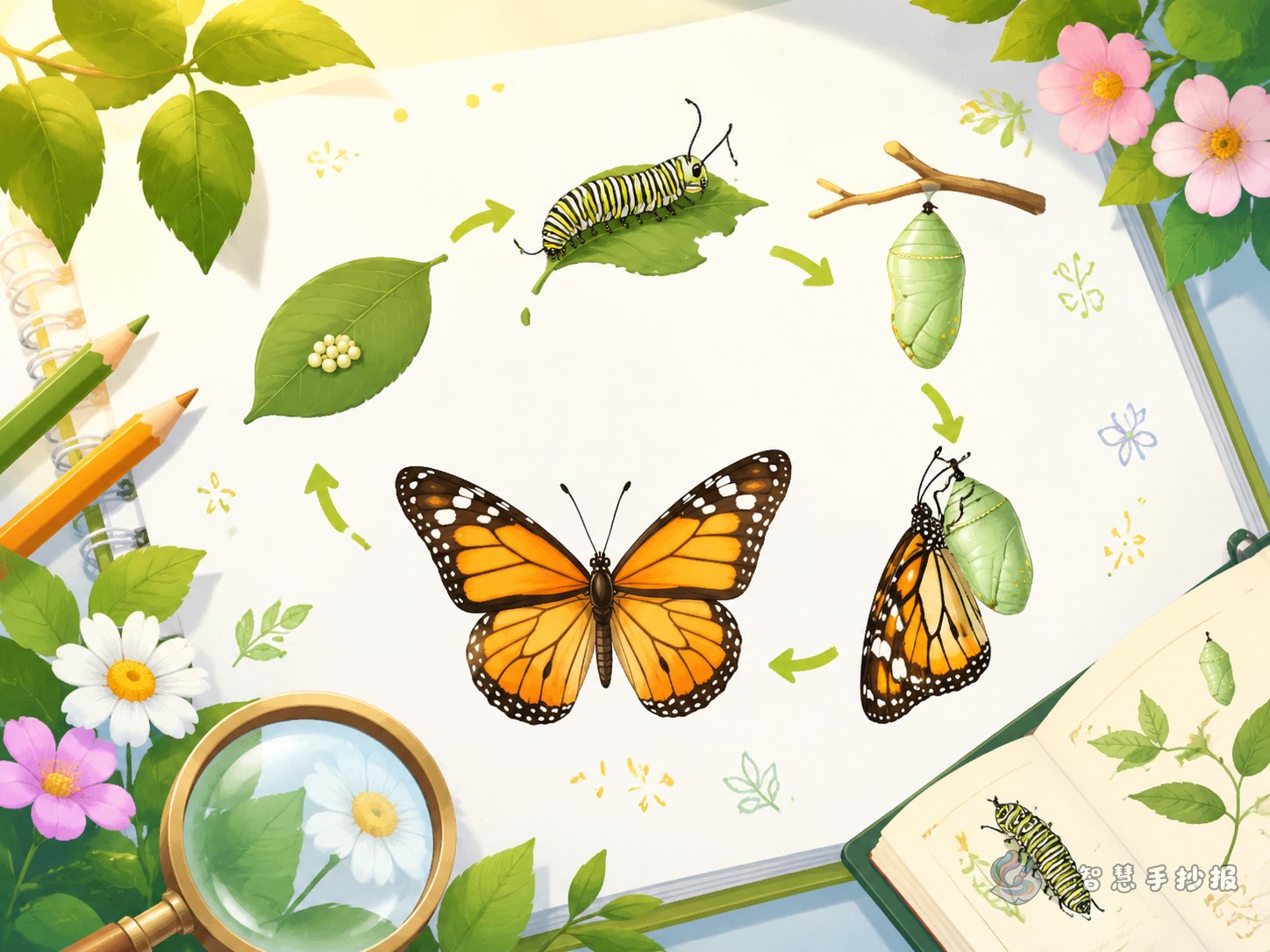
A butterfly life cycle handwritten newspaper should help readers see the process of change at a glance. Instead of turning the page into a collection of random insect facts, the best approach is to show how life moves from egg to butterfly in a clear sequence.
For elementary students, simple visual structure matters a lot. A timeline, a four-box layout, or a circular process design can all make the topic easier to understand and more interesting to read.
How to write the four life stages
1. Egg
You can explain that butterflies lay eggs on plants that will later feed the caterpillars. This section should feel like the beginning of a tiny life.
2. Larva
This is often the most active stage. The larva mainly eats and grows, and it may shed its skin as it becomes bigger. This stage gives the page a strong sense of observation.
3. Pupa
The pupa may look still from the outside, but important changes are happening inside. This part can be described as quiet but amazing.
4. Adult butterfly
After emerging, the butterfly spreads its wings, flies, drinks nectar, and helps with pollination. This is a great section to highlight in the layout.
Good page sections to include
- Life cycle card: Use short notes for each of the four stages.
- My observation notes: Record color, shape, movement, or stage changes.
- Butterfly facts: Add simple science points children can understand.
- Protect nature: Encourage gentle observation and care for habitats.
- Key words: egg, larva, pupa, butterfly, change, pollination.
Short text ideas you can use
- A butterfly goes through four stages: egg, larva, pupa, and adult.
- The larva spends most of its time eating and growing.
- The pupa looks quiet, but the change inside is amazing.
- After leaving the pupa, the butterfly slowly opens its wings.
- When we observe insects, we should be gentle and avoid harming them.
You can also add a simple closing sentence such as: The life of a butterfly is a quiet and wonderful journey of growth.
How to make the layout feel full of process
This topic works very well as a timeline layout. Arrange egg, larva, pupa, and butterfly from left to right, then connect them with arrows or dots. That makes the growth path easy to follow.
If the page is large, place the butterfly in the center and build the other stages around it. If the page is small, put the process on the top half and observation notes on the bottom half.
- Choose light green, yellow, or sky blue for a fresh natural feeling.
- Add leaves, flowers, or wing lines as small decorations.
- Keep section titles short and clear, such as “Beginning,” “Growing,” “Changing,” and “Flying.”
Small ways to improve the final work
- Do not only list facts. Add sentences that show what you noticed.
- Keep each stage similar in length so the page looks balanced.
- End with a short message about caring for nature.
- Draft first, then copy neatly for a cleaner final result.
If you already have your theme and sections ready, you can continue organizing the page in the Smart Handwritten Newspaper WeChat mini program to finish your design more easily.