Turn the legend into a clear story line
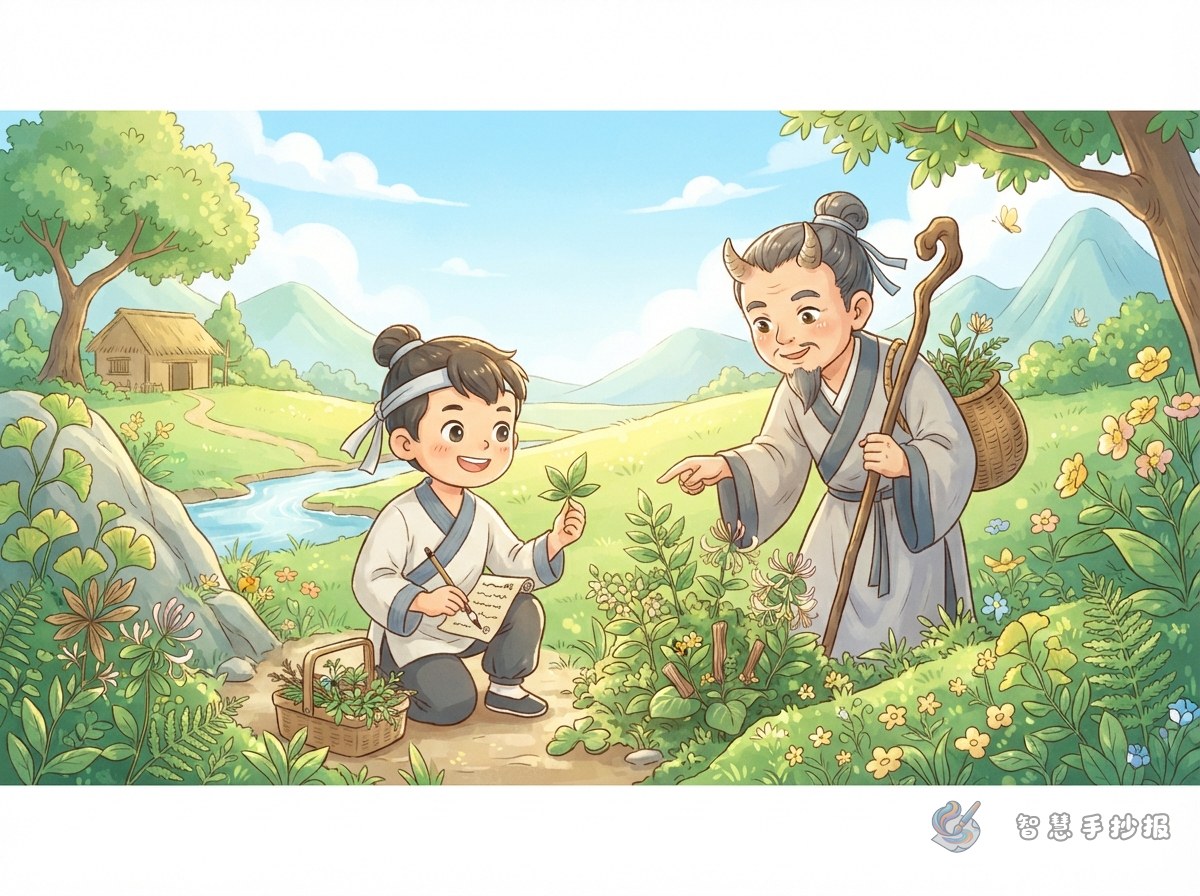
Shennong tasting herbs is a well-known traditional legend. A handwritten newspaper does not need a complicated historical discussion. Instead, build the page around observing plants, telling differences apart, collecting experience, and caring for others. This helps readers see the story as an expression of ancient curiosity about nature and the wish to understand plants.
How to write the central story
Begin with a short introduction: according to the legend, Shennong carefully observed the shapes, colors, and scents of different plants and shared what he learned with other people. Then describe his patient process of watching and recording nature. End with the idea that traditional medical knowledge grew through long-term observation and accumulated experience.
Add a cultural message
Place four keywords beside the story: respect for nature, careful observation, sharing knowledge, and valuing life. These words enrich the page and connect the legend with an age-appropriate introduction to traditional Chinese medicine.
Four sections that give the page substance
- Legend in brief: Introduce the story of Shennong tasting herbs in a short paragraph and clearly identify it as a traditional legend.
- Plant observation cards: Choose familiar plants such as mugwort, mint, or chrysanthemum. Record their leaf shapes, colors, scents, and growing environments without inventing medical effects.
- Traditional medicine vocabulary: Explain words such as observation, identification, recording, experience, and harmony in language children can understand.
- My small discovery: Add one or two sentences about observing plants at school, such as “When I look closely at a leaf, I can see its patterns and changes.”
A short passage to adapt for copying
“According to the legend, Shennong walked through the mountains and forests, carefully observing the shapes, colors, and scents of different plants. He recorded his discoveries and shared them with the people. The story of Shennong tasting herbs reflects the ancient wish to explore nature, collect experience, and help others. It also reminds us why observation and careful records matter.” This passage works well in a central story box or a scroll-shaped section.
Make the herb cards the visual highlight
- Write “Shennong Tasting Herbs” as the main heading and decorate it with vines, leaves, or seal-inspired details for a traditional feeling.
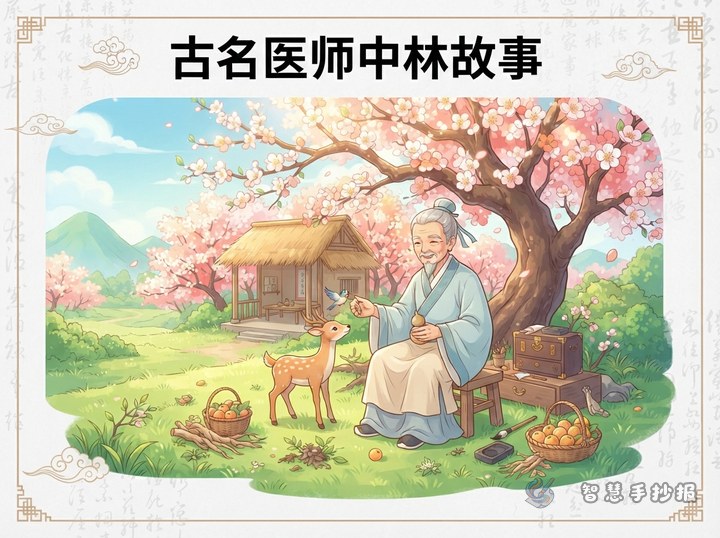
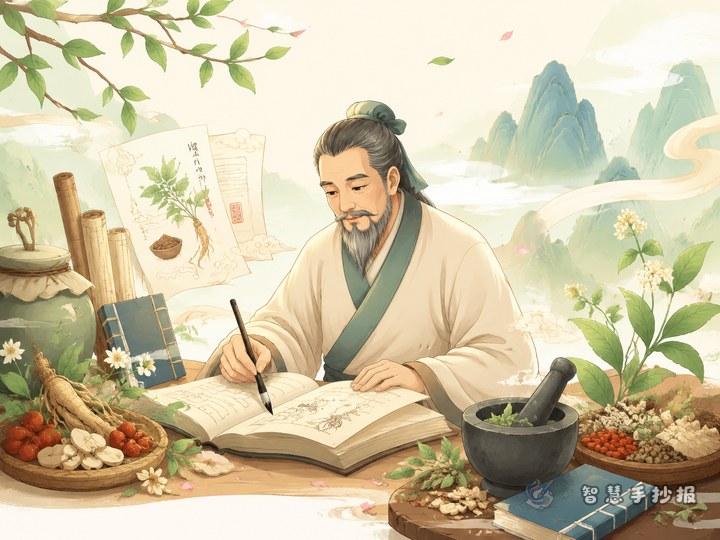
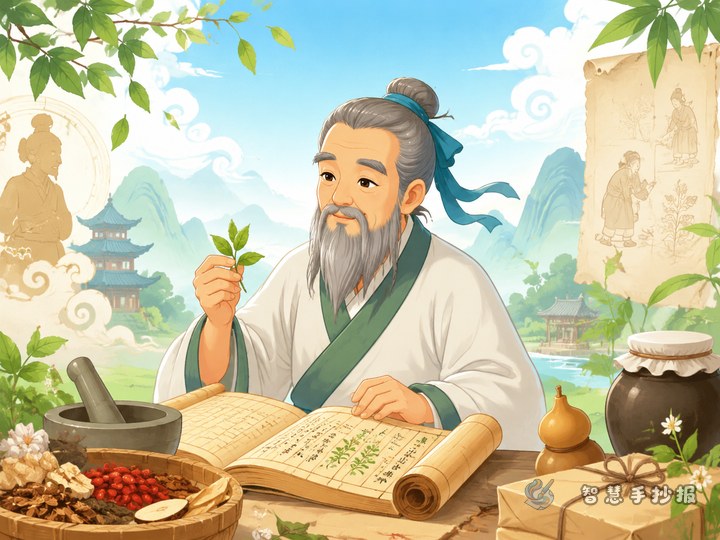
- Draw Shennong in the center with a herb basket and a leaf in his hand. Connect the four sections around him with circular or teardrop-shaped cards.
- Put the legend on the left, three plant observation cards on the right, and a “What I Learned About Observing” section along the bottom.
- Use leafy green, warm cream, and light brown as the main colors, with a small amount of vermilion for seals or headings.
Three checks before handing it in
- Keep each section brief and retain only two or three key sentences.
- Separate the legend, cultural information, and personal observations so the legend is not presented as proven history.
- Add a safety reminder: never pick, taste, or use unfamiliar plants as medicine. After preparing the text, you can also enter the Zhihui Shouchaobao WeChat Mini Program to organize the sections and layout more easily.