Build the Story Around a Scholar Who Organized Medical Knowledge
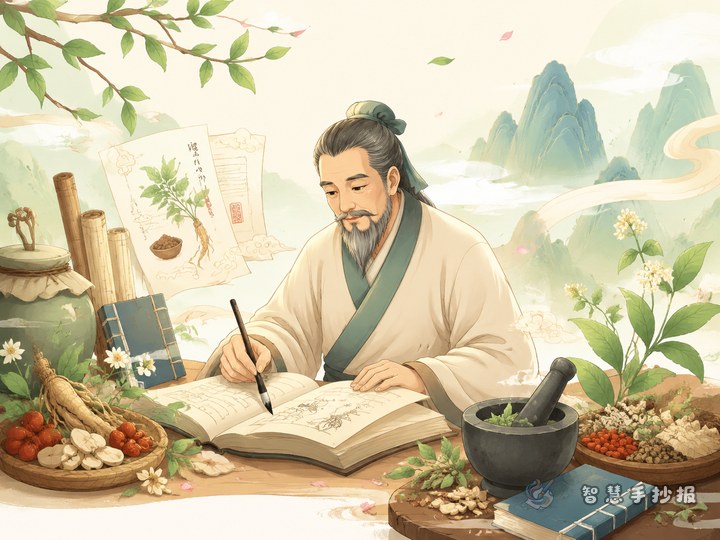
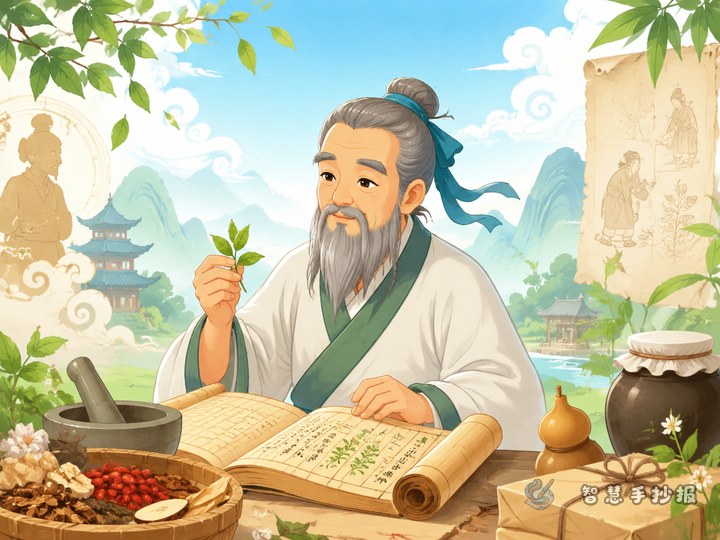
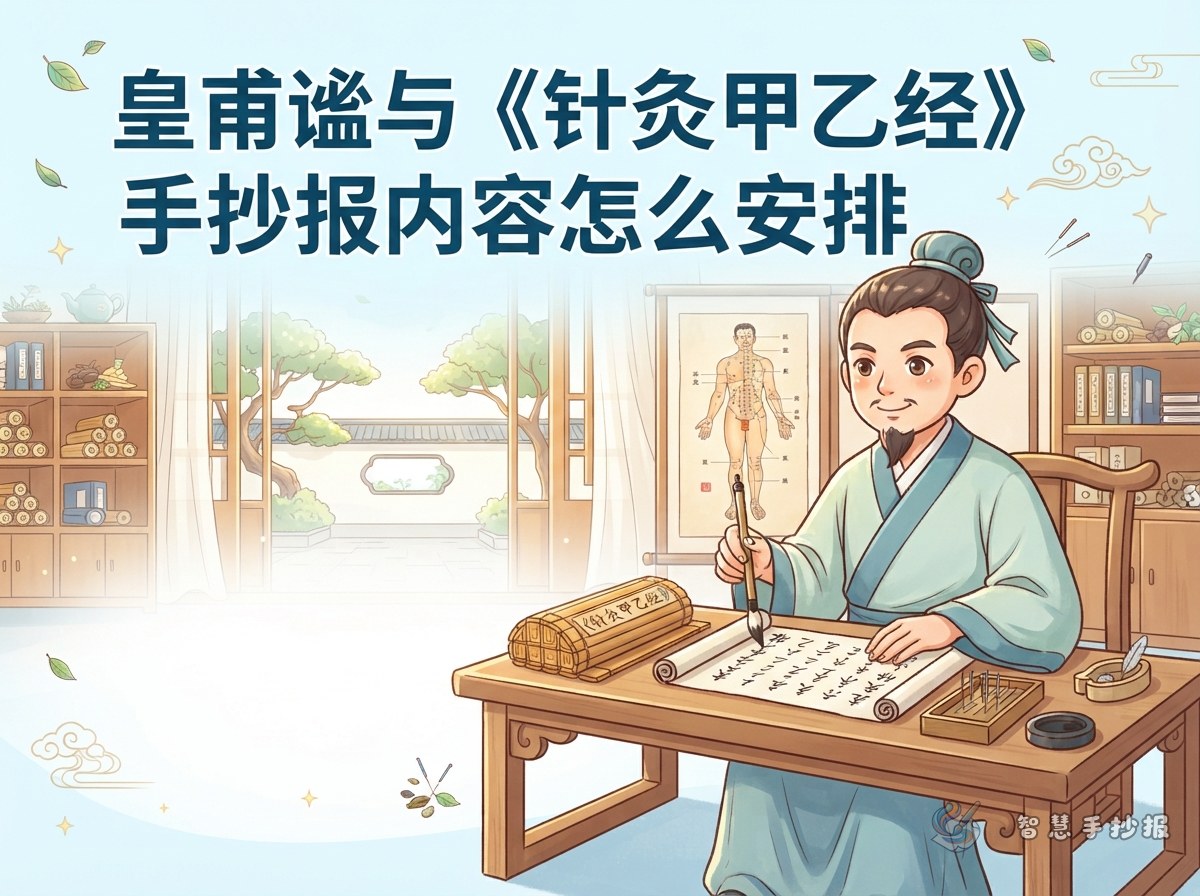
Instead of filling the poster with dates, present Huangfu Mi's life as a simple journey: he devoted himself to learning, studied medicine, examined earlier writings, and compiled the Systematic Classic of Acupuncture and Moxibustion. This approach introduces both the historical figure and the values of diligence, careful organization, accuracy, and service to others.
A short profile may read: Huangfu Mi was a scholar and physician of the Western Jin dynasty. His major work systematically organized early knowledge about acupuncture and became an important text in the preservation and transmission of traditional Chinese medical culture.
Use Three Information Panels
How the Medical Classic Was Compiled
Medical information in ancient China was preserved in different texts and was not always easy to consult. Huangfu Mi reviewed earlier writings and arranged material about the body, channels, acupoints, and acupuncture theory into categories. Students can summarize this process with four words: collect, compare, classify, and compile.
Why the Book Matters
The classic should not be presented as a book of magical cures. Its importance lies in the way it preserved early medical ideas and organized them systematically. Keep the poster focused on history, books, and cultural heritage rather than needling instructions or personal treatment advice.
Lessons for Students Today
- Diligence: Continue reading and thinking when a subject is difficult.
- Accuracy: Sort information carefully and avoid unsupported claims.
- Preservation: Respect historical texts while studying traditional culture objectively.
Design the Page as an Unrolling Ancient Scroll
Use a horizontal scroll as the main visual path. Place a small scene of Huangfu Mi reading on the left, a large title on an open scroll in the center, and three panels on the right for his profile, the story of the book, and its historical value. Thin lines, bamboo slips, or seal motifs can guide the reader from one section to the next.
A palette of parchment beige, bamboo green, and cinnabar red creates a bright historical look. Use beige for the paper, green for calm accents, and red for headings and seals. Small drawings of stitched books, bamboo slips, a writing desk, or a medicine gourd can fill empty corners without crowding the page.
A Ready-to-Use Ending and Simple Workflow
A concluding paragraph can say: “By carefully organizing earlier medical knowledge, Huangfu Mi helped preserve valuable ideas for later generations. His story teaches us not only about an ancient physician, but also about disciplined study, respect for knowledge, and cultural preservation.”
- Sketch the title, portrait, book, and text areas in pencil.
- Limit each panel to one short paragraph and a few key points.
- Write the main text before adding scrolls, seals, and book decorations.
- Check the dynasty, the book title, and historical claims before coloring.
To refine the panel sizes and decorative layout, scan the code to open the 智慧手抄报 WeChat Mini Program and continue creating the handwritten newspaper there.