Build the Poster Around One Guiding Question
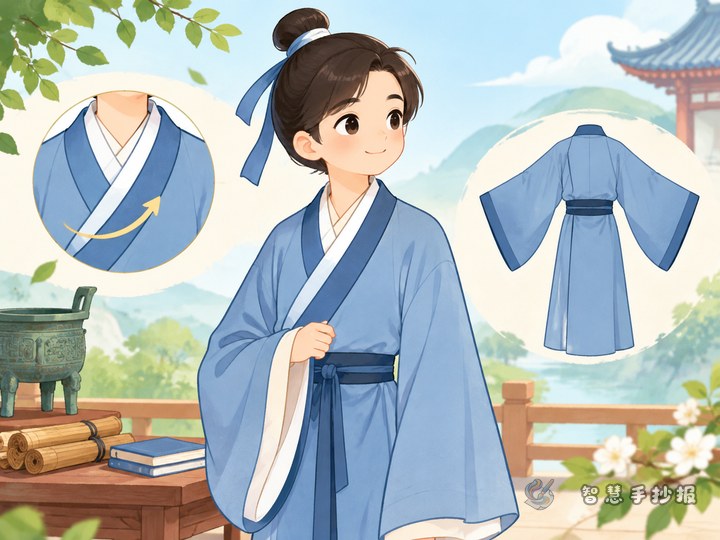
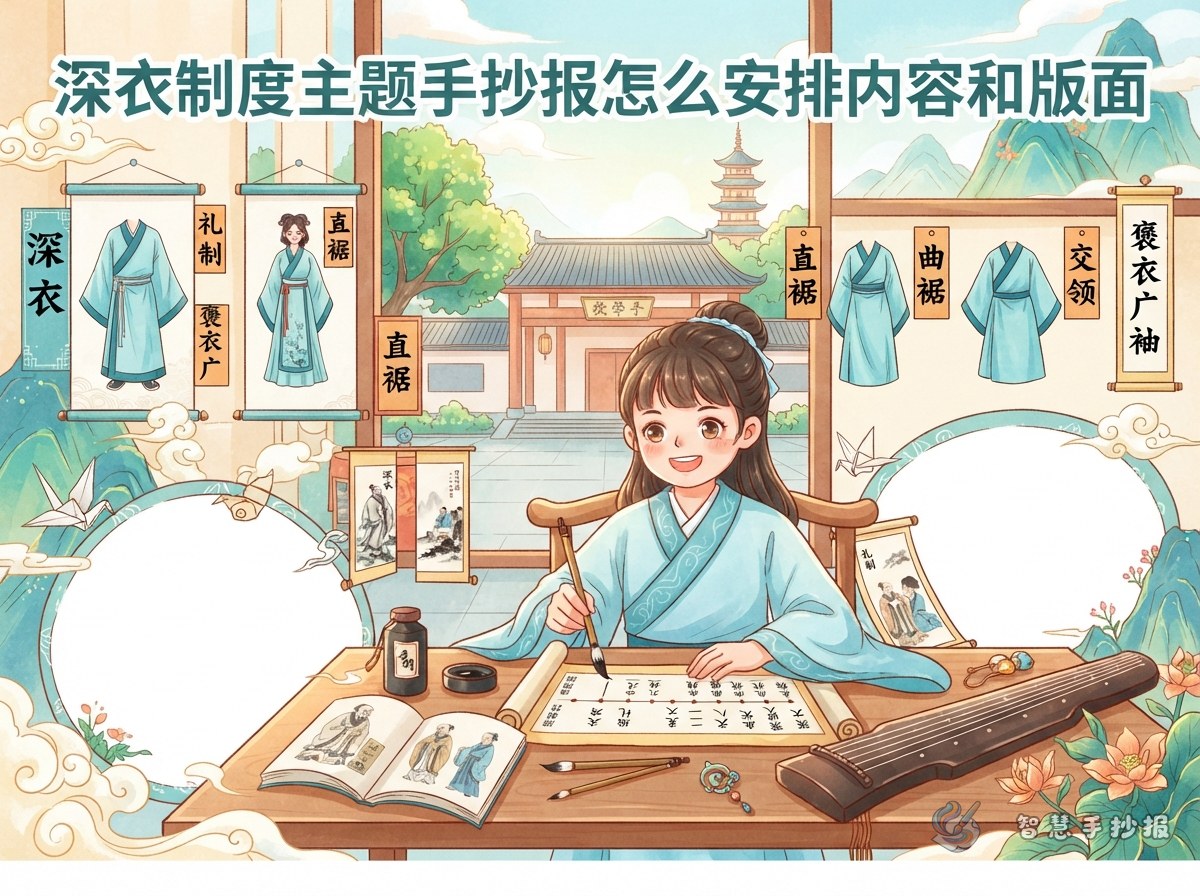
Instead of listing clothing from many dynasties, ask how Shenyi connects garment structure with ideas of courtesy and proper conduct. Place a figure in Shenyi near the title and use guide lines to identify the crossed collar, right-side closure, roomy sleeves, and long silhouette. Add a note that Shenyi offers one window into historical Chinese dress but does not represent every garment or period.
Turn the Main Ideas into Three Learning Panels
What Is Shenyi?
Explain that Shenyi refers to an ancient style in which the upper and lower sections are joined. Its exact construction varied across periods and interpretations, so a school poster should emphasize clear, broadly accepted features rather than present every disputed detail as fact.
How Clothing Expressed Ritual Values
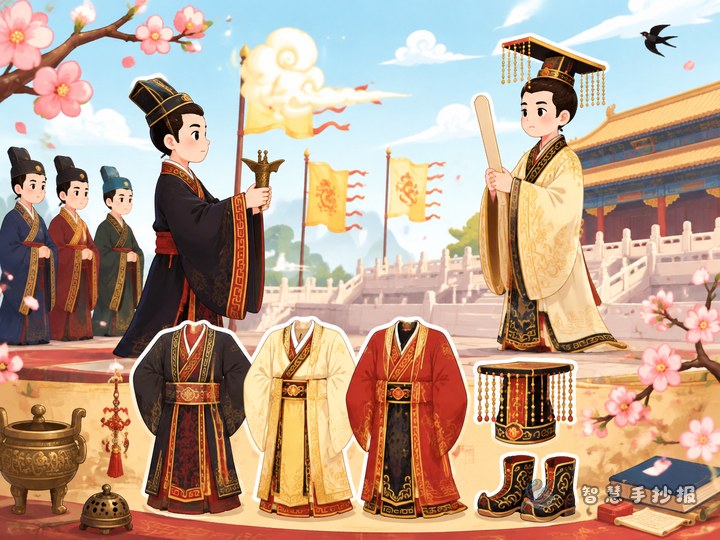
Historical dress could reflect occasion, social role, and expectations for conduct. Clothing provided protection and warmth, but neat and appropriate dress could also communicate dignity and respect. A simple arrow diagram can connect suitable clothing, composed behavior, and respect for the occasion.
Garment Observation Cards
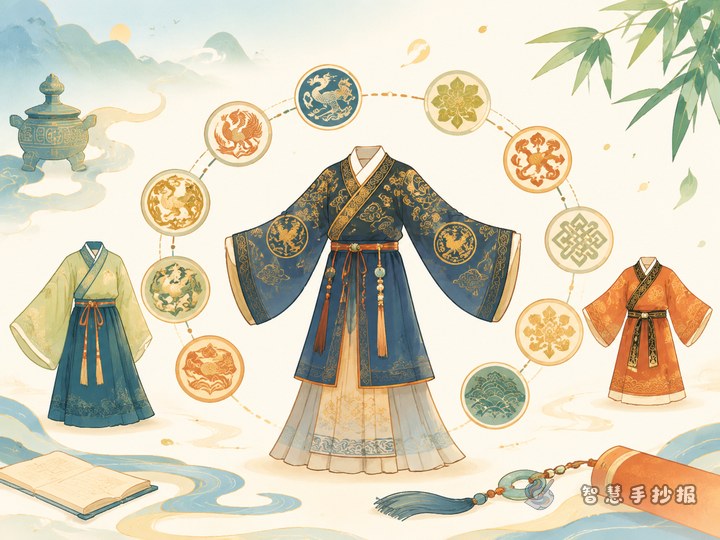
- Crossed collar and right closure: Show how the front panels overlap toward the wearer's right.
- Joined sections: Use a small diagram to explain the connection between the upper garment and lower skirt.
- Long, balanced outline: Use the sleeves and hem to create a calm and dignified appearance.
- Important distinction: Shenyi is not a name for every type of Hanfu or all clothing worn in ancient China.
Use Short Text with Clear Levels
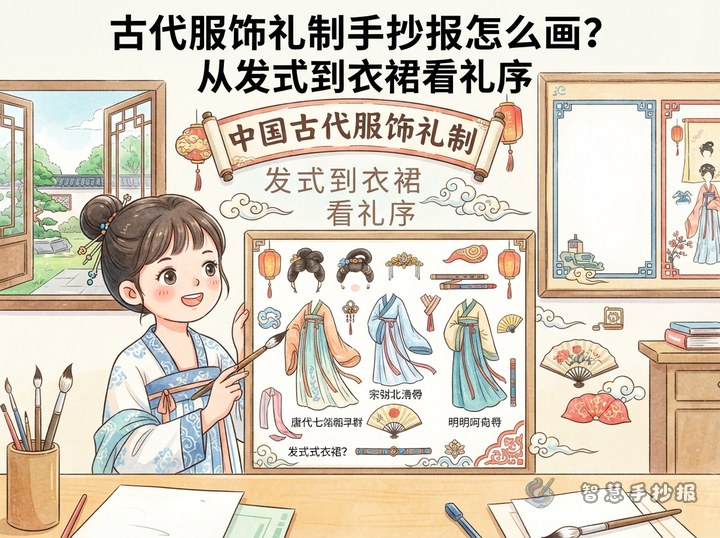
Write one central statement followed by three compact facts. A phrase such as “Clothing has form; courtesy begins within” can introduce notes on the name, construction, and cultural meaning of Shenyi. Add a true-or-false corner asking whether Shenyi represents all ancient Chinese clothing. This interactive detail reinforces an important distinction.
Shape the Layout Like an Unrolled Sash
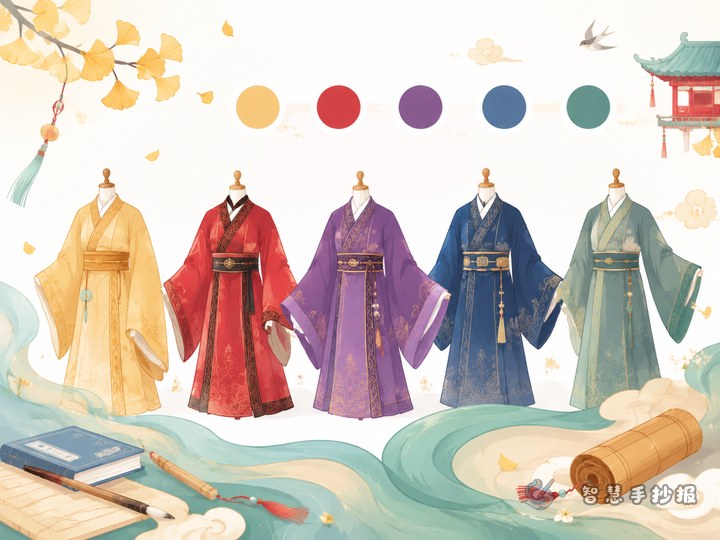
Run a curved sash across the page to connect the title, figure, fact cards, and reflection panel. A palette of warm ivory, muted brown, dark blue-green, and small red accents creates a historical mood without making the page dull. Let the main figure occupy about one third of the page and use simplified cloud patterns, geometric borders, or collar lines sparingly.
Check Accuracy Before Adding Color
- Confirm that the poster does not use Shenyi as a general name for all ancient clothing.
- Check the direction of the garment closure and keep period references consistent.
- Shorten dense sentences so each fact box contains only two to four lines.
- Sketch positions in pencil, ink the final lines, add color, and write the small headings last.
To test different panel combinations and page arrangements, continue the project in the WeChat mini program, then adjust the balance of text and illustrations for the paper size.