Choose a Clear Handwritten Newspaper Theme
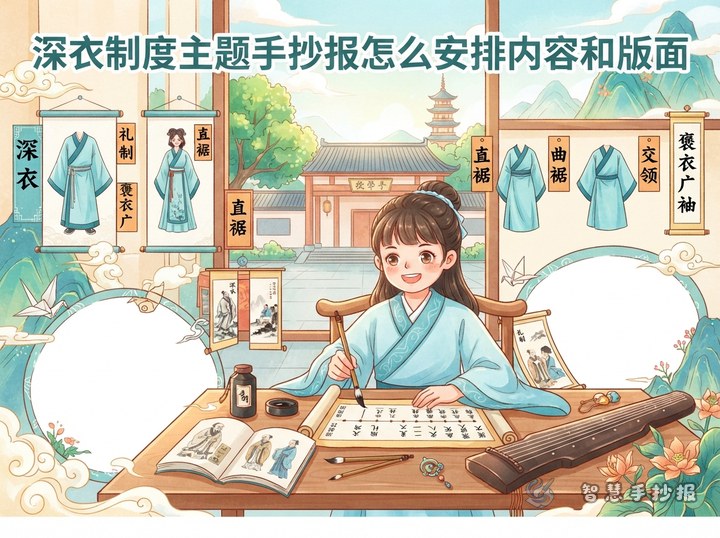
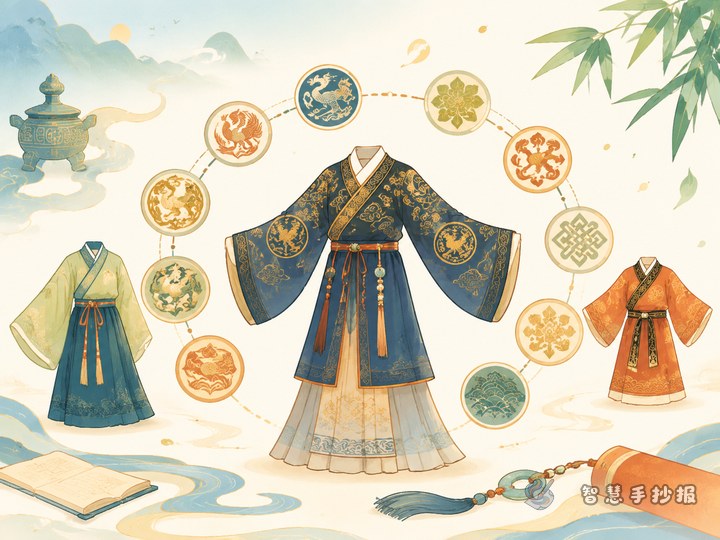
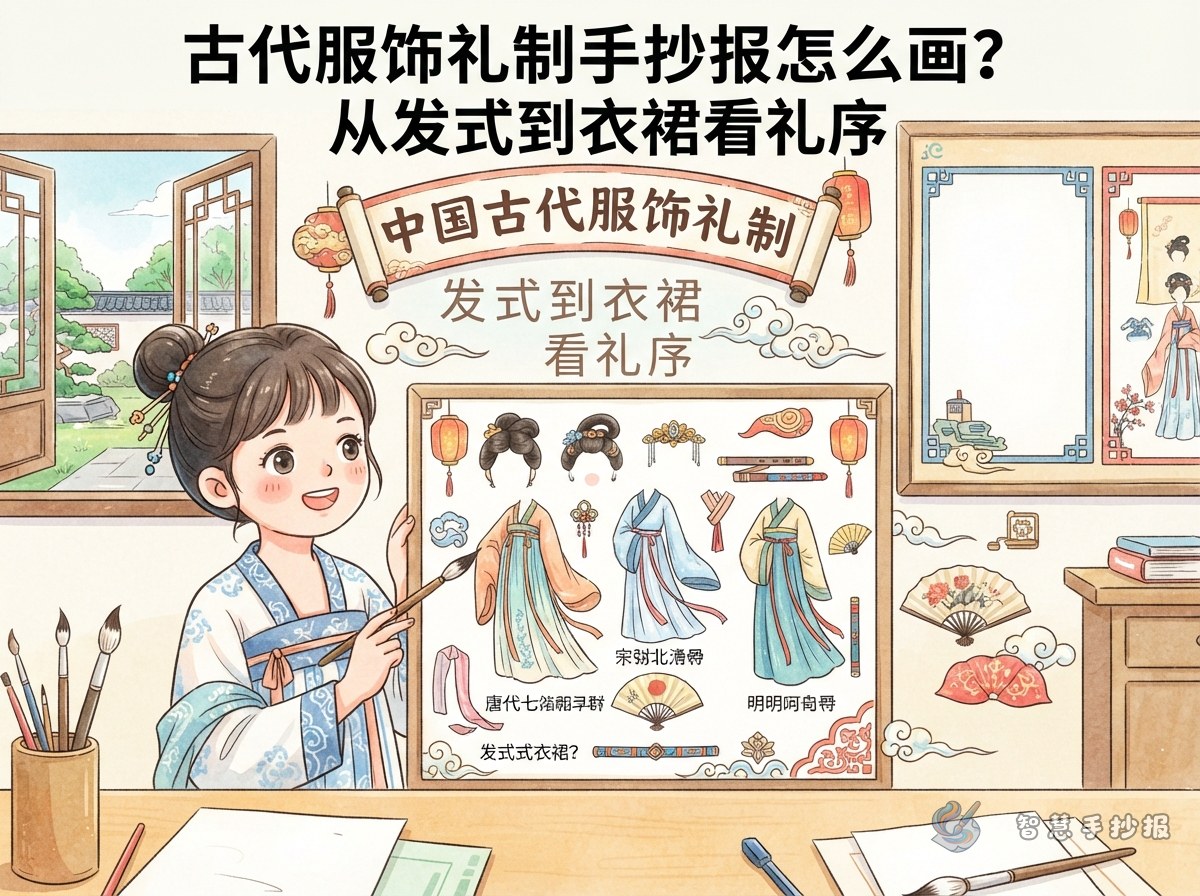
This handwritten newspaper can focus on “From Hairstyles to Robes: Finding Order in Ancient Clothing”. In ancient China, clothing was not only for warmth or appearance. Details such as hairstyles, collars, sleeves, and waist ties could suggest age, identity, occasion, and respect for etiquette. Draw a central figure in traditional clothing and use arrows to label the hairstyle, collar, belt, and skirt so readers can quickly understand the connection between clothing details and ritual order.
Useful Text for the Main Sections
Hairstyles and Identity
Ancient hairstyles could be influenced by age, marital status, and social position. Children, unmarried women, and adult women might wear their hair in different ways, while hairpins, caps, or crowns could be used on formal occasions. Instead of listing too many difficult terms, use a short heading such as “Hairstyles Carry Meaning” and add one or two simple sentences.
Collars and Waist Ties
The overlapping collar, the length of a garment, and the position of a waist tie all contributed to the neat and dignified appearance of traditional clothing. A short text box could say: “Ancient people valued clean and orderly clothing. Keeping the collar flat and the waist tie secure showed both a sense of beauty and respect for the occasion and other people.”
Clothing for Different Occasions
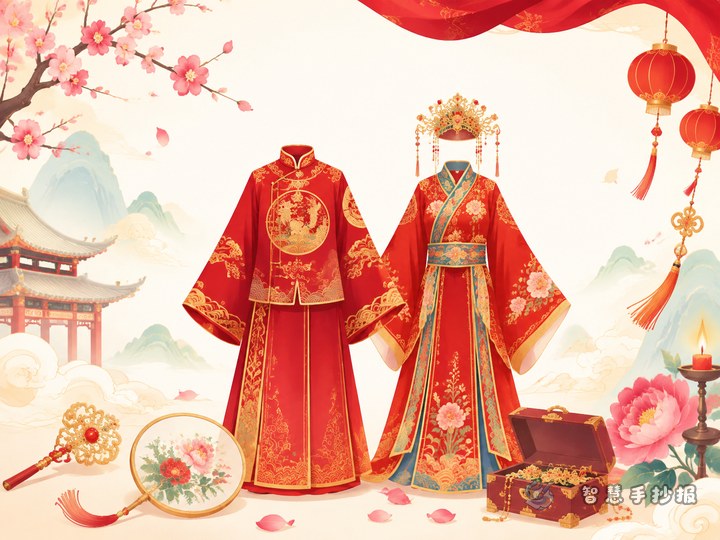
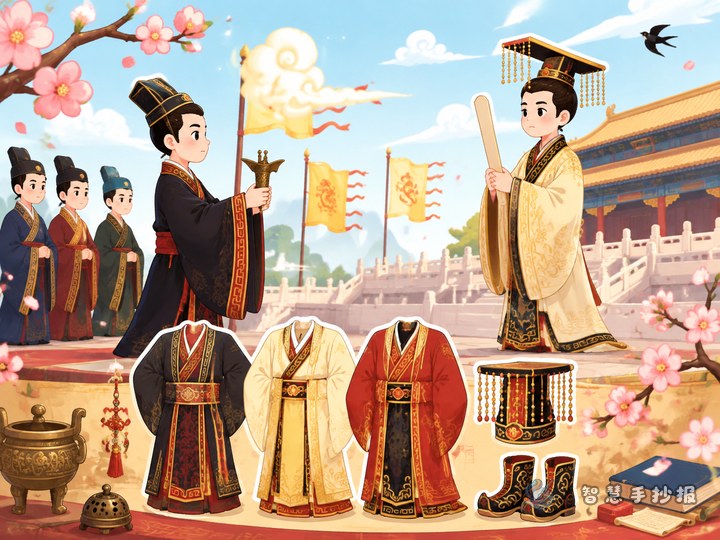
Everyday clothing, festive clothing, and garments for important ceremonies were not exactly the same. Create a section called “What Did People Wear for Different Occasions?” and use three small icons for daily life, festivals, and ceremonies. This helps explain that ancient clothing rules emphasized matching the person, the occasion, and proper behavior.
Turn Clothing Details into Layout Highlights
- Write the title on a scroll-shaped banner and decorate it with hairpins, waist ties, or cloud patterns.
- Place the main figure in the center, with four labeled sections around it: hairstyle, collar, belt, and sleeve.
- Add a “Clothing Detail Guide” at the bottom with the clothing part, its possible etiquette meaning, and a suggested drawing.
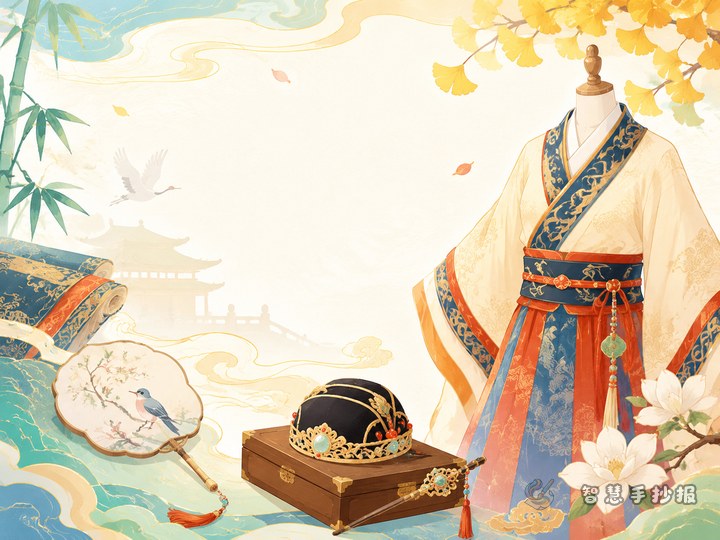
- Use small drawings of folding fans, fabric flowers, shoes, or textile patterns in the corners without crowding the text.
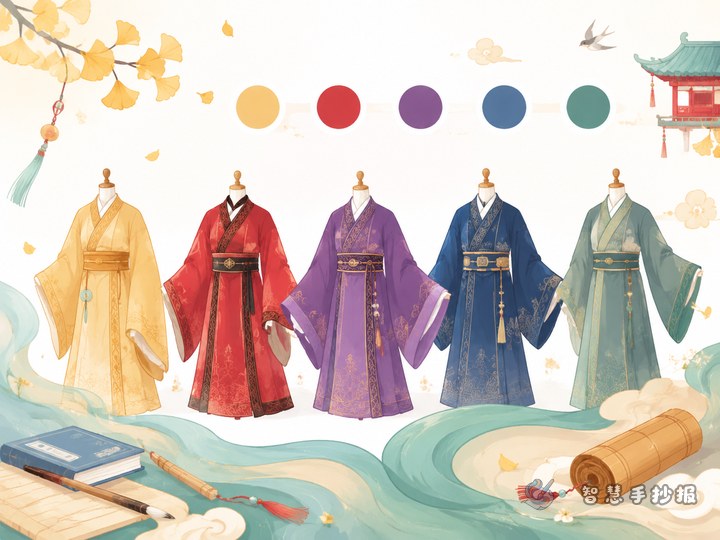
朱红、青绿、米白和墨色可以组成清爽的传统配色。Choose a strong dark color for headings and keep the explanatory text neat and easy to read. Keep the clothing lines simple so that primary school students can copy and color them.
Three Things to Check Before Finishing
- Do not mix clothing from different dynasties without care. If the exact dynasty is uncertain, describe it as “traditional ancient Chinese clothing” instead of making an overly definite claim.
- Keep each text section short and focused. Two or three sentences per section are enough, leaving space for the figure and surrounding details.
- Explain ritual rules in everyday language. Focus on the relationship between clothing, identity, occasions, and manners instead of copying many unfamiliar terms.
After planning the content, open the WeChat mini program 智慧手抄报 to continue arranging sections, selecting a layout, and completing the handwritten newspaper.