Turn the Twelve Imperial Motifs into a Story-Based Poster
For a handwritten poster about ancient Chinese clothing and ritual rules, the Twelve Imperial Motifs make a clear and interesting theme. These motifs include the sun, moon, stars, mountains, dragons, pheasants, ritual vessels, water plants, fire, grains, axe patterns, and paired symbolic patterns. They were not just decorations; they showed ideas about status, duty, order, and moral values.
A suitable title could be “Symbols on Robes: Ritual Meanings in Ancient Chinese Clothing”. Instead of writing it like an encyclopedia page, divide the poster into easy sections such as “Recognize the Motifs,” “What Do They Mean?” and “Why Did Clothing Follow Rules?”
Short Text Students Can Copy
Opening Paragraph
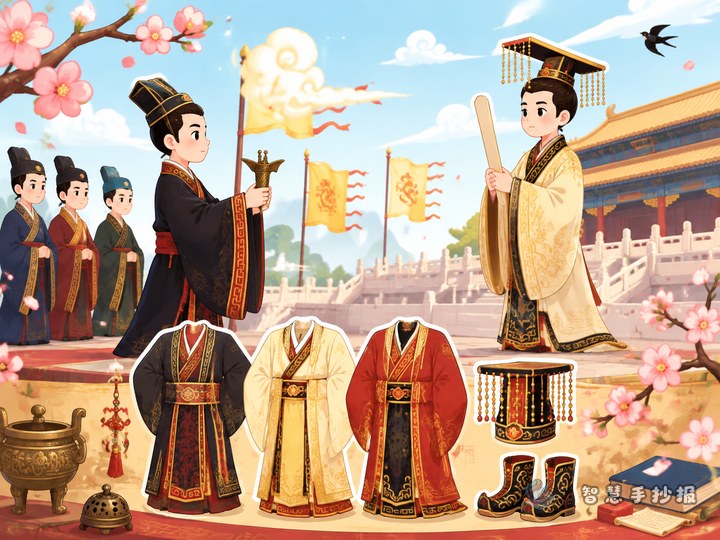
In ancient China, formal clothing was closely connected with ritual. Colors, patterns, and accessories could show a person’s role, the occasion, and the respect required. The Twelve Imperial Motifs are a representative example. They placed nature, virtue, and order onto clothing, showing how traditional culture valued proper manners and responsibility.
Motif Notes
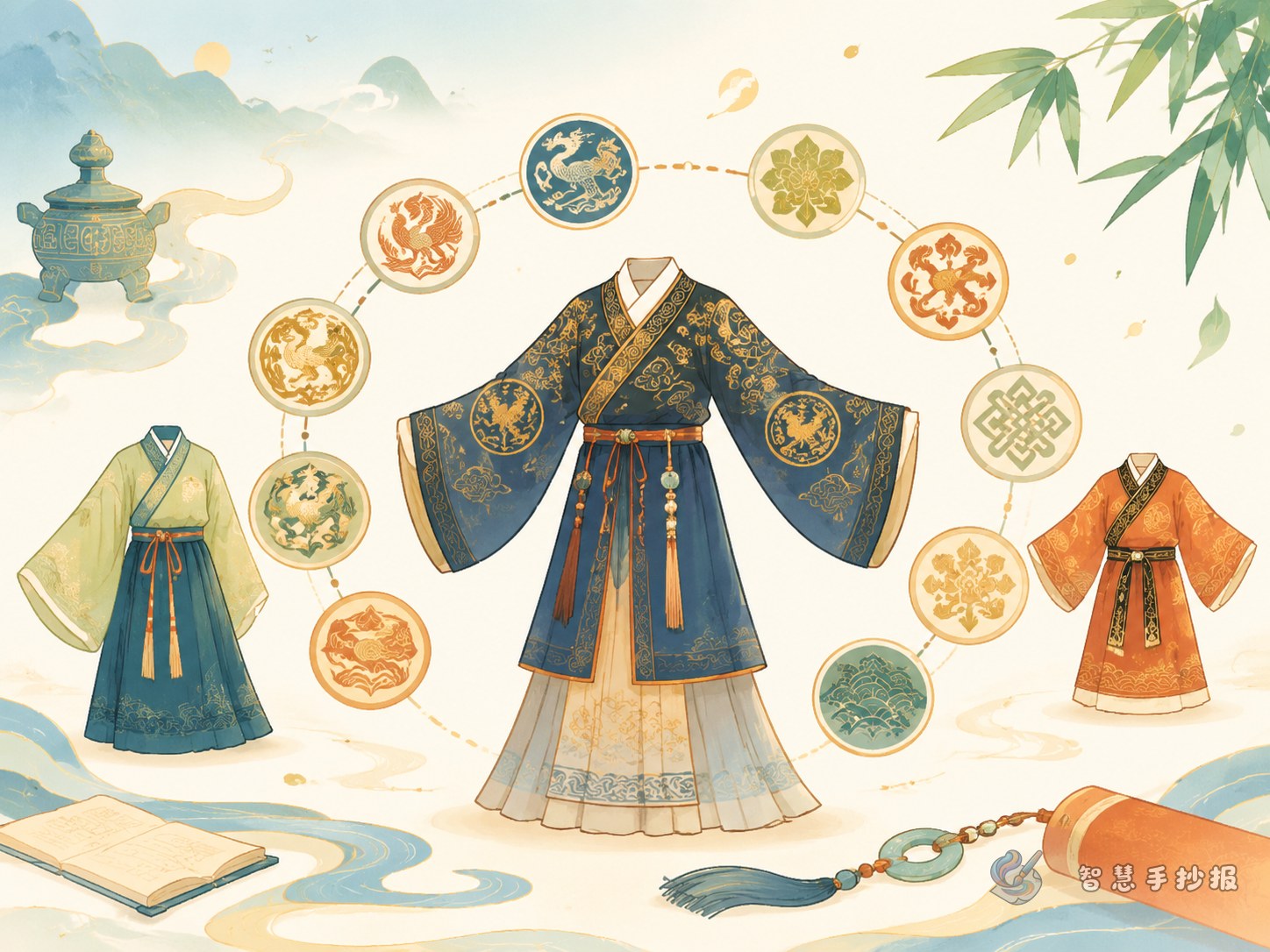
- Sun, moon, and stars: symbols of light, time, and respect for heaven and nature.
- Mountains: a sign of steadiness and responsibility.
- Dragon and pheasant: images of dignity, grace, and cultural beauty.
- Water plants, fire, and grains: reminders of purity, brightness, and nourishment.
- Axe and paired patterns: symbols of judgment, caution, and the ability to tell right from wrong.
Poster Sections That Make the Topic Easy to Read
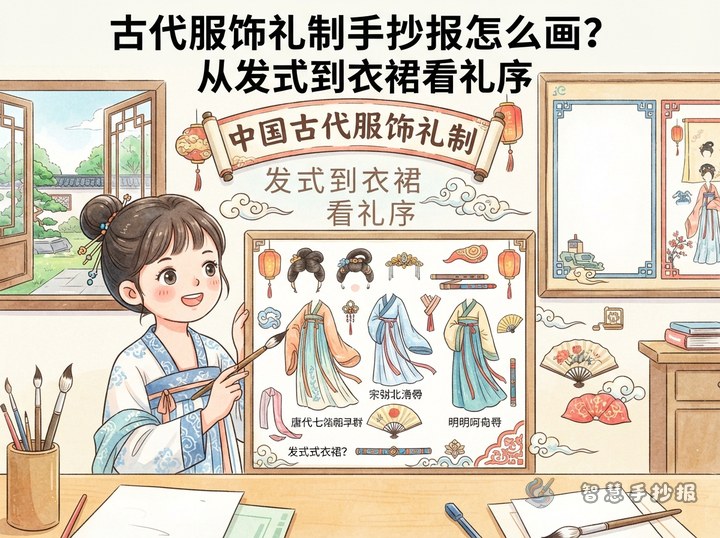
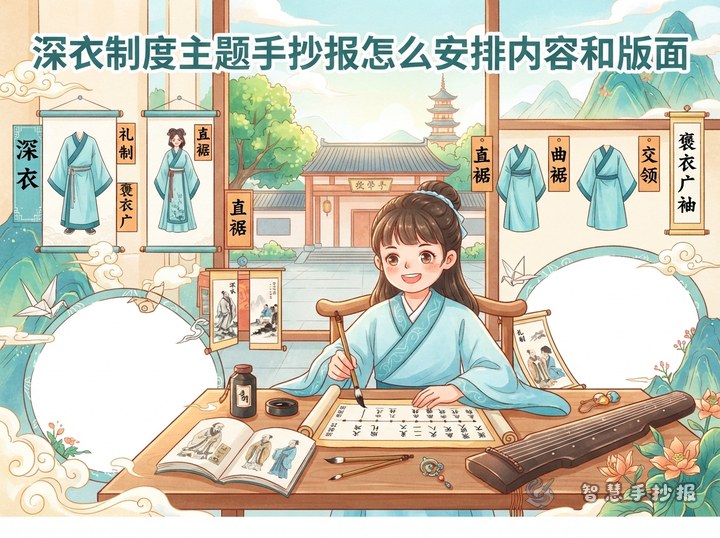
You can divide the poster into four parts: a simplified ancient robe on the left, a motif guide on the right, a short paragraph about clothing and ritual in the center, and a bottom box called “What Etiquette Means Today.” This layout combines pictures, explanations, and personal understanding.
- Motif magnifier: Choose four to six motifs and draw each one inside a small circle with a one-sentence meaning.
- Ritual Q and A: Add questions such as “Why could formal robes not be worn casually?” and “What did the patterns represent?”
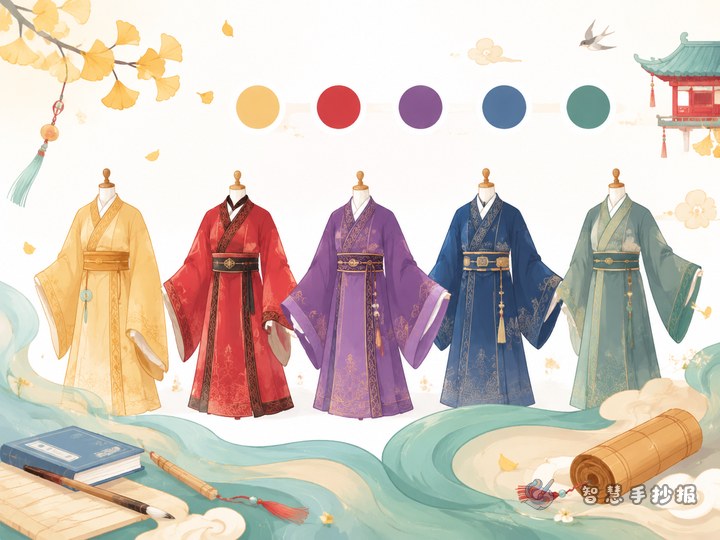
- Traditional color strip: Use red, black, yellow, and green in a clean way for borders and labels.
- Modern reflection: Write one or two lines about how etiquette means respecting people and occasions.
Simple Drawing Ideas with an Ancient Style
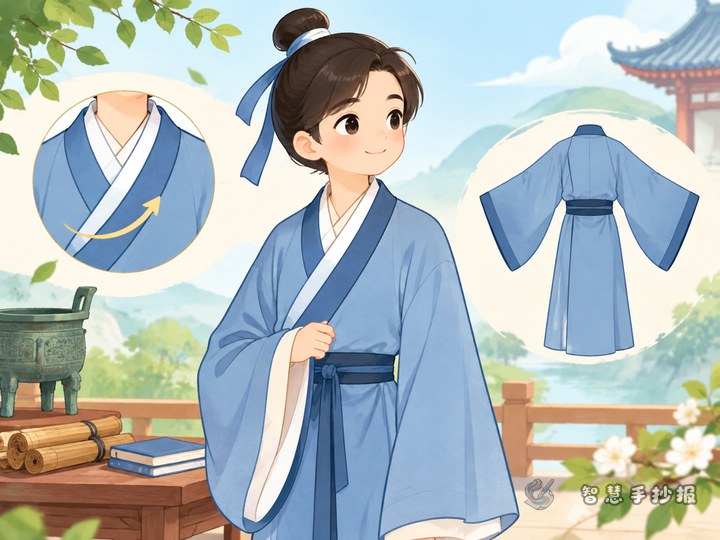
Start with the outline of a robe, using wide sleeves, crossed collars, and hanging ribbons to create an ancient feeling. It does not need to be a perfect historical reconstruction. Then place symbols such as the sun, moon, mountain, flame, and grains around the robe, connecting them to short notes with thin lines.
For the border, try a bamboo-slip shape, cloud patterns, key patterns, or a scroll design. Make the title large and neat. Keep each paragraph short, about three to five lines. Younger students can use more drawings and fewer words, while older students can add deeper explanations of motif meanings and ritual occasions.
Before You Finish the Poster
Decide the main color, title, and four sections before drawing on the final paper. Sketch the layout on draft paper first so the text and pictures fit well. If you need more title ideas, section names, or layout inspiration, you can continue making the poster in the Zhihui Shouchaobao WeChat mini program using keywords such as “Twelve Imperial Motifs,” “ancient clothing rituals,” and “traditional culture.”