Start with a Clear Theme: Clothing as a Sign of Ritual
An ancient Chinese clothing and ritual system poster should not only list costume names. A better focus is “Clothing Shows Courtesy”, which explains how caps, robes, colors, patterns, and occasions reflected order and respect in traditional culture.
You can begin with a short introduction: In ancient China, dressing properly was an important part of etiquette. Different clothing was worn for ceremonies, court meetings, weddings, coming-of-age rituals, and daily learning. Clothes were not only beautiful, but also carried cultural meaning.
Useful Sections for the Poster
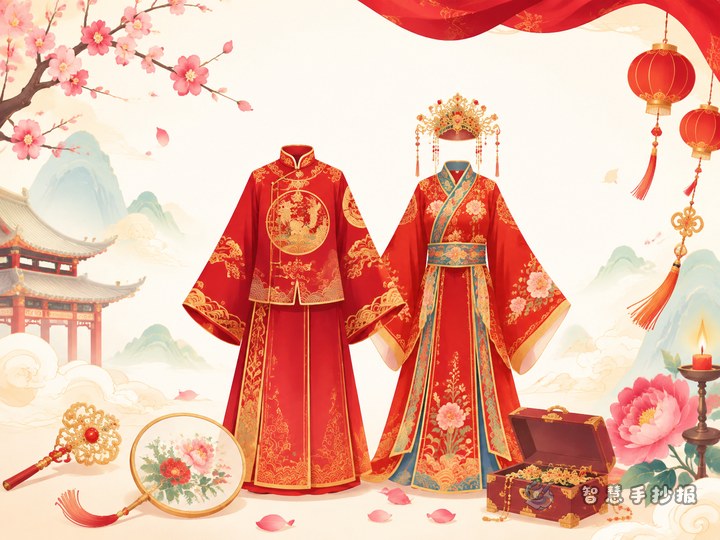
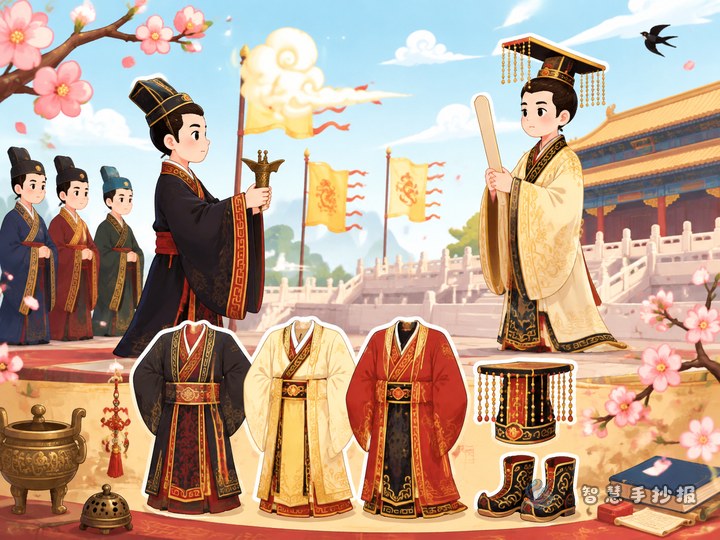
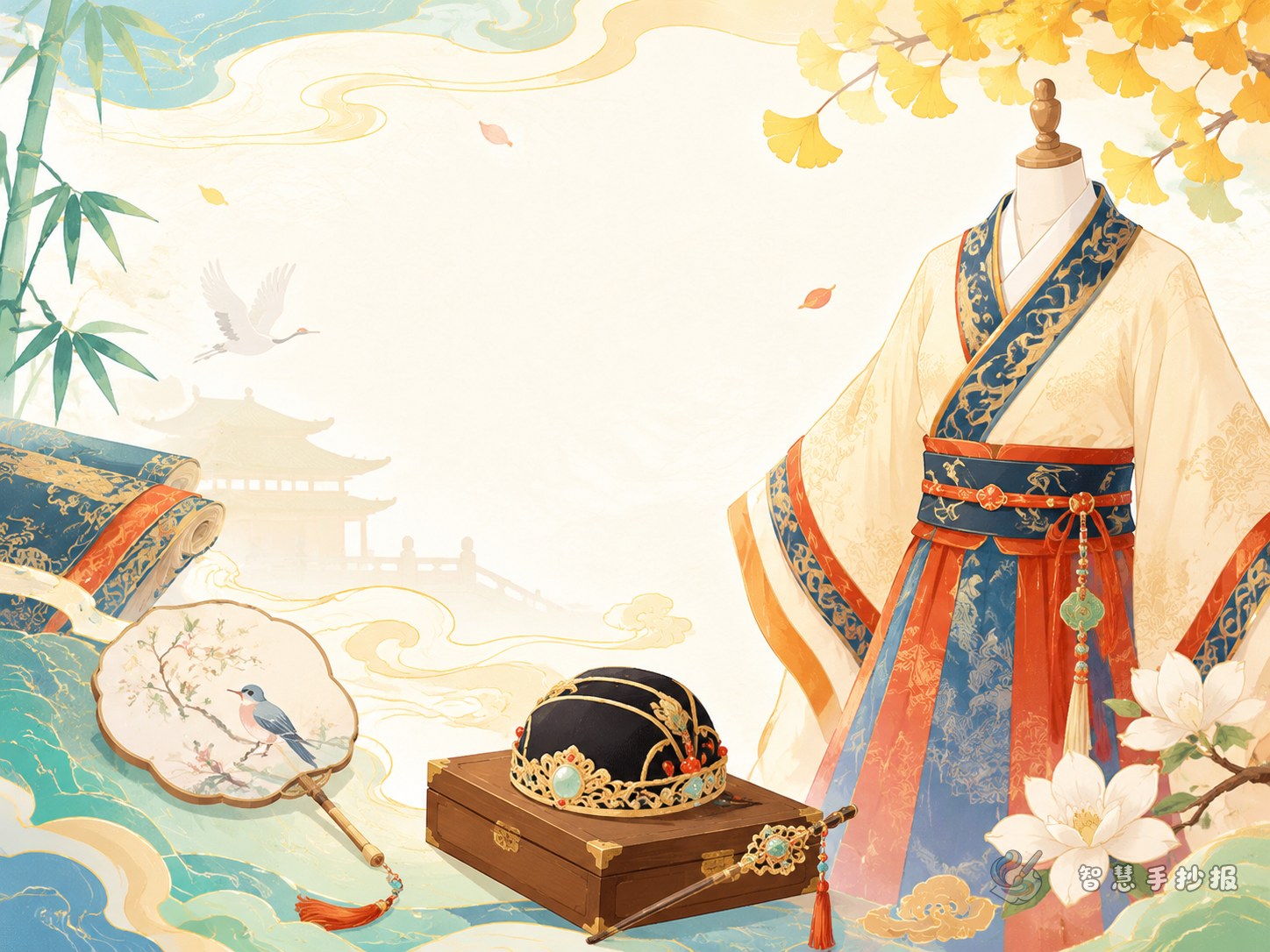
- Caps and robes: Explain that caps often related to adulthood, identity, and formal manners, while robes, belts, shoes, and accessories formed a complete outfit.
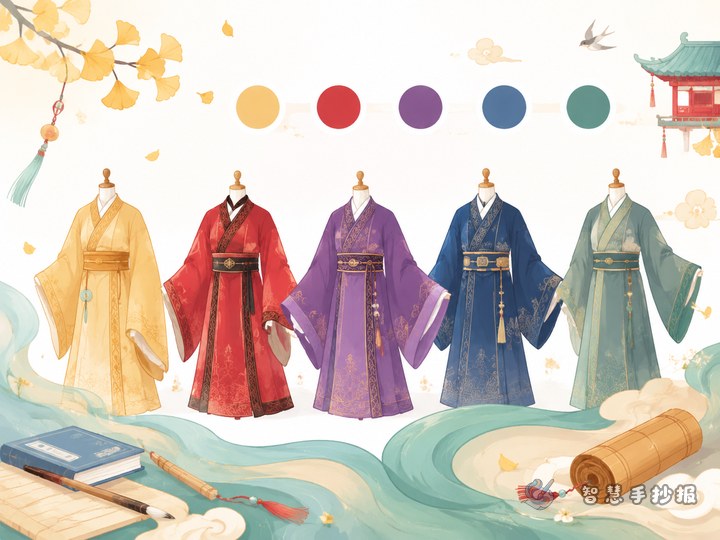
- Colors with meaning: Introduce traditional colors such as black, red, blue-green, and white, and explain that colors could create a solemn or respectful feeling.
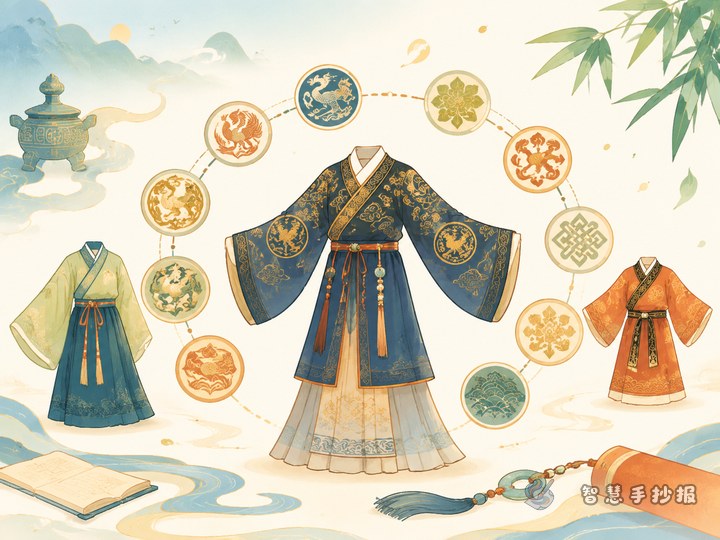
- Patterns that speak: Clouds, birds, mountains, and dragon-like motifs can be used to show dignity, good wishes, and nature.
- Clothes for different occasions: Use small boxes to show ceremonies, court meetings, weddings, and study scenes.
Short Text Materials to Copy
Short Sentences
- Proper clothing was an outward sign of respect in ancient Chinese etiquette.
- Ancient clothing rules showed identity, occasion, and social order.
- Colors, patterns, and accessories together created the beauty of ceremonial dress.
- Learning about ancient clothing helps us understand traditional manners and culture.
A Short Paragraph
In ancient China, clothing was closely connected with rituals and manners. People wore suitable caps and robes on important occasions to show respect. The style, color, belt, pattern, and accessories all had meanings. By including these ideas in a handwritten poster, students can understand traditional culture in a clear and visual way.
A Layout Idea: Let One Ceremonial Robe Connect the Page
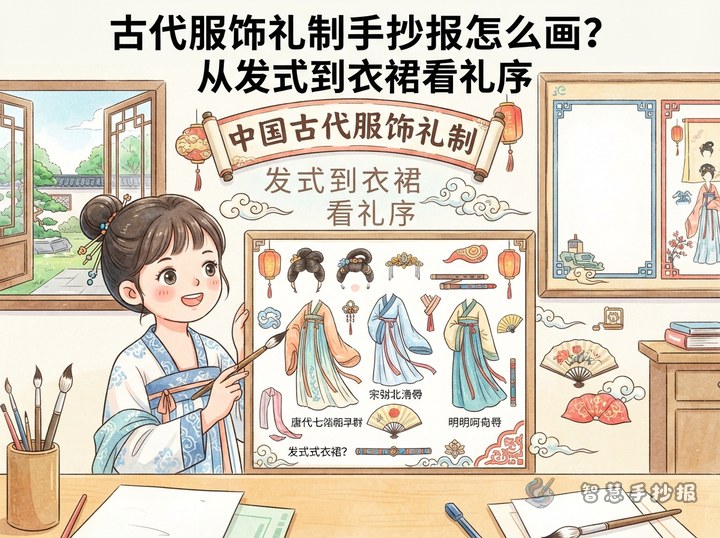
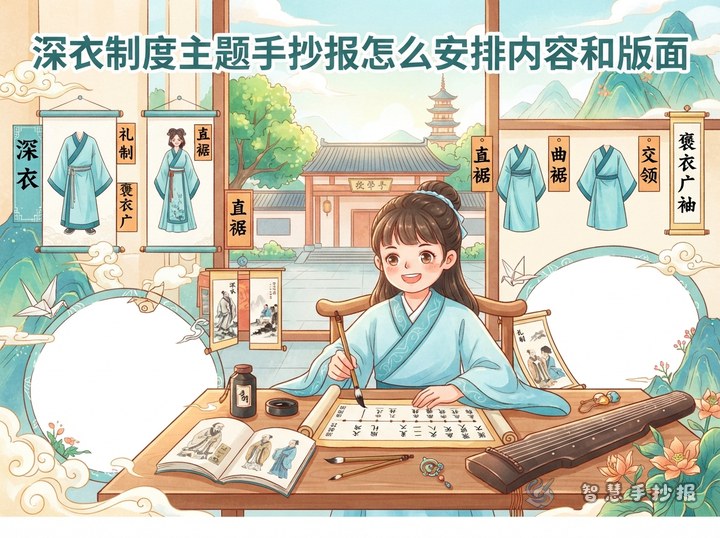
Draw a simplified ancient ceremonial robe or a figure wearing a cap in the center. The drawing does not need to be complicated. Wide sleeves, a belt, a cap, and a few patterns are enough to show the theme. Around it, use scrolls, window frames, clouds, or bamboo-slip borders to divide the page.
- Place the title at the top, such as “Clothing Shows Courtesy.”
- Put basic knowledge about caps and robes on the left.
- Place colors and patterns on the right with small color blocks.
- Use the bottom area for ritual scenes such as ceremonies, weddings, and studying.
Recommended colors include beige, light brown, vermilion, ink black, and blue-green. These colors create a clean traditional style. Younger students can draw more symbols and borders instead of complex figures.
Continue Making the Poster in the Mini Program
After choosing the theme and text, students can organize the draft and continue in the Zhihui Handwritten Poster WeChat mini program. It helps arrange titles, sections, borders, and decorative elements, so parents and teachers can adjust the content for different grade levels.