Begin with One Plate as the Main Idea
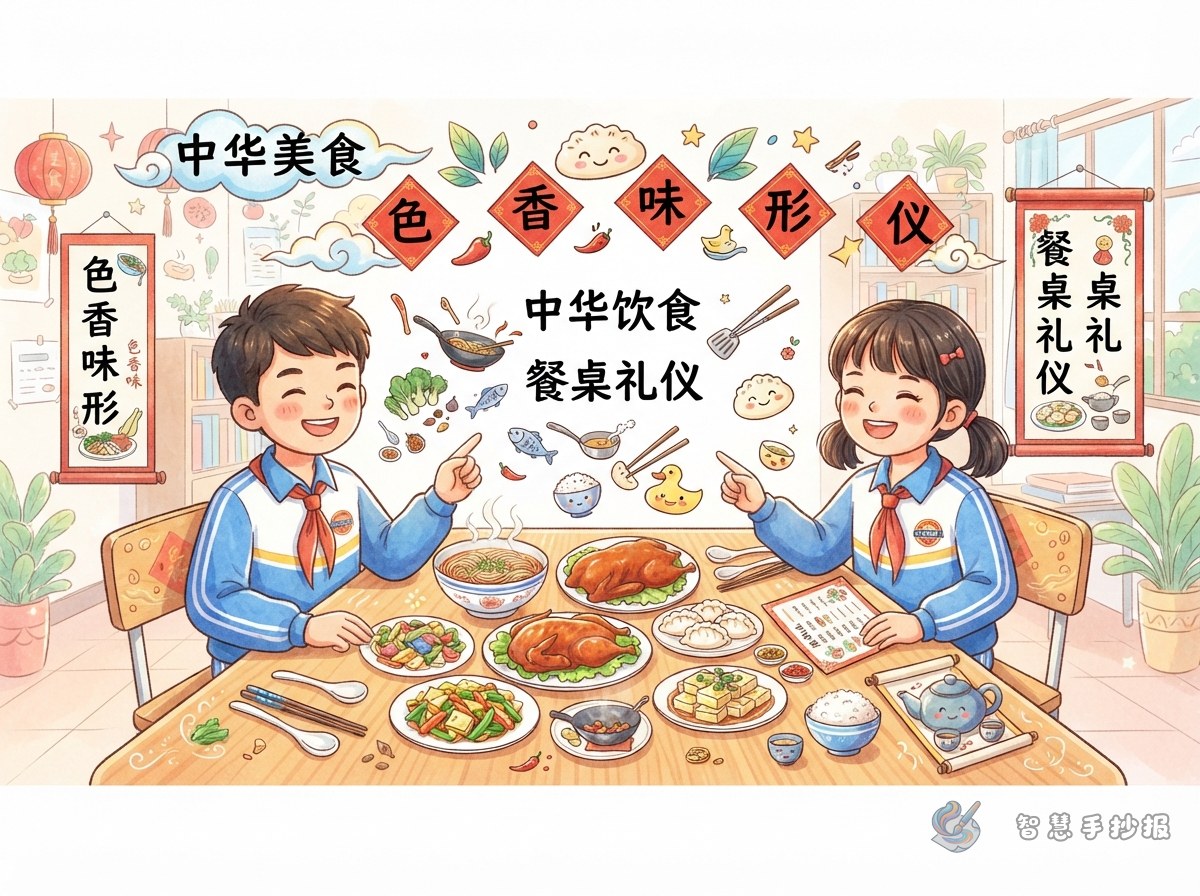
This handwritten newspaper does not need a long list of dishes. Build it around four words: color, aroma, taste, and form. Together, they describe how Chinese cuisine creates an enjoyable dining experience. Color makes a dish inviting, aroma builds anticipation, taste shows balance, and form reflects careful presentation.
Suggested theme sentence: A single home-cooked dish can reveal the beauty, thoughtfulness, and courtesy found in Chinese food culture.
Four Ways to Describe the Food
Color: A pleasing combination of natural ingredients
You can write that Chinese dishes often pay attention to the colors of their ingredients. Red, green, and yellow vegetables can create a fresh, layered appearance while showing the variety of foods on the plate.
Aroma: Ingredients and cooking working together
Scallions, ginger, garlic, and other seasonings can add fragrance. However, a good dish is not simply the strongest-smelling one; its aromas should support rather than hide the ingredients.
Taste: Different flavors kept in balance
Regions and families may enjoy different tastes, and home cooking often carries special memories. Seasoning should be moderate and harmonious, while slow tasting helps us notice the details of food.
Form: Neat presentation shows care
The way ingredients are cut and arranged changes the dining experience. A clean and attractive plate can show respect for the food, the person who prepared it, and everyone at the table.
Turn Food Culture into Everyday Courtesy
To keep the project from being only about food appreciation, add a section called “Polite Dining Reminders.” It can connect traditional food culture with actions students can practice every day.
- Wash your hands before eating and sit properly at the table.
- Take a suitable amount and do not search through a shared dish.
- Use serving chopsticks or a serving spoon when available.
- Take only what you can finish and value the work behind every meal.
- Speak softly, do not talk while chewing, and help put things in order after the meal.
Short reminder: Clean hands, proper portions, orderly sharing, quiet conversation, and no waste.
Let the Plate Guide the Page
- Place the title at the top: Write “Color, Aroma, Taste, and Form in Chinese Cuisine” in large lettering and add a small bowl or spoon.
- Draw the main image in the center: Show a home-cooked dish with red, green, and yellow ingredients. Connect it to four small circles labeled with the key words.
- Arrange the sections on both sides: Put the four food descriptions on the left and the dining reminders on the right so the information does not become crowded.
- Close with a personal line: Add “Appreciate food, show respect, share thoughtfully, and avoid waste,” followed by one dining habit you practice.
Try warm red, soft green, pale yellow, and cream for a welcoming but clean look. Small drawings of bowls, spoons, grains, and vegetables are enough; leaving open space will make the writing easier to read.
Check the Project Before Finishing
- Does each of the four key words have an explanation, rather than serving only as a heading?
- Are the dining manners written as clear actions that readers can follow?
- Do the text boxes, main picture, and empty spaces create an easy visual order?
Write the short sentences first, then decide how large the borders and illustrations should be. When you are ready to refine the sections, colors, and overall arrangement, continue making the project in the 智慧手抄报 WeChat mini program.