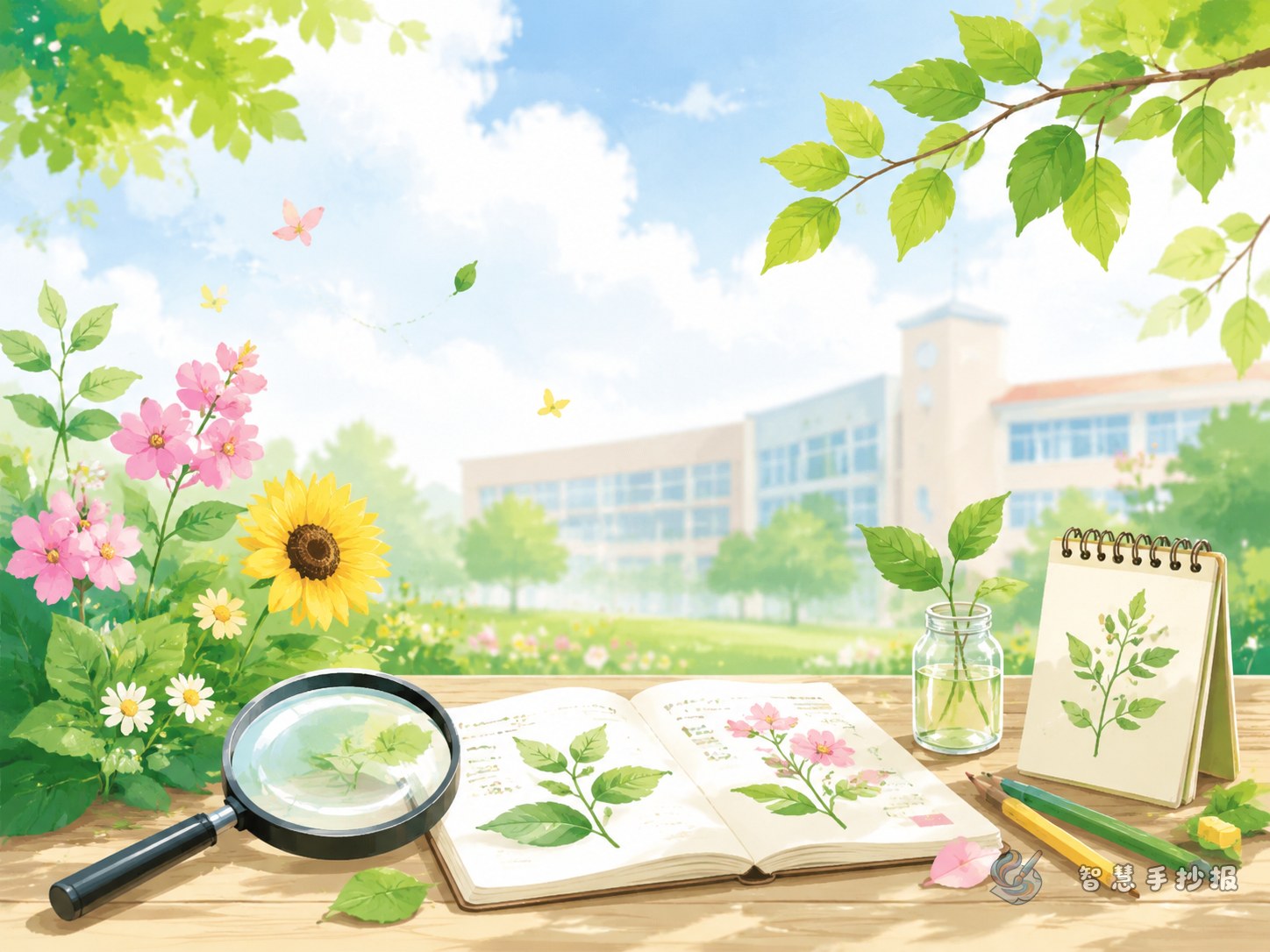
Choose a few familiar plants first
A campus plant observation handwritten newspaper does not need too many examples. Picking 2 to 4 familiar flowers or grasses is enough. Good choices include clover by the playground, roses near the school building, osmanthus in the garden, or magnolia along the path. This makes the work feel close to real school life and easier to decorate.
When choosing plants, focus on three points: easy to see every day, clear visual features, and noticeable seasonal change. That will make the page both informative and observation-based.
Useful sections for a student-friendly layout
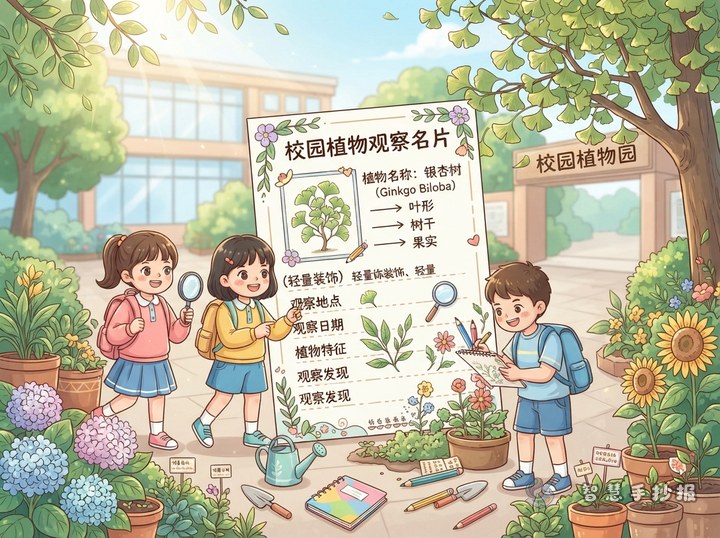
1. Plant profile cards
- Plant name
- Where it grows
- Color and shape
- Leafing or blooming season
2. What I noticed today
This section works well with short sentences, such as: The rose has many layers of petals and very bright colors. Clover grows close to the ground, and its small leaves look neat and fresh.
3. Changes over time
You can describe how the plant looks in sunshine, after rain, in spring, or in autumn. This helps the project feel like real observation instead of only basic introduction.
4. Protect our campus plants
Include simple ideas such as not stepping on grass, not picking flowers, giving young trees space to grow, and observing plants without damaging leaves.
Ready-to-use text ideas
Rose observation: Roses come in many colors and have layered petals. They often grow in school flowerbeds and are easy to notice when blooming.
Osmanthus observation: Osmanthus flowers are tiny and light yellow with a gentle fragrance. In autumn, their scent can often be noticed before the flowers are seen clearly.
Clover observation: Clover usually has three small leaflets and grows close to the ground. After rain, the leaves often look brighter and full of life.
Magnolia observation: Magnolia flowers are large and eye-catching when they open. Their upright branches make them a great spring observation subject on campus.
Keep the page simple and clear
You can divide the page into four parts: a big title at the top, plant profiles on the left, observation notes on the right, and plant facts plus protection tips at the bottom. If you have more space, add a small section called “My Favorite Campus Plant.”
For colors, green, light yellow, and soft pink work well with the theme. Make the title bold, keep the body text neat, and limit each paragraph to a few short lines for a clean student-friendly result.
Small details that improve the final work
- Add labels beside each plant, such as “Observation place: east side of the flowerbed.”
- Write the observation date to make it feel more authentic.
- Decorate corners with leaves, flowers, dew drops, or butterflies, but keep the text as the focus.
- If you need more content, add one sentence about how plants help the campus, such as beautifying the environment, cleaning the air, or bringing more life to the school.
If you already have your theme and text but want a faster way to organize the page, title style, and sections, you can continue creating it in the Zhihui Shouchaobao WeChat mini program.