Choose one real plant to observe
A good campus plant newspaper should feel close to everyday school life. Instead of introducing many kinds of plants at once, it is better to focus on one tree, one flower bed plant, or one shrub that students can actually see on campus.
- Trees near the teaching building: good for writing about trunk, crown, and fallen leaves
- Plants beside the playground: good for observing sunlight and growth
- Flower bed plants: good for flower color, leaf shape, and blooming time
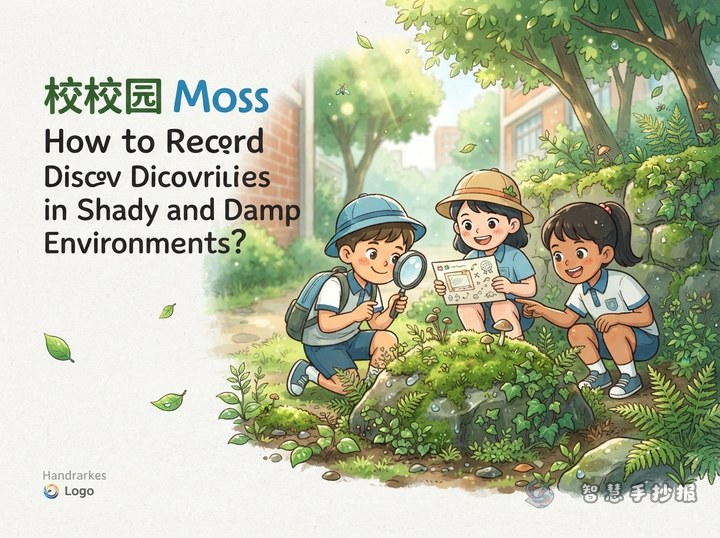
- Small grass or vines in corners: good for discussing vitality and adaptation
If you are not sure what to pick, a theme like “The Tree I Observed on Campus” is simple, natural, and easy to develop.
Plan the newspaper with clear sections
A strong handwritten newspaper needs both content and structure. For this theme, it works well to combine observation notes with simple science facts.
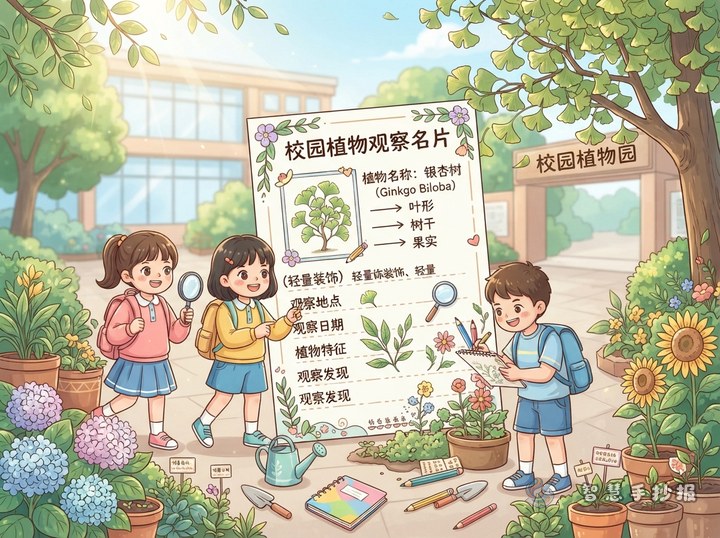
- Main title area: use a title such as “Trees on Our Campus” or “The Campus Tree I Observed.”
- Observation notes: include date, place, weather, and what you found.
- Plant profile: write the plant name, appearance, leaf shape, and color changes.
- Seasonal changes: explain how the plant looks in spring, summer, autumn, and winter.
- Protection tips: remind readers not to step on grass or break branches.
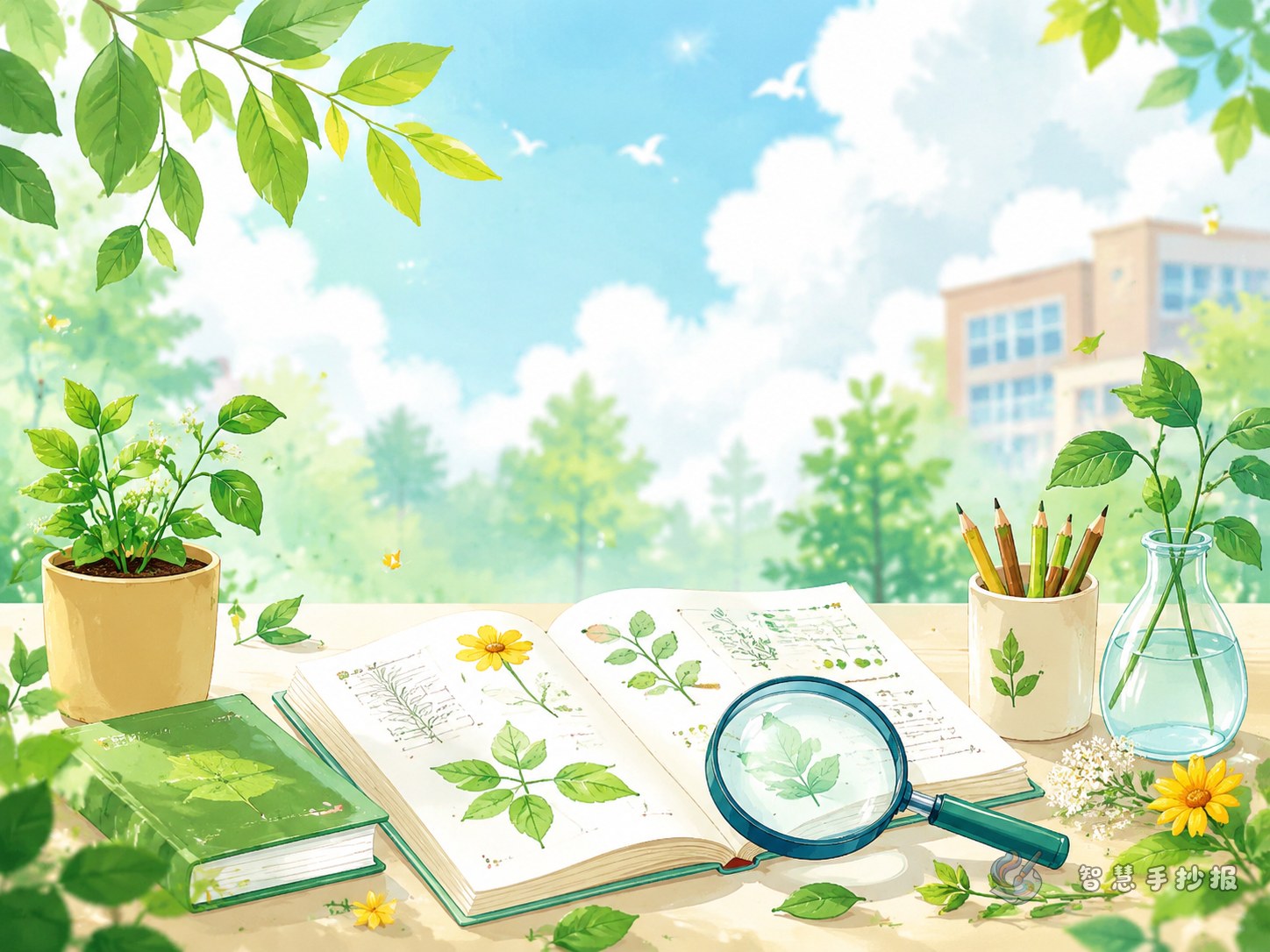
You can place the title in the center with sections around it, or make the page look like an observation notebook for a more interesting effect.
Useful sample text for the newspaper
Observation example
Today I observed a big tree on our campus. Its trunk was thick and the bark felt rough, with many fine lines on it. The leaves were green, and some edges were slightly curled. When the wind blew, the leaves moved gently as if waving to us.
Science facts example
Plant leaves do more than make the campus beautiful. They also carry out photosynthesis. During the day, leaves use sunlight to make food for the plant. Different plants have different leaf shapes, veins, and colors, which are all important clues for observation.
Protection message example
Campus plants are our green friends. We should care for every tree and flower, avoid breaking branches, stay off flower beds, and never throw rubbish around them. When everyone helps protect them, our school becomes more beautiful and full of life.
Easy design ideas that look lively
Plant-themed newspapers look best with natural decorations, but the page should still stay clean and readable.
- Use leaves, flowers, or branches around the title
- Add small icons like sprouts, pots, or magnifiers near section headings
- Decorate corners with falling leaves, fruits, butterflies, or water drops
- Highlight key words such as “leaf shape,” “bark,” and “seasonal changes” in bold
- Choose green, light yellow, and brown as the main color palette
If you want to finish faster, decide on the title and sections first, then fill each block with short observation sentences. If you want to continue improving the layout and combine more materials easily, you can also use the Zhihui Shouchao Bao WeChat mini program.
A simple ending for students
The ending does not need to be long. It should return to the ideas of observation and care. For example: Through this observation, I learned that campus plants are not only beautiful but also full of knowledge. I will keep observing the flowers and trees around me and become a student who loves and protects nature.
This kind of ending is short, clear, and helps complete the whole newspaper naturally.