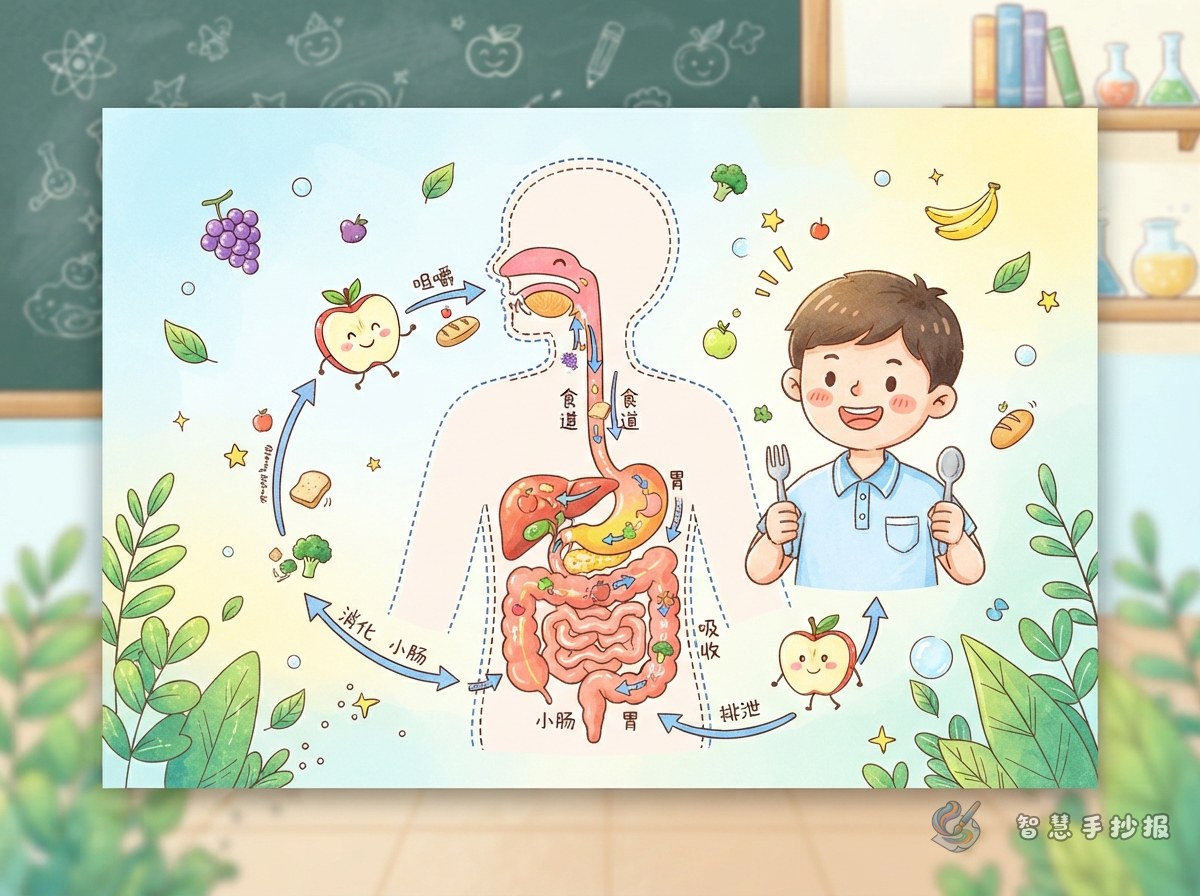
Draw a Travel Route for Food
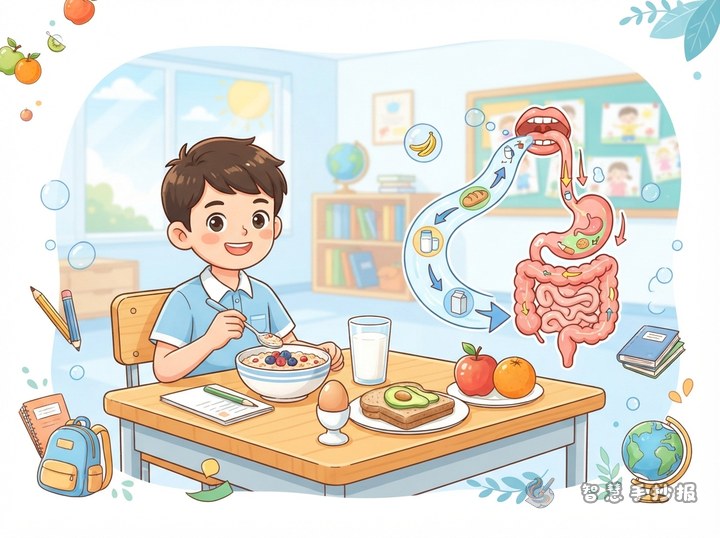
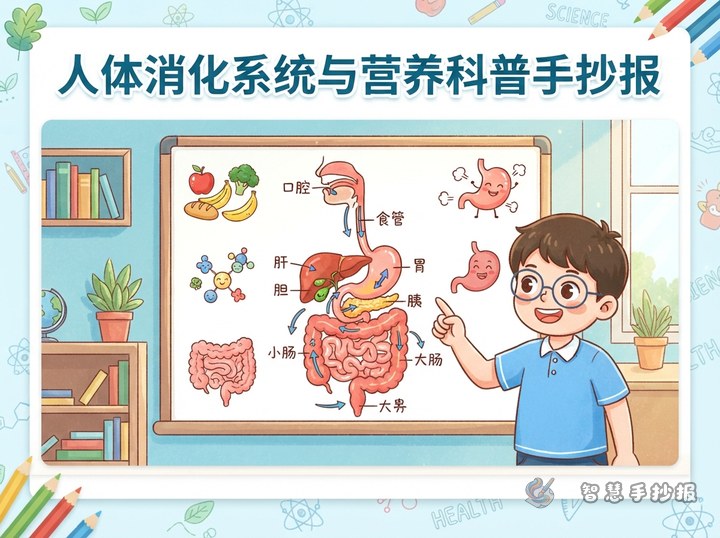
Build the poster around the idea of food taking a journey through the body. Use arrows to connect the mouth, throat and esophagus, stomach, small intestine, large intestine, and anus. A curved, colorful route can run through the center of the page, with simple icons such as teeth, a stomach, intestines, and water drops. This makes the science easier to follow and gives the poster a lively story.
A Relay Race Through the Digestive System
Stop One: The Mouth
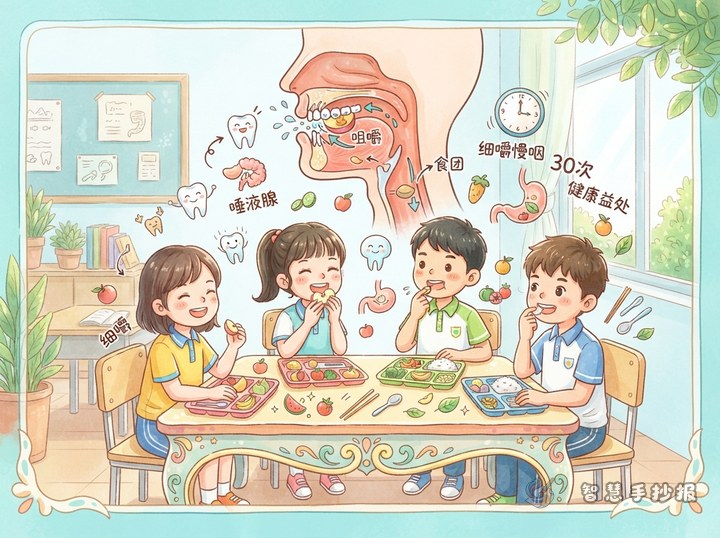
Teeth cut and grind food, while the tongue helps mix and swallow it. Saliva also begins the digestion of starch. A short sentence for the poster could be: “Chew well and let digestion begin with the first bite.”
Stop Two: The Stomach
The stomach acts like a muscular mixing bag. It stores food for a while and mixes it into a softer, more liquid form. You can draw a speech bubble saying, “Let me mix everything before the next stop!”
Stop Three: The Small Intestine
The small intestine is an important place for digestion and absorption. After food is broken down further, most nutrients are absorbed here. Make this the main focus of the poster and use a magnifying glass, tiny nutrient shapes, and arrows leading toward the blood to show how nutrients are transported.
Stop Four: The Large Intestine
The large intestine mainly absorbs leftover water and helps form and remove waste. A simple caption is enough: “Recover water and organize the body’s waste.”
Let Nutrients Ride the Body Express
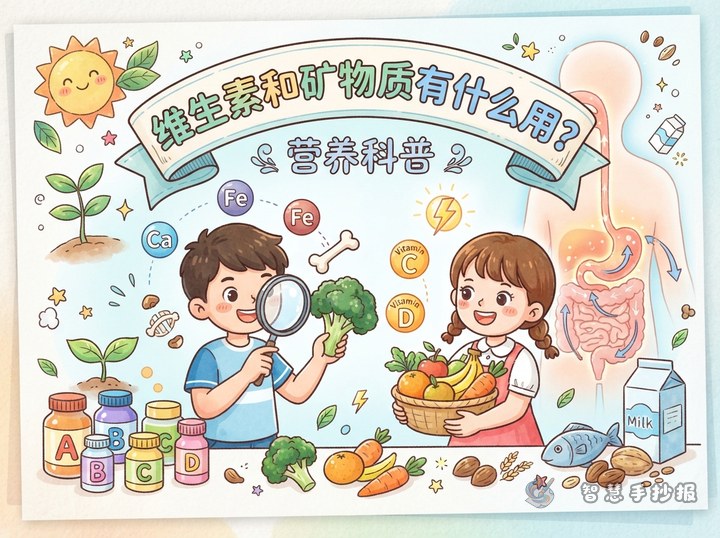
Add a “nutrient passengers” section beside the route. Use different colors to show that carbohydrates provide energy for activity, proteins support growth and tissue repair, fats store energy and help keep the body warm, vitamins and minerals support normal body functions, and water helps with transport, regulation, and waste removal.
Remind readers that food must be digested before its nutrients can be absorbed and used more easily. Instead of calling one food the only “best food,” use the idea of eating a variety of foods in sensible combinations.
Four Road Signs for Healthy Habits
- Eat regularly: Try to keep meals at fairly regular times.
- Chew slowly: Give the mouth enough time to break food down.
- Choose variety: Combine grains, vegetables, fruit, and protein foods sensibly.
- Drink water and stay active: These habits support a healthy daily routine.
Turn these ideas into four road signs or tickets below the digestive route. This creates a useful “science plus action” section.
Finish with a Digestive System Map
A horizontal or vertical map layout works well. Place the title and a short introduction at the top, the digestive route in the center, “nutrient passengers” on one side, and “healthy road signs” on the other. A small section at the bottom can be titled “How I Take Care of My Digestive System.” Use orange, green, and blue for the title, keep organ drawings simple, and write in short sentences so the page does not look crowded.
After sketching the content, you can open the WeChat mini program 智慧手抄报 to continue arranging sections and adjusting the layout, making the food travel map clearer and easier to display.