Sort Out Four Sky Words First
These four words get mixed up all the time. A small block of word cards at the top of the page fixes that, and the rest of the poster becomes much easier to plan.
- Meteor: a speck of dust or rock from space that burns up in the air and leaves a bright streak in the night sky.
- Meteor shower: many meteors appearing within a short time, seeming to stream out from one area of the sky.
- Meteorite: the piece that does not burn up completely and lands on the ground.
- Comet: a body of ice, dust and rock that grows a glowing coma and a long tail as it comes closer to the Sun.
Four side-by-side cards save space and make the differences obvious at a glance.
What to Put in the Comet Section
A comet is like a dirty snowball
The solid centre of a comet is called the nucleus, made mostly of ice and dust. Far from the Sun it is cold and faint, almost impossible to see with the naked eye.
The closer it gets, the longer the tail
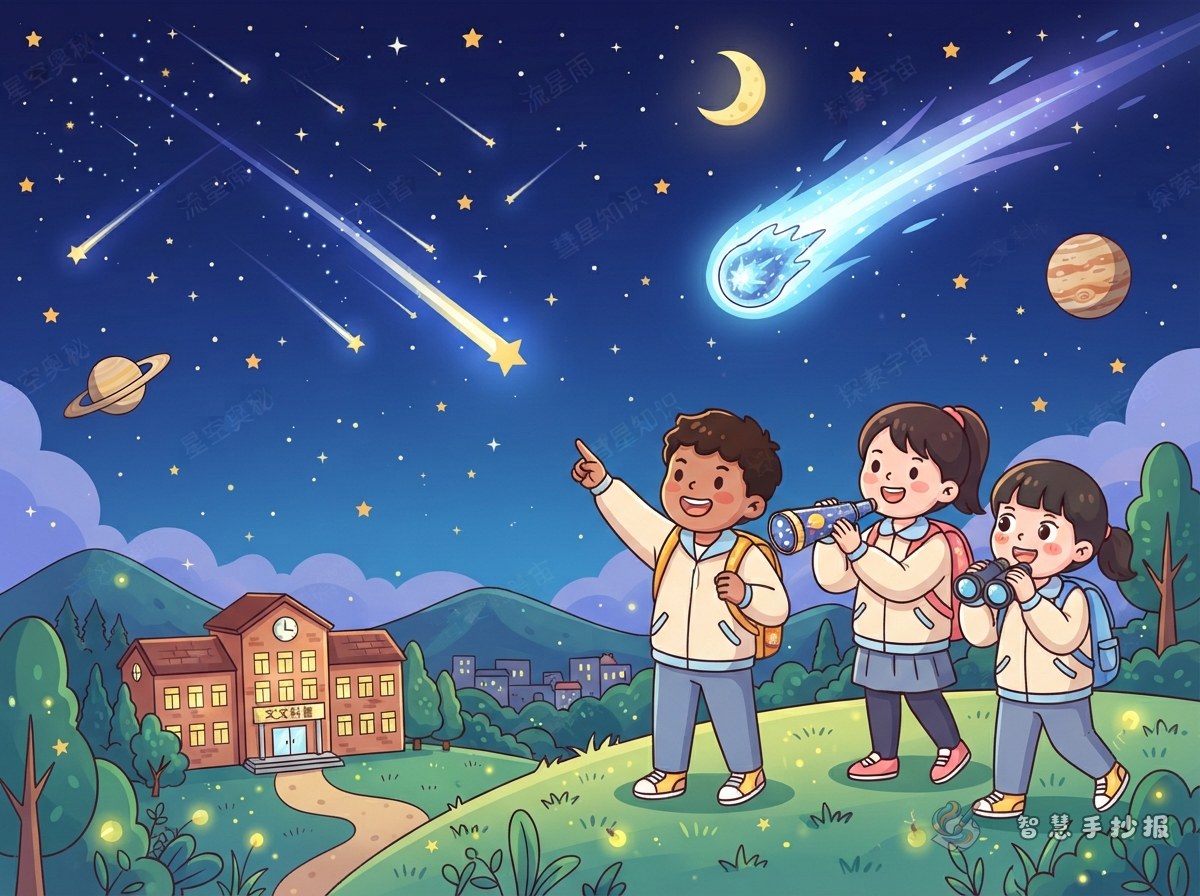
As a comet approaches the Sun, its ice turns into gas and forms a glowing cloud called the coma. The solar wind pushes that gas and dust outward, creating the tail. Draw a small bright nucleus, ring it with a soft glow, then sweep a long curved tail across the page.
Some comets come back
Halley's Comet returns about every 76 years. It last appeared in 1986 and is expected again in 2061. You can add a line next to it: the sky you are looking at tonight is also waiting for a star that returns decades later.
The tail is not always behind
A comet's tail does not simply trail behind it. It is pushed away by the Sun, which is the detail most people get wrong when they draw it.
How a Meteor Shower Really Happens
Most meteor showers are not one-night events. Earth crosses a trail of dust left behind by a comet or an asteroid at roughly the same time each year, and those particles burn up in the atmosphere as a group.
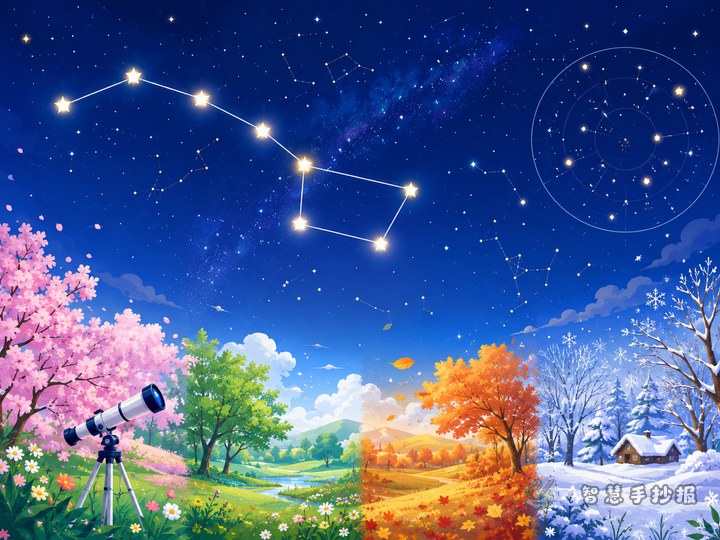
- Meteor showers are named after the constellation their radiant point sits in, such as the Perseids, Geminids and Leonids.
- No telescope is needed. Find a dark spot with a wide open view and simply wait.
- The constellation in the name marks a direction, not the place the meteors actually come from.
This section works well in the lower middle of the page, with a dotted line showing Earth crossing the dust trail.
Laying Out the Page So It Looks Like a Night Sky
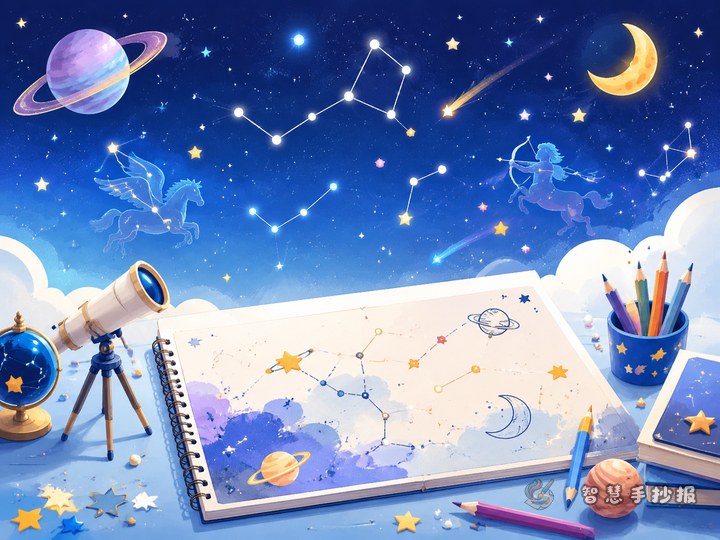
The biggest risk with a space poster is a page full of star stickers with no focus. Divide it into three levels instead:
- Top: leave a wide band of dark sky and write the title in white or pale yellow, with a slight glow effect.
- Middle: place the comet diagram on the left and the meteor shower diagram on the right, joined by a single arrow.
- Bottom: split the space into two or three text columns for word cards, viewing tips and one favourite line about the stars.
Deep blue and purple work as the base, with white, pale yellow and a little orange-red as accents. Keep the stars scattered rather than dense, because empty space is what makes a night sky look real.
Blocks You Can Copy Straight Onto the Page
- One-line fact: a comet is a dirty snowball of ice and dust that shines brighter near the Sun.
- Viewing tip: you do not need a telescope for a meteor shower, just give your eyes ten minutes to adjust to the dark.
- Sky quote: every meteor is a short line the universe writes across the night.
- Mini task: look up this year's meteor showers and list their names and months in a small table.
If drawing the title lettering, borders and illustrations feels like a lot of work, open a starry template in the Smart Handwritten Newspaper WeChat mini program, set the layout first, then fill in the text you have already prepared.