Choose a Smaller Theme for a Better Result
Many students try to include the sun, moon, planets, rockets, and galaxies all on one page. That often makes the project feel crowded. A better choice is to focus on the Big Dipper and seasonal night skies, which gives the poster both knowledge value and strong visual appeal.
This topic is especially suitable for school handwritten newspapers because it combines sky knowledge with real observation. It is easier to read, easier to draw, and easier to organize on the page.
Useful Sections to Include
Section 1: What Is the Big Dipper?
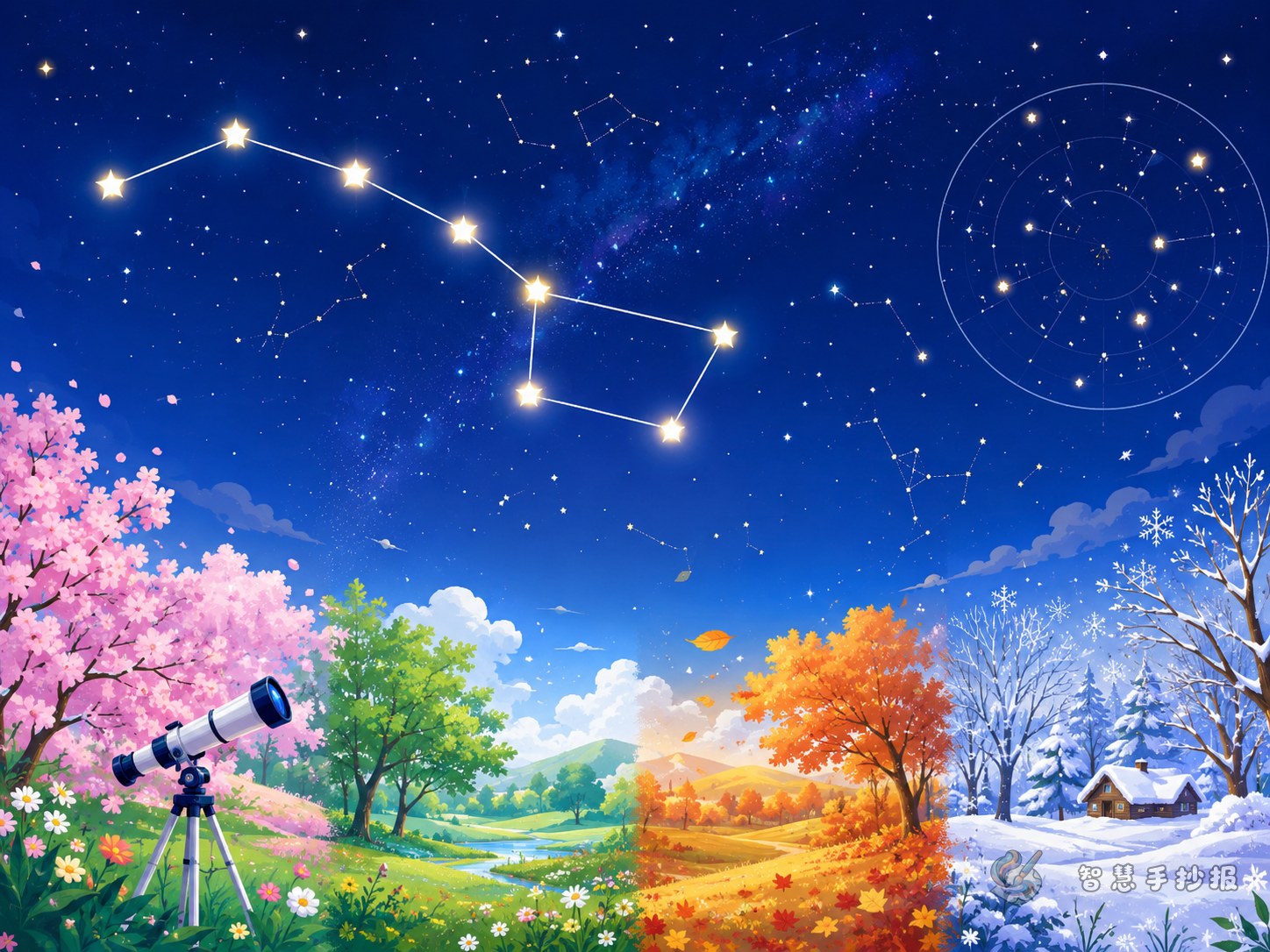
You can explain that the Big Dipper is a group of seven bright stars arranged like a spoon. It is one of the easiest star patterns to recognize in the night sky and is often used as a first step in learning astronomy.
Section 2: How to Find Polaris
Write a simple explanation: if you extend a line from the two stars at the edge of the Dipper’s bowl, you can locate Polaris. Adding an arrow in the drawing makes this idea easy to understand.
Section 3: What the Sky Looks Like in Different Seasons
- Spring: The Big Dipper is a great seasonal highlight.
- Summer: The Milky Way often becomes the most magical part of the page.
- Autumn: You can introduce a memorable pattern such as Pegasus.
- Winter: Orion is bright, clear, and student-friendly.
Section 4: Simple Stargazing Tips
Students can write that the best time to observe stars is on a clear night in a place with less artificial light. Warm clothing and adult company are also good practical reminders.
Short Text Materials Ready to Use
1. The Big Dipper looks like a spoon and is one of the best-known star patterns.
2. People often use the Big Dipper to help find Polaris and identify direction.
3. The night sky changes with the seasons, so different stars stand out at different times of year.
4. In summer, the Milky Way can appear like a faint glowing river across the sky.
5. Stargazing helps us learn science and grow our curiosity about the universe.
6. Looking up at the stars feels like opening a natural textbook with no edges.
Try a Star-Map Style Layout
This topic does not need a standard block-by-block layout. You can design the page like a sky map. Put the main title near the top, draw the Big Dipper on one side with lines connecting the stars, and place the seasonal sections around it like guide cards.
- Use white or pale yellow for the main title to create a glowing effect.
- Choose light blue, silver, or soft purple for subheadings.
- Decorate empty spaces with small stars, meteors, telescopes, or cloud outlines.
- Do not fill every corner too heavily; open space helps the sky theme breathe.
Simple Tips for Students and Families
If the page feels too full, keep only four sections and write two or three key sentences in each one. Then add simple drawings instead of more text. This saves time and improves readability.
Parents and teachers can guide children to sketch the star lines before writing the text, so the layout stays balanced. If you want to keep adjusting the design, colors, or wording, you can continue in the Smart Handwritten Newspaper WeChat mini program.