Build the page around a simple moon theme
A moon-themed handwritten newspaper works best when the topic is easy to understand. Instead of filling the page with difficult facts, focus on what the Moon looks like, why it changes shape, how people explore it, and a few fun facts. This makes the project readable and lively for elementary students.
You can choose a title such as “All About the Moon,” “A Closer Look at the Moon,” or “Why Does the Moon Change Shape?” Add small drawings like stars, a crescent moon, or a rocket near the heading to make the page more attractive.
Best content blocks to include
1. Moon profile
- The Moon is Earth’s natural satellite.
- We often see it in the night sky.
- The Moon does not make its own light; it reflects sunlight.
- Its surface has craters, plains, and dust.
2. Moon phases
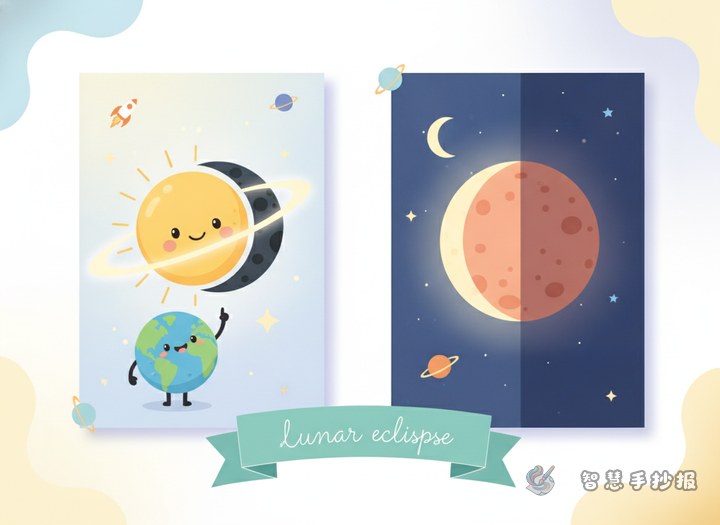
Explain in simple words that the Moon seems to change shape because the positions of the Moon, Earth, and Sun keep changing. You can mention new moon, crescent moon, full moon, and half moon. This section is even better with small sketches.
3. Fun facts about the Moon
- Gravity on the Moon is much weaker than on Earth.
- The Moon does not have breathable air like Earth.
- Daytime and nighttime on the Moon are both very long.
- It is one of the most studied objects in space.
4. Moon exploration
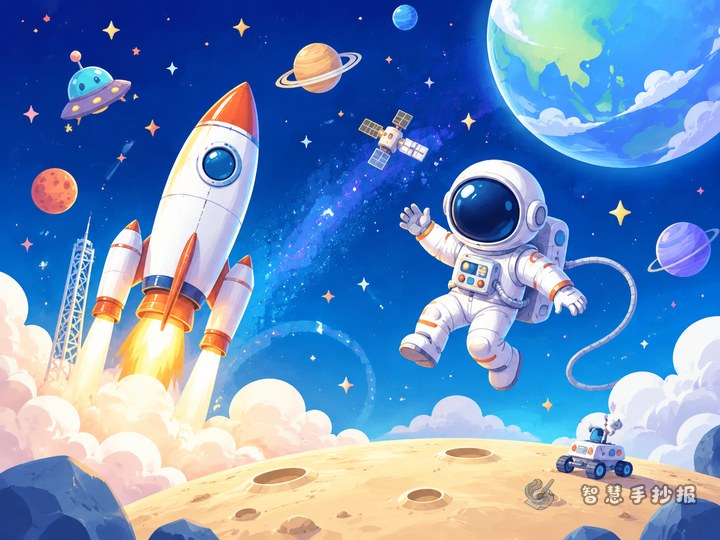
Keep this section short and clear. You can mention how people observed the Moon, sent probes to study it, and carried out moon missions. A handwritten newspaper should use short sentences instead of long encyclopedia-style paragraphs.
A page layout that looks neat
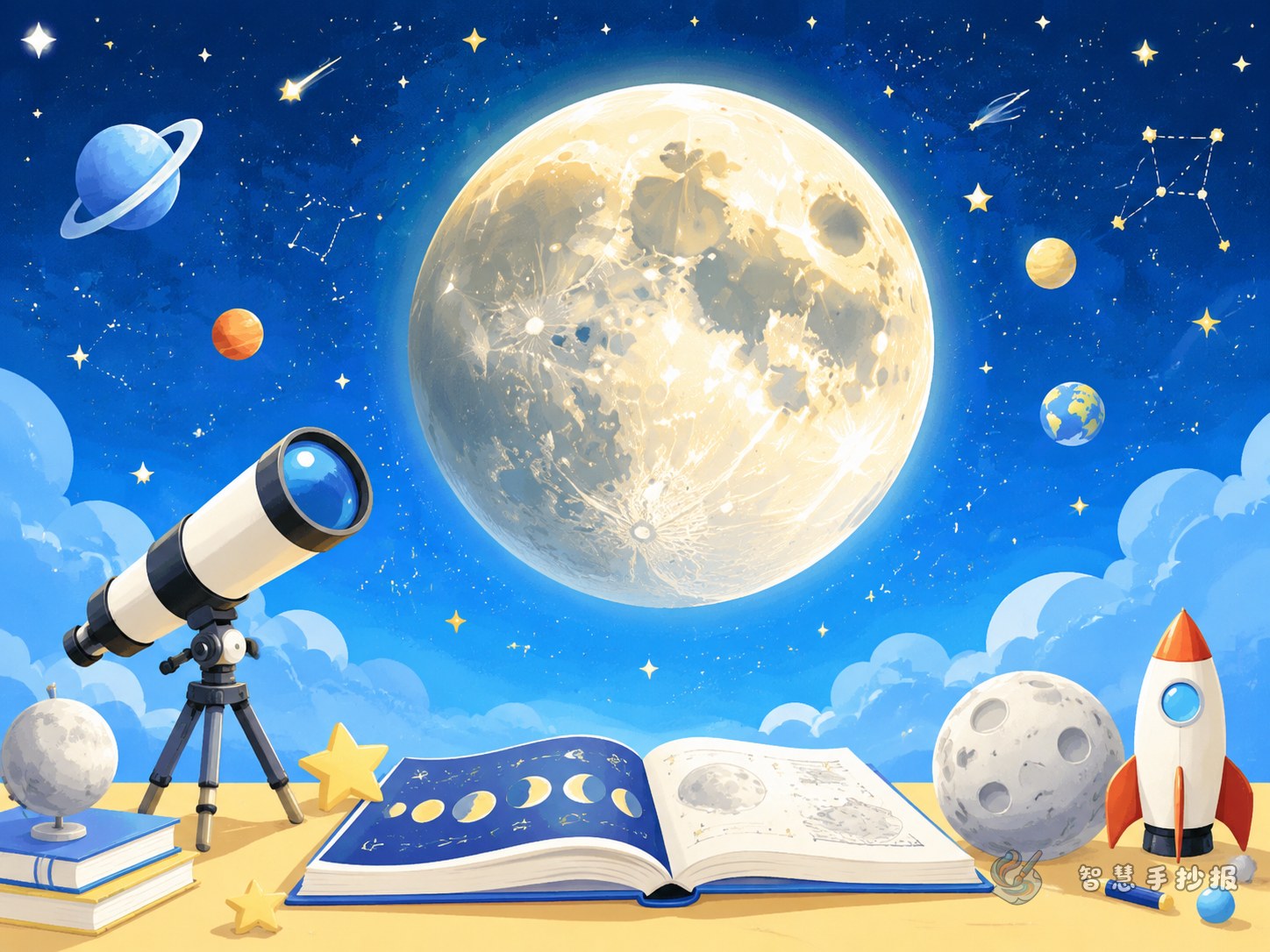
A moon topic fits a center-image layout very well. Draw a large moon in the middle, then place small sections around it like a starry sky poster.
- Top: title and subtitle.
- Center: a moon drawing or moon phase chart.
- Left side: moon profile.
- Right side: fun facts or exploration notes.
- Bottom: a short reflection, quiz, or summary sentence.
For younger students, use fewer words and more shaped text boxes such as circles, clouds, or rockets so the page is easier to write and read.
Small sections that make the work more interesting
- Why does the Moon seem to follow me?
- Quick quiz: Does the Moon make its own light?
- Observation note: What shape of moon did I see?
- Word bank: crater, moonlight, night sky, orbit, satellite.
- Closing line: Exploring the Moon helps us learn about our closest neighbor in space.
These details help the page feel like a student project rather than a copied fact sheet.
Colors and decoration tips
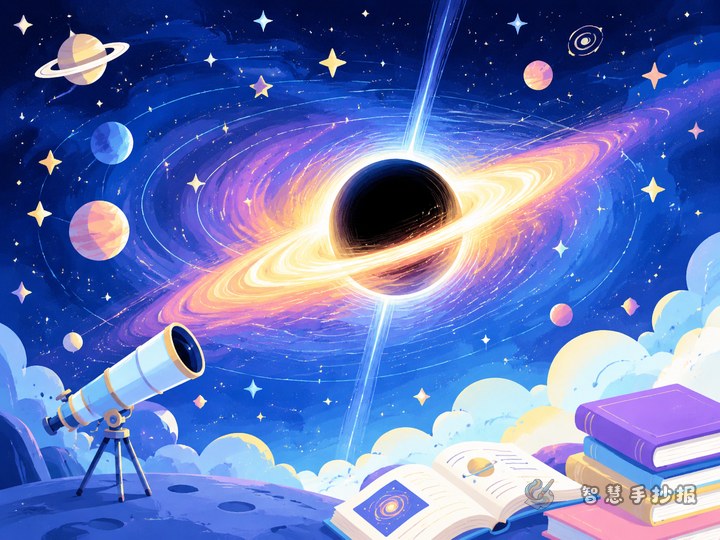
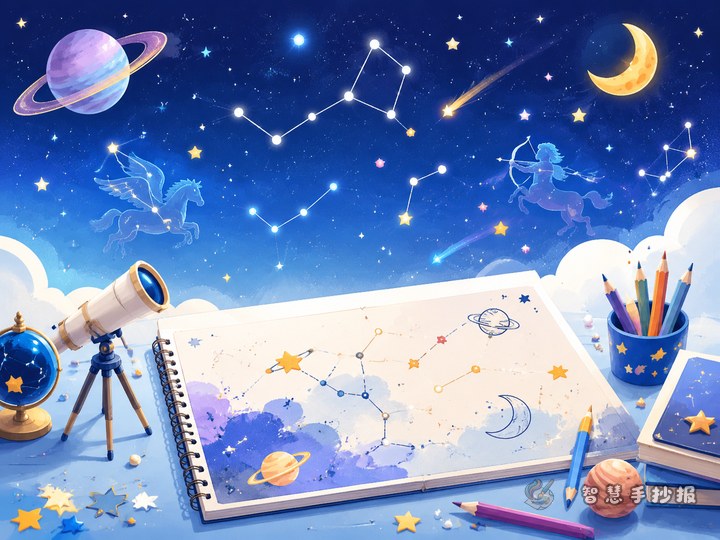
Use dark blue, sky blue, white, and silver gray as the main colors. Yellow can be added for stars or glowing highlights. Keep decorations light and do not cover the writing. Small drawings of stars, astronauts, telescopes, or rockets are enough.
Try to keep each paragraph short. Highlight key words such as natural satellite, moon phases, and craters so the main points stand out clearly.
Start with a simple outline, then refine the page
If you do not know where to begin, first list four main parts: moon profile, moon phases, fun facts, and moon exploration. Write three to five short sentences for each part and add one main illustration. That is already enough for a complete moon handwritten newspaper. After organizing the text, you can also continue designing in the Zhihui Shouchaobao WeChat mini program to improve the layout and polish the final look.