Start with the real focus of the page
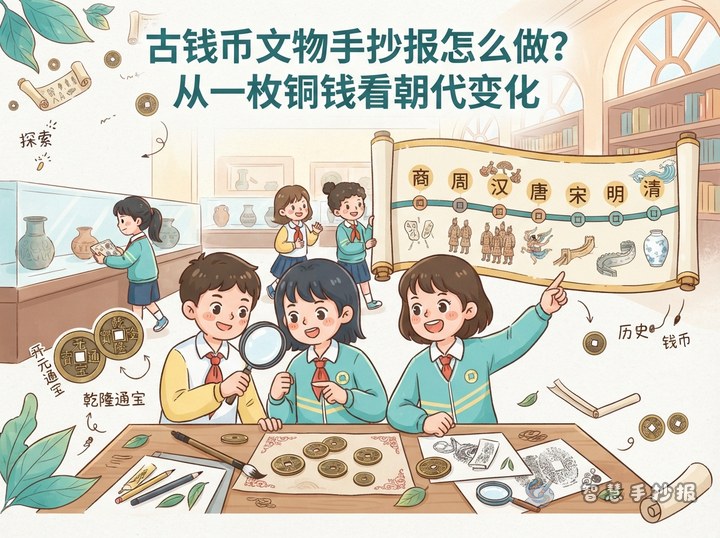
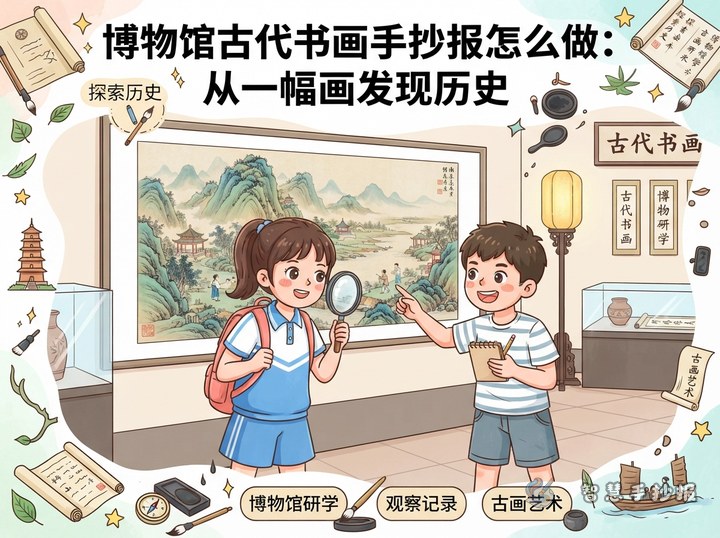
A museum study tour newspaper should do more than introduce a museum. It should show observation, learning, reflection, and discovery in one page. Before writing, choose a clear angle such as “What I learned in the museum,” “A meaningful study trip,” or “Learning history through artifacts.” This keeps the content focused and easier to design.
For elementary students, a simple plan works well: What did I see? What did I learn? What did I like best? What should I remember next time?
Section ideas that are easy to use
Section 1: Study tour mission card
Write the theme, the place you visited, and the purpose of the trip in a few short lines. For example: Visit a museum, learn about cultural relics, and understand why they should be protected.
Section 2: My visit route
Show the visit in order, such as “Entrance hall, bronze gallery, ceramics gallery, painting gallery, activity area.” Short phrases are enough and fit a newspaper layout well.
Section 3: Artifacts that caught my attention
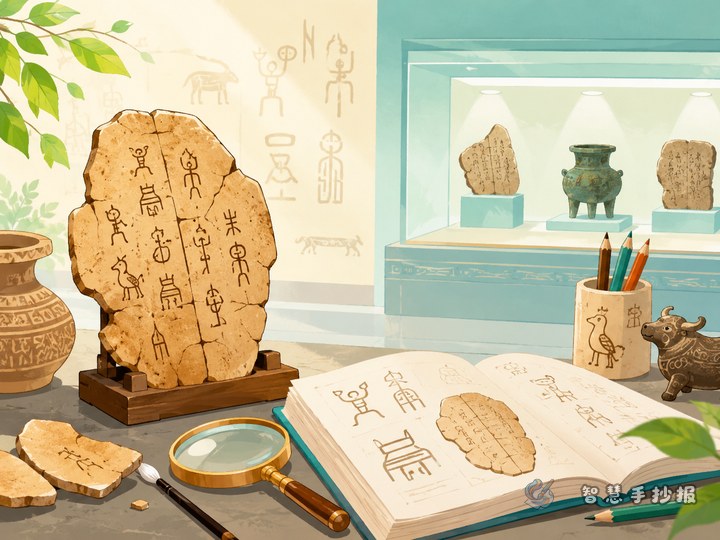
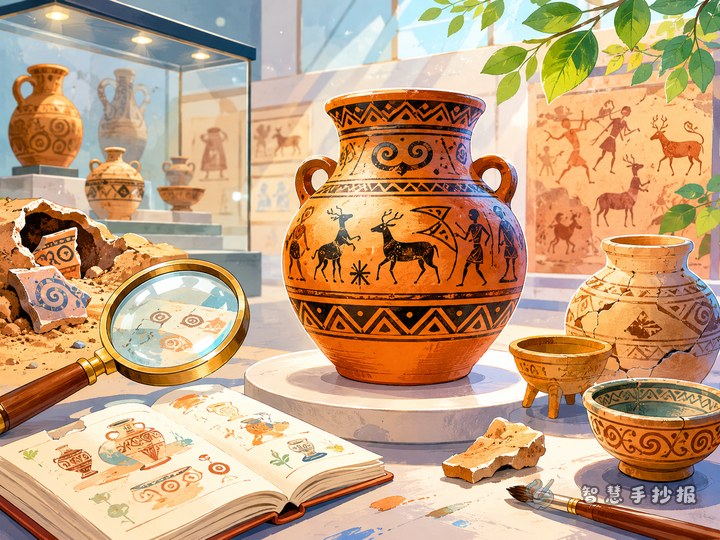
Choose one to three artifacts and describe each with a few lines about its name, period, use, or special features. A smaller number of well-written examples is better than too much scattered information.
Section 4: Quick facts about cultural relics
- Cultural relics are important witnesses of history and civilization.
- Many artifacts are fragile and should never be touched casually.
- Museums collect, protect, research, and display historical objects.
Section 5: What I learned from the trip
This part gives the page a true study-tour feeling. Students can write about what they learned, such as how to behave in a museum, why flash photography may be restricted, and why protecting artifacts matters.
Ready-to-use text materials
These short lines fit well in a handwritten newspaper:
- A museum is like an open history classroom.
- Every artifact carries a story from the past.
- Respectful visiting is the first step in protecting relics.
- Protecting cultural relics means protecting our shared memory.
- A study tour is not just looking around, but thinking and learning carefully.
You can also add short explanations:
- Bronze objects often reflect ancient rituals, craftsmanship, and daily life.
- Ceramics can show changes in technology, art, and living habits over time.
- Paintings and calligraphy reveal both artistic beauty and cultural ideas.
How to make the layout look better
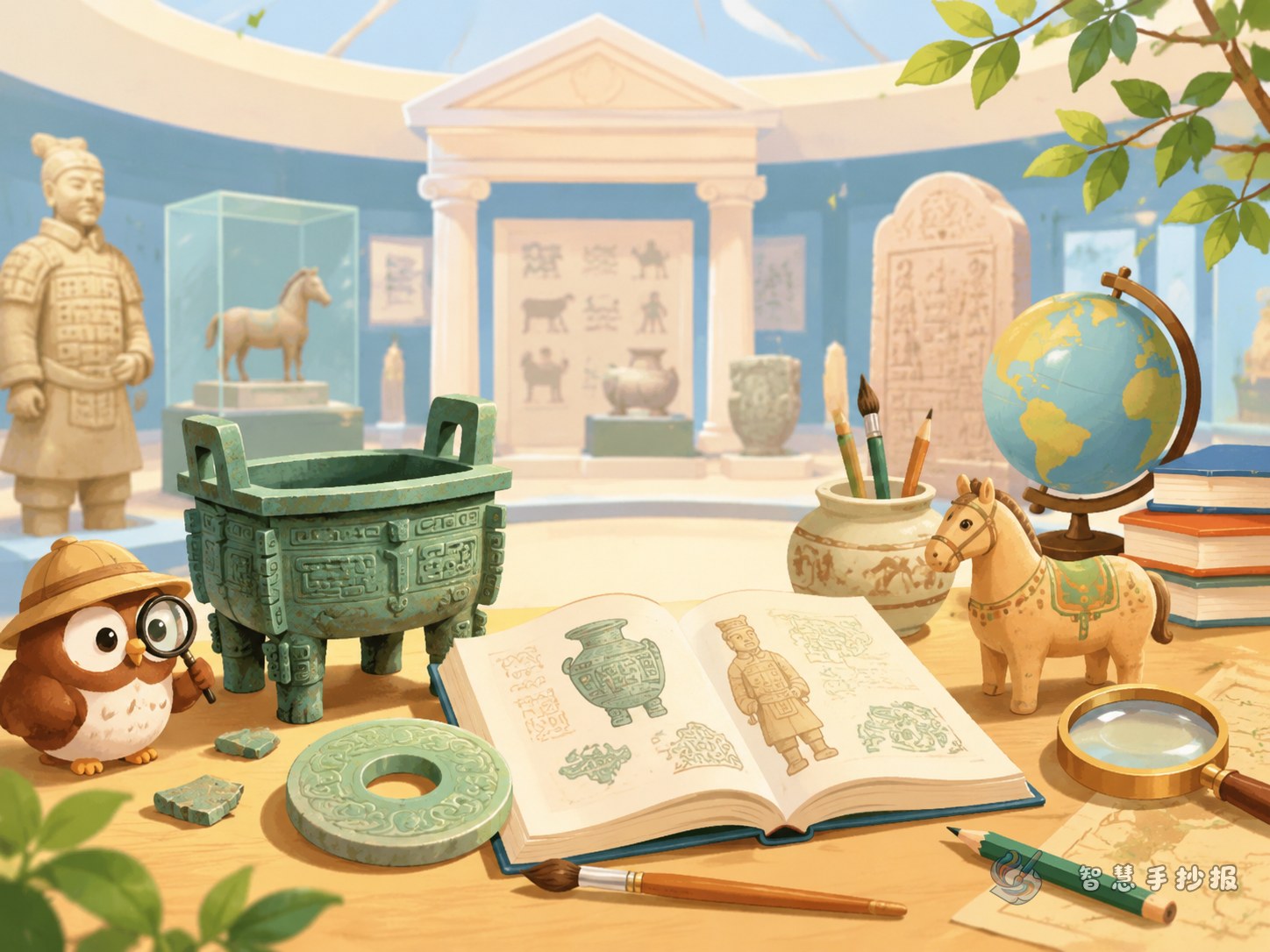
This topic works very well as a page that feels like a travel study record. Put the title in the center or top area, then add a simple drawing of a representative artifact nearby. Arrange the rest of the page into clear sections around it.
- Top area: Main title and a short introduction.
- Left side: Visit route and learning goals.
- Right side: Key artifact notes and fact cards.
- Bottom area: Museum manners and personal reflections.
Color choices such as brown, beige, dark red, or deep green can create a museum feeling. Keep the page bright enough for children to read easily. Small decorative elements like stamps, tickets, scroll lines, or display-case borders can also help.
How to avoid a boring fact-only page
Many students turn this topic into a long list of facts. A better way is to turn knowledge into personal discovery. Instead of writing a long background paragraph, say something like “I noticed the bronze patterns were very detailed, which shows how skilled ancient craftsmen were.” This sounds more natural and works better for a handwritten newspaper.
If there is extra space, add mini sections like “Three new words I learned,” “A question I would ask the guide,” or “How I can help protect relics.” These details make the page richer and more original.
Final checklist before finishing
- Does the title clearly show the museum study tour theme?
- Does the page include both visit experience and artifact knowledge?
- Are the paragraphs short and easy to read?
- Are the key ideas highlighted clearly?
- Does the whole page look neat and student-friendly?
If you already have a topic and want more help with layout, section planning, or text ideas, you can continue organizing your design in the Zhihui Shouchaobao WeChat mini program.