Turn the topic into a night sky that tells stories
A constellation mythology handwritten newspaper becomes more attractive when it feels like a sky full of stories instead of a page of copied facts. A simple way to begin is to choose 2 to 4 well-known constellations, such as Orion, Cygnus, Cassiopeia, or Leo, and build the page around three questions: Who is it? What is the myth? How can we find it in the sky?
This approach gives the page both focus and personality. A title like “Stories Hidden in the Stars” or “Constellations That Shine With Legends” can make the project feel lively and student-friendly.
Mix mythology with real astronomy facts
Many students make the mistake of filling the whole page with legends only. A stronger handwritten newspaper combines storytelling with science.
- Myth corner: Write a short and simple version of the legend behind a constellation.
- How to spot it: Describe its shape, a few bright stars, or the season when it is easier to observe.
- Sky-watching tips: Mention safe observation, clear nights, and places with less bright light.
- Mini fact card: Explain that constellations are patterns people use to divide and recognize the sky.
This makes the work more balanced, educational, and suitable for class display.
Try a more playful section plan
If you are not sure how to divide the content, this structure works well:
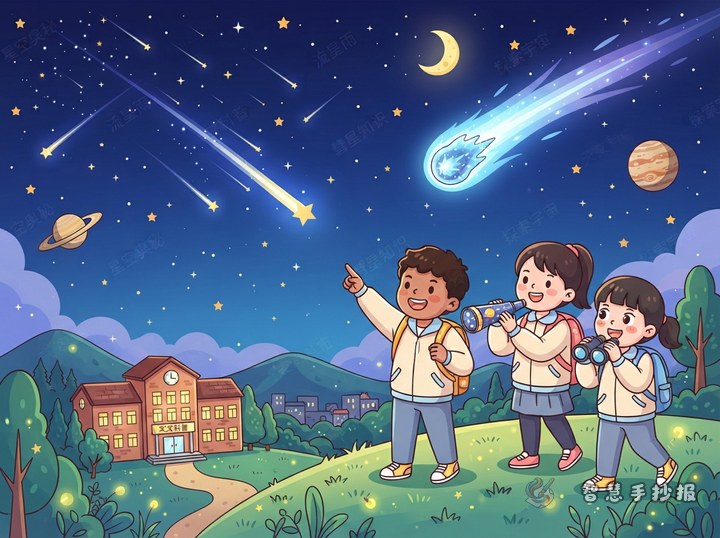
- Main title area: Put the title at the top and decorate it with stars, a moon, or a comet.
- Legend stage: Introduce two constellation myths in short paragraphs.
- Find it tonight: Add simple clues about shape, season, or direction.
- Space fact box: Include a few easy facts, such as the idea that the sky is divided into 88 constellations.
- My favorite constellation: Add a small personal reflection to make the page warmer and more original.
This combination gives the handwritten newspaper story, knowledge, and student voice at the same time.
Design the page like a sky map
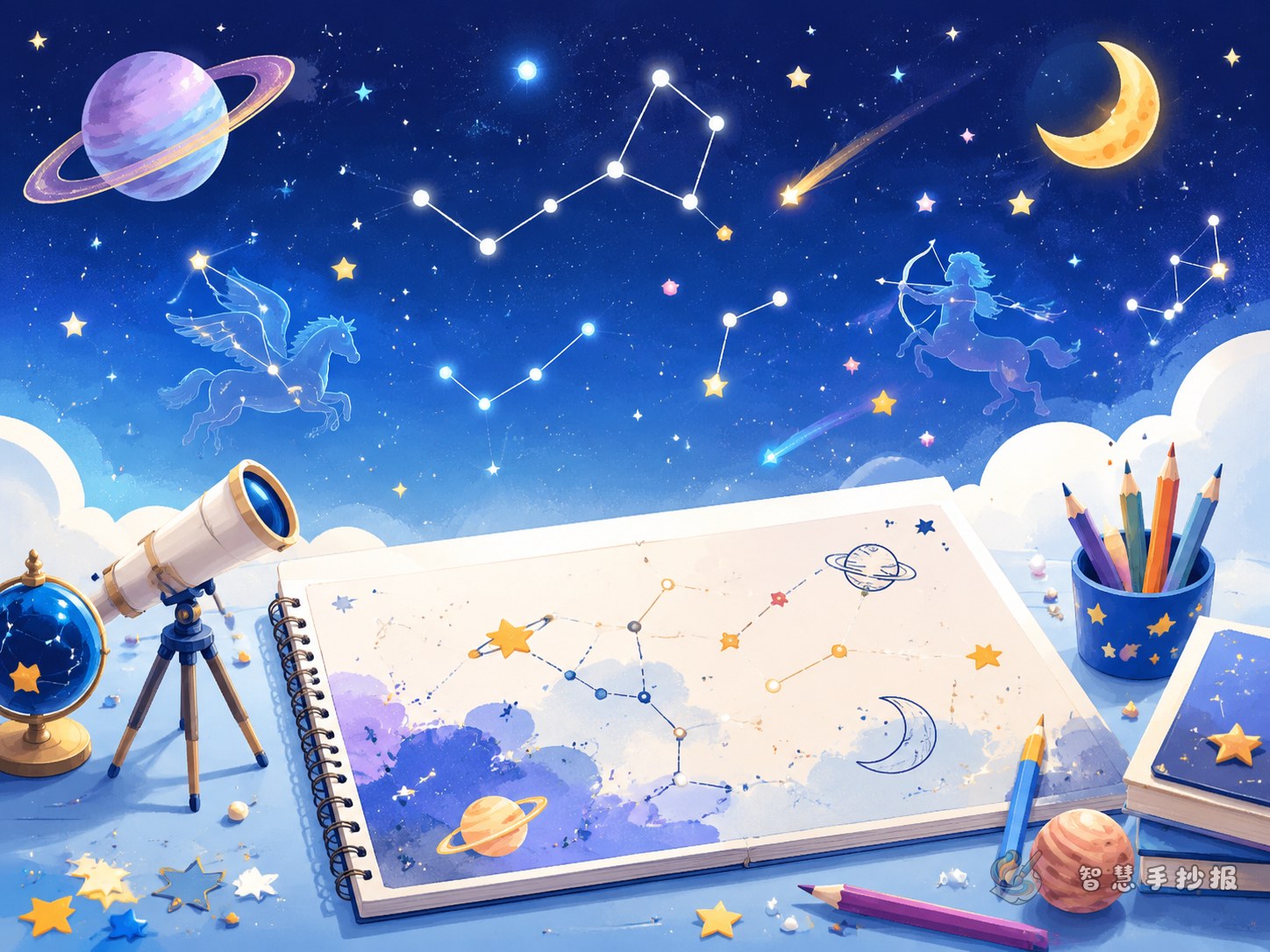
This theme works beautifully with a night-sky layout. You do not need to force everything into strict boxes. As long as the page has a clear order, it can look creative and neat.
- Place the title across the top center.
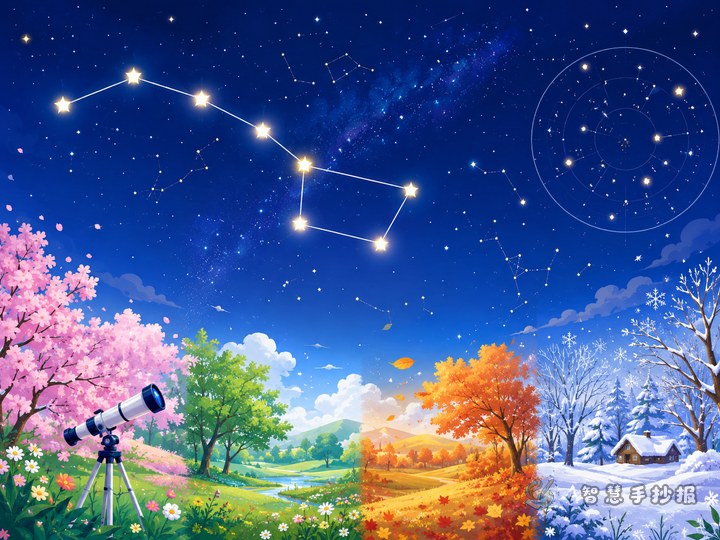
- Use dark blue, purple, white, and soft yellow for a sky-like feeling.
- Put constellation stories on two sides and connect sections with star lines.
- Use corners for tips, questions, or mini facts.
- Decorate with crescent moons, telescopes, clouds, or tiny stars.
If a full dark background feels difficult, use white paper with blue and purple accents. The goal is to suggest the night sky without making the page messy.
Short sentences students can use directly
These simple lines fit well in a handwritten newspaper:
- Constellations are patterns people imagined to help recognize the stars in the sky.
- Different seasons bring different constellations into view.
- Many constellation names come from old myths and legends.
- Watching the sky is easier on a clear night away from strong city lights.
- Learning constellations helps us enjoy both stories and science.
You can also end with a personal sentence such as “The night sky feels like a glowing book of stories.” That kind of detail makes the work feel more vivid.
Keep the final work clear and easy to read
The biggest challenge with this topic is trying to include too much. Write a simple outline first, divide the page into sections, and keep each block short. Leave space for drawings and borders. After finishing the basic version, students can continue improving their layout ideas in the WeChat mini program and explore more ways to arrange titles, star-themed borders, and content blocks for a polished handwritten newspaper.