Turn the Poster into a Small Chinese Music Stage
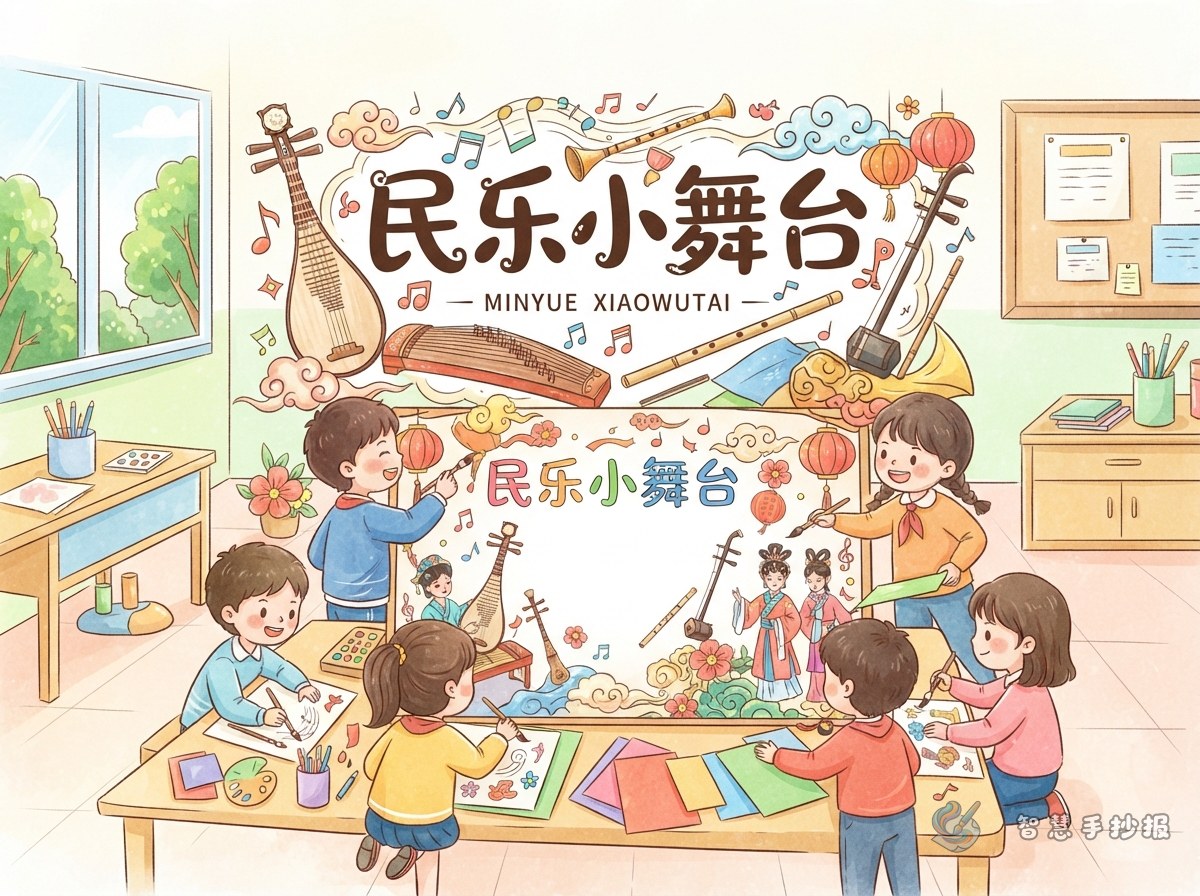
This topic works well for students who do not want to make a simple list of instruments. Imagine the whole handwritten poster as a small traditional Chinese music concert. The center can be a stage, while the sides can show a program list, instrument cards, sound descriptions, and short cultural notes.
Possible main titles include A Small Chinese Music Stage, Listen to Traditional Chinese Instruments, or A Concert of Chinese Music. Around the title, students can draw lanterns, clouds, musical notes, curtains, or scroll-shaped borders to make the theme clear at first sight.
Instrument Roles to Place on the Stage
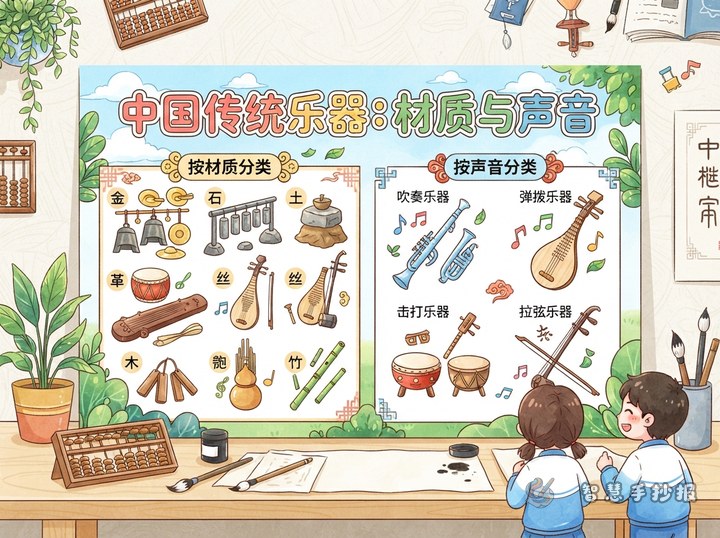
Choose four to six representative instruments instead of trying to include every instrument. For each one, write one short feature and add a simple drawing.
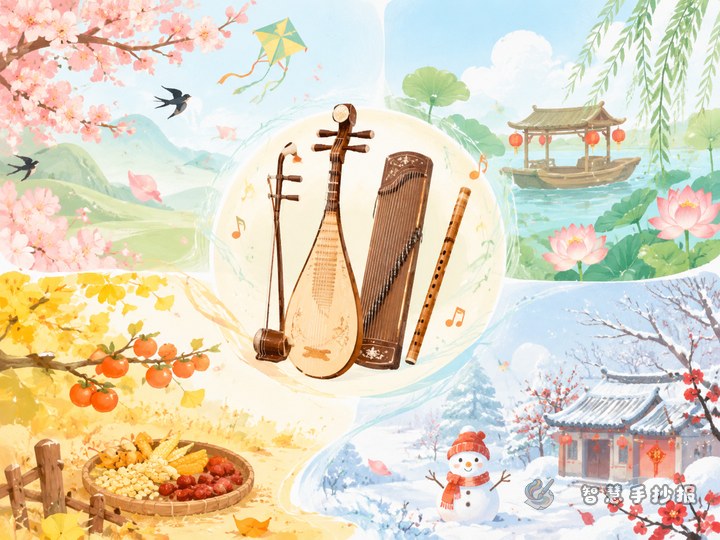
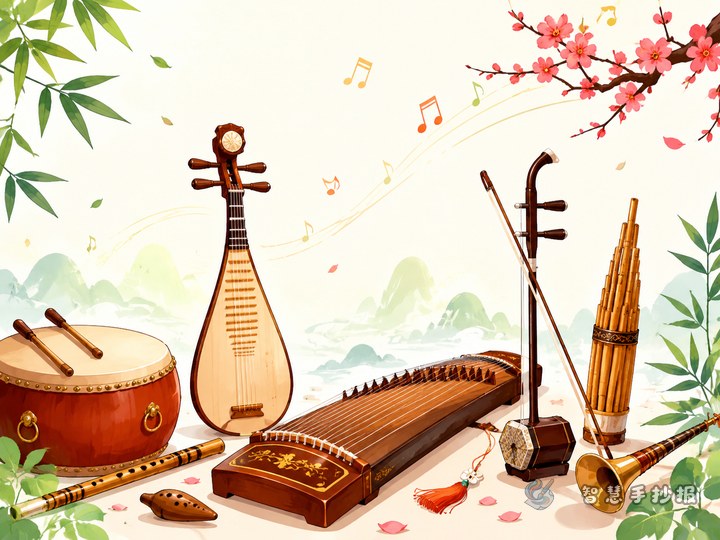
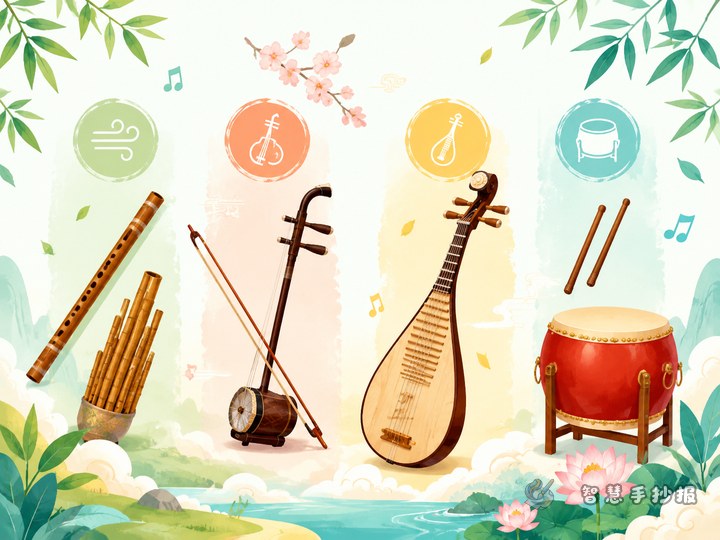
- Guzheng: Its sound is bright and flowing, often reminding people of streams, mountains, and classical scenes.
- Pipa: It has a flexible and lively sound, suitable for cheerful, powerful, or delicate melodies.
- Erhu: Its tone is gentle and expressive, often used to show deep feelings.
- Dizi: This bamboo flute sounds clear and fresh, like wind, birdsong, or spring scenery.
- Drum: Its strong rhythm can create a festive atmosphere and is often used in celebrations and folk performances.
Short Texts Students Can Use
Opening Note
Traditional Chinese instruments are a beautiful part of Chinese culture. Some sound bright, some sound gentle, and some bring lively rhythms. Drawing them on a handwritten poster is like opening a small stage full of music and culture.
Instrument Fact Box
Traditional instruments can play melodies, express emotions, and describe scenes such as mountains, rivers, festivals, and stories. Learning their names, shapes, and sounds helps us understand the beauty of Chinese music.
My Feeling
I like traditional Chinese instruments because their sounds create pictures in my mind. The guzheng sounds like flowing water, drums feel like a festival, and the dizi sounds like spring wind across the fields.
Layout Ideas for a Concert-Like Poster
- Center stage: Draw a semicircle stage and place small illustrations of the guzheng, pipa, erhu, dizi, and drum on it.
- Program list on the left: Use creative section names such as “Mountain and Stream Melody” or “Spring Flute Tune.”
- Instrument cards on the right: Each card can include the instrument name, its sound feature, and one cultural note.
- Bottom interaction area: Add small boxes such as “The instrument I want to hear most” or “The instrument pattern I can draw.”
Colors and Decorative Details
Good colors for this topic include red, gold, beige, blue-green, and light blue. Red and gold feel festive, beige looks like rice paper, and blue-green gives a classical touch. Decorations can include notes, cloud patterns, bamboo leaves, fans, scrolls, and small lanterns.
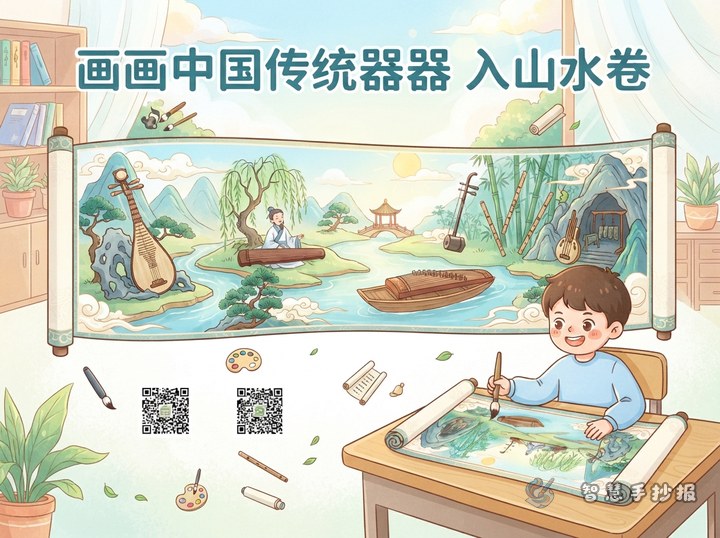
Instrument drawings do not need to be complicated. Show the main shape: a long body and strings for the guzheng, a pear-shaped body for the pipa, a long neck and sound box for the erhu, a thin bamboo tube for the dizi, and a round drum surface for the drum. Students can also use the 智慧手抄报 WeChat mini program to organize text, explore layout ideas, and continue making a neat handwritten poster.