Choose a clear focus instead of listing too many instruments
For a handwritten newspaper about traditional Chinese musical instruments, it is better to build the page around a simple angle rather than filling it with long lists. You can focus on topics like “common Chinese instruments,” “how instruments are grouped,” or “what different sounds and moods they create.” This makes the page easier to read and easier to design.
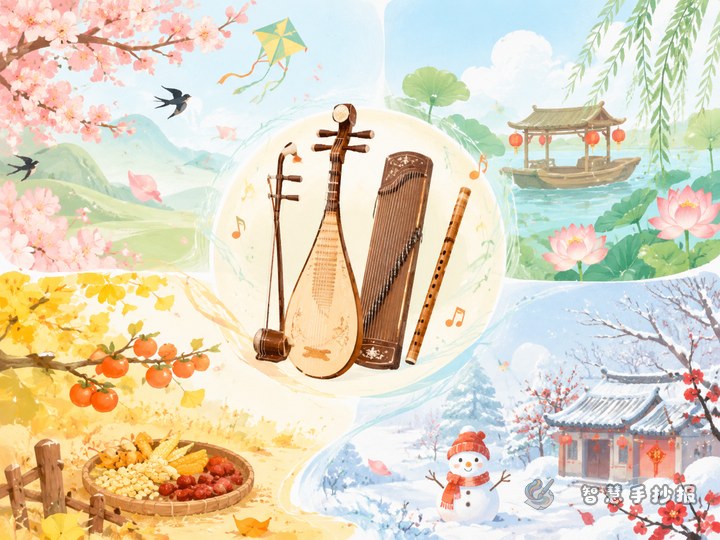
For elementary students, a good plan is to choose four to six familiar instruments and give each one a short introduction, its sound feature, and a simple cultural note.
Useful sections to include on the page
Section 1: Instrument mini cards
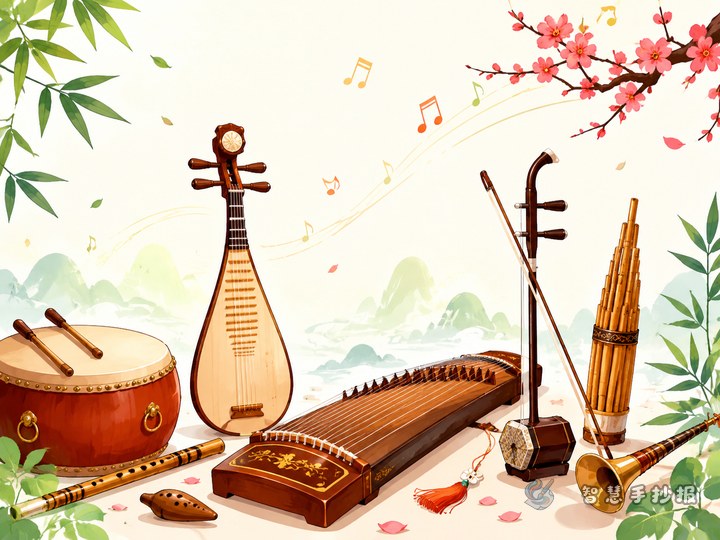
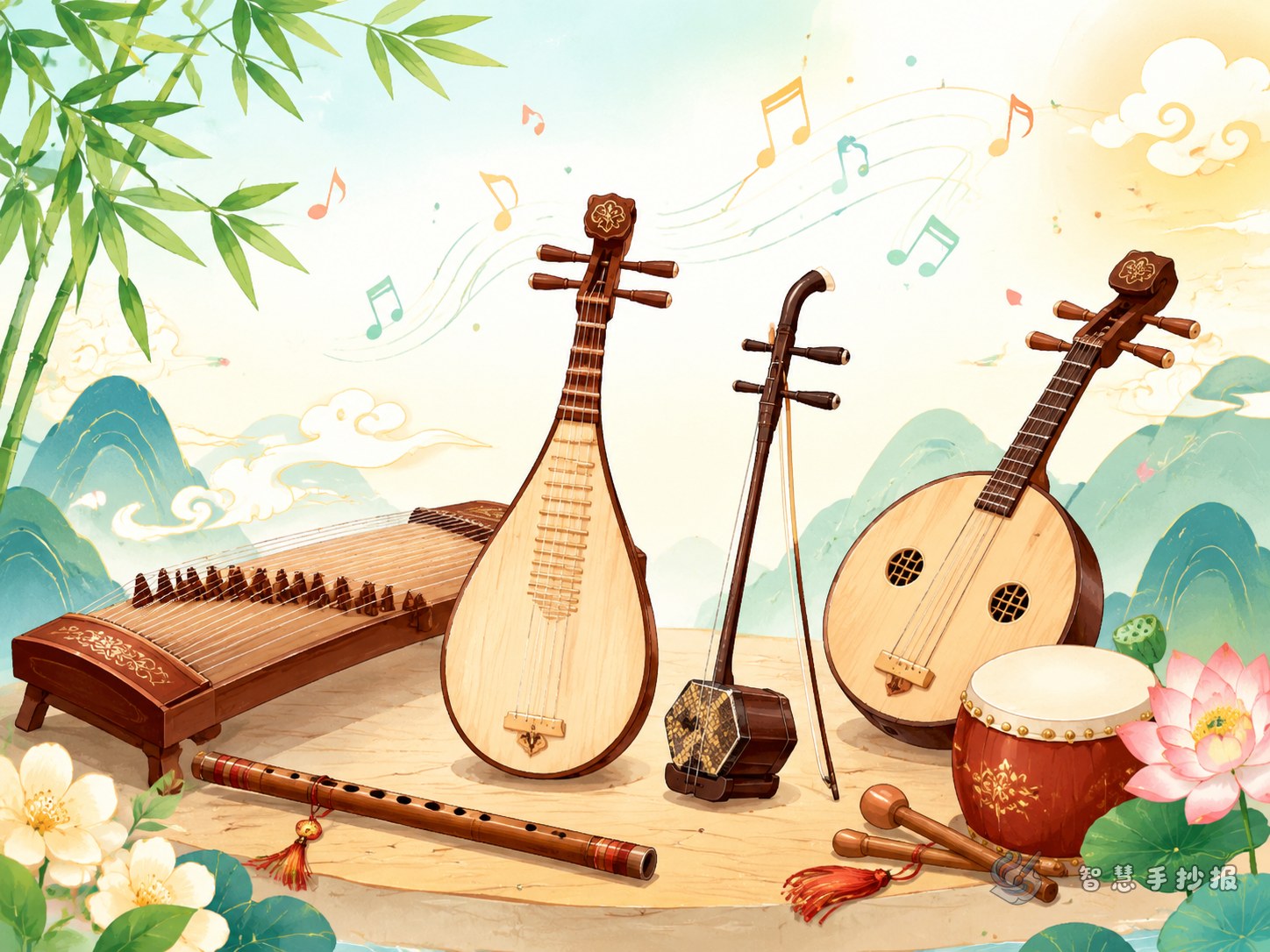
- Guzheng: a plucked string instrument with a bright and gentle sound.
- Erhu: a bowed string instrument with soft and expressive tones.
- Pipa: a plucked instrument known for lively and powerful playing.
- Dizi: a bamboo flute with a clear and cheerful sound.
- Suona: a wind instrument with a strong and festive tone.
Section 2: Simple instrument categories
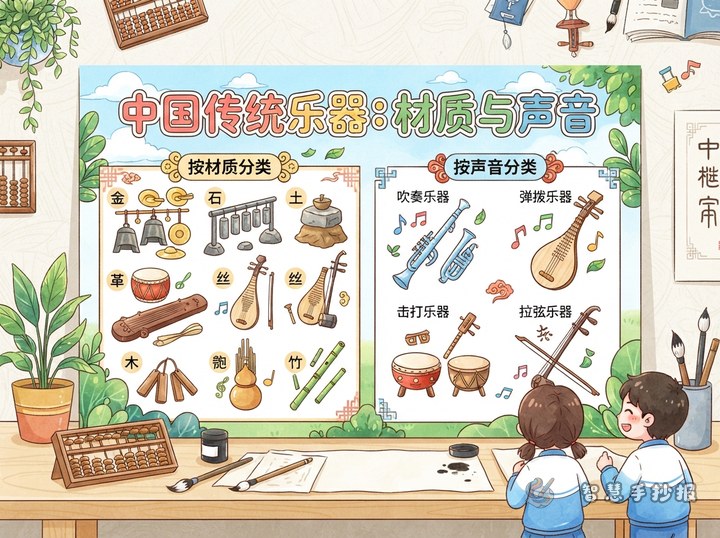
A clear way to organize the content is to group instruments into four kinds: blowing, bowing, plucking, and percussion. This structure is easy for students to understand and looks neat on a poster page.
- Blowing: dizi, xiao, suona
- Bowing: erhu, banhu
- Plucking: guzheng, pipa, guqin
- Percussion: drum, gong, cymbals
Section 3: Cultural meaning behind the music
Traditional instruments are not only for making music. They also carry festival spirit, folk customs, and Chinese aesthetic ideas. For example, the guqin often suggests calmness and self-cultivation, while drums and suona are often linked with lively celebrations.
Short writing materials that fit a school handwritten newspaper
The text should be brief, clear, and easy to copy neatly. A practical format is “instrument name + sound feature + cultural meaning.” This keeps the page organized and readable.
- Traditional Chinese instruments show the richness of Chinese music culture.
- Different instruments create different moods, from gentle and elegant to bright and exciting.
- They often appear in festivals, performances, opera, and folk activities.
- Learning about these instruments helps us understand traditional Chinese culture better.
You can also add one personal sentence, such as “My favorite instrument is the dizi because its sound feels like spring wind.”
Layout ideas for a cleaner and more attractive page
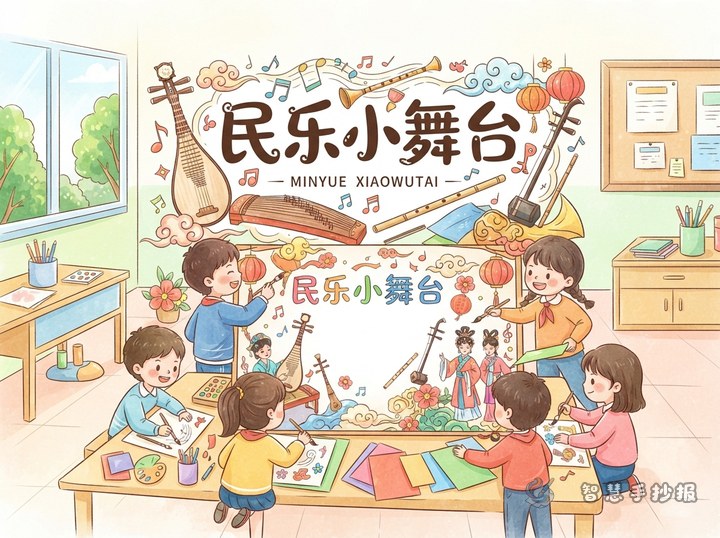
Place the main title in the center, then arrange smaller content blocks around it. One side can show categories, another can introduce famous instruments, and the bottom can include cultural meaning and your own thoughts. This makes the reading order natural and the page balanced.
- Use a Chinese-style title design with cloud patterns or fan-shaped borders.
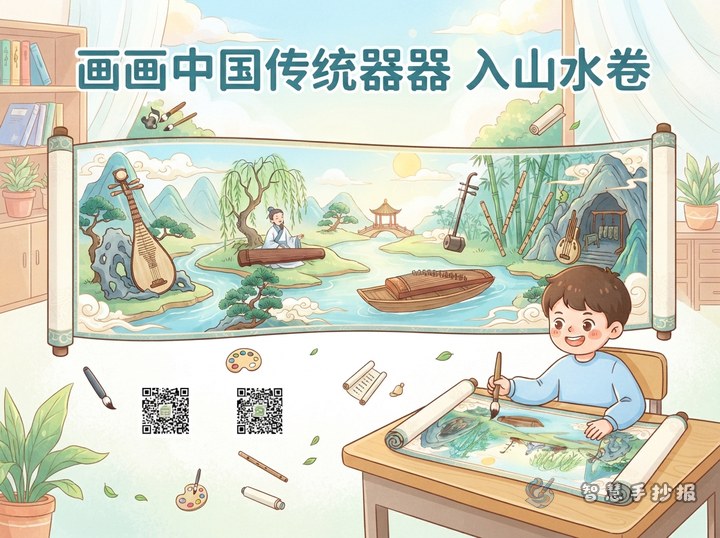
- Leave small spaces for simple drawings of instruments.
- Choose colors like red, gold, teal, or light ink tones.
- Highlight key words such as “sound,” “category,” and “culture.”
A simple ending to complete the work
You can end the page with a short summary such as: Traditional Chinese instruments are like keys that open the door to history, helping us feel the beauty of Chinese culture through music. This kind of ending is short, neat, and suitable for school display.
If you already have your topic and sections in mind, you can continue organizing your handwritten newspaper in the Zhihui Shouchaobao WeChat mini program for a smoother and more polished result.