Build the Page Around a Relic’s Second Life
Instead of filling the newspaper with difficult facts, choose one type of object, such as pottery, a painting, or an old book. Tell its story through four stages: discovering damage, examining and recording, cleaning and repairing, and storing it safely. This gives every section a clear connection.
Turn Restoration into Four Easy Sections
Why Objects Become Damaged
Moisture, strong light, dust, pests, improper handling, and natural aging can all affect museum objects. This section can also explain why visitors should not touch exhibits: skin oils, sweat, and pressure may cause harm.
What Happens Before Any Repair
Conservators first examine the object, take photographs, and record cracks, missing areas, or color changes. They then make a plan based on its material and condition. A useful summary is examine first, decide carefully, and act last.
Restoration Does Not Mean Making It New
The goal is to preserve genuine historical information. A conservator may carefully clean, strengthen, or reconnect damaged areas without freely changing the original appearance. Feature this sentence on the page: Conservation continues history; it does not remake history.
How Museum Visitors Can Help
- Keep a suitable distance from displays and cases.
- Follow no-touch and no-flash signs.
- Walk calmly and never lean on display cases.
- Read labels to learn an object’s name, period, and use.
Design the Page Like a Conservation Desk
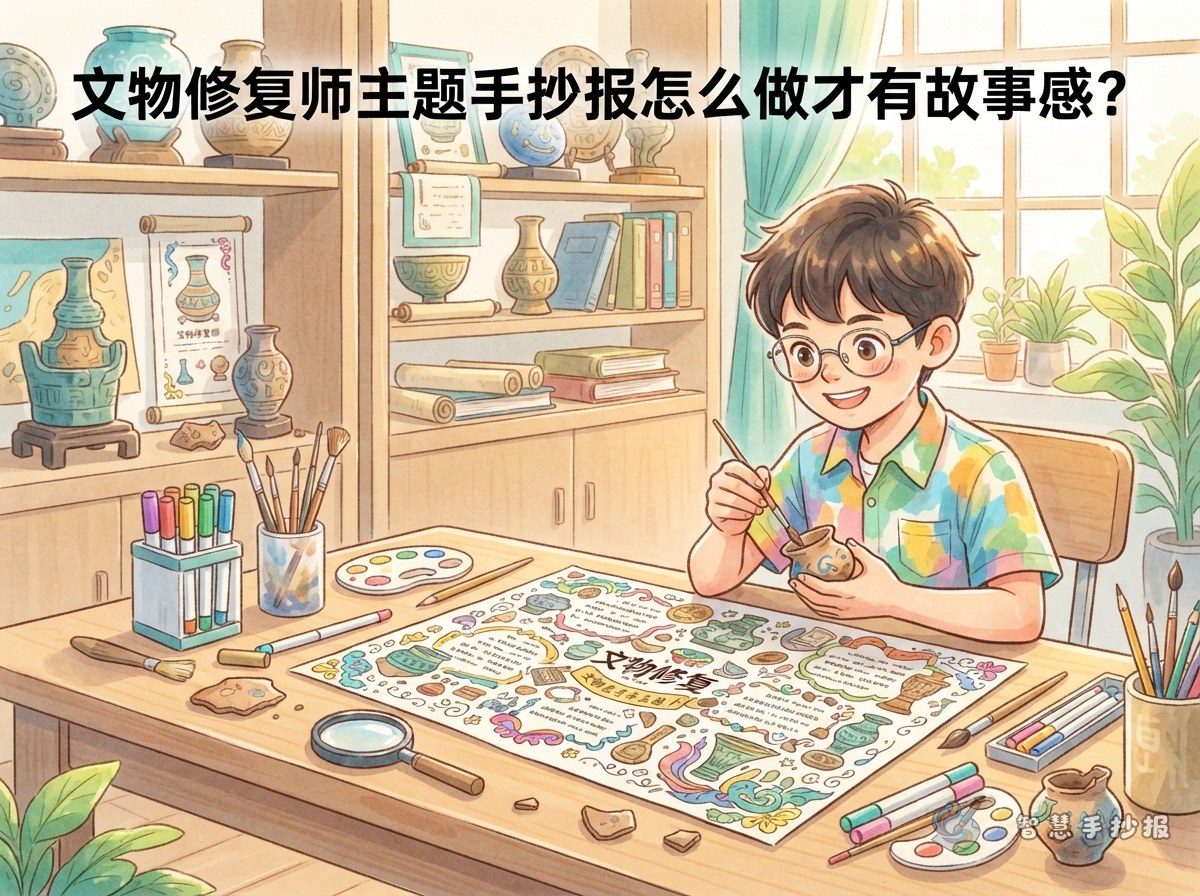
Place the title at the top and draw a cracked pottery vessel in the center. Arrange section boxes shaped like record cards or pottery fragments around it. Small drawings of a magnifying glass, soft brush, gloves, and numbered labels can reinforce the theme. Connect the stages with dotted lines or arrows so the reading order is obvious.
Use ivory, terracotta red, blue-gray, and light brown for a calm museum atmosphere. Write the main text in a dark color and highlight only a few keywords in red or muted gold. Leave enough open space to keep the page readable.
Ready-to-Use Text for the Newspaper
A conservator at work: Conservators are like patient doctors for historical objects. They examine and document each object before choosing suitable ways to clean, strengthen, or reconnect it. Every action must be careful because the historical information carried by an artifact cannot be replaced.
My museum promise: In a museum, I will slow down, follow visitor rules, and read the object labels carefully. Protecting cultural heritage is not only a conservator’s job. Every visitor can help through respectful behavior.
A Final Check Before You Finish
- Does the title clearly show the conservation theme?
- Have you included causes of damage, key steps, and visitor tips?
- Do the drawings support the information instead of crowding it?
- Are paragraphs short and important words easy to find?
- Is there enough open space for a clean layout?
To arrange the sections more quickly, open the Smart Handwritten Newspaper WeChat Mini Program, choose a suitable layout, and adjust the text for the student’s grade and paper size.