Why This Idea Works on a Handwritten Newspaper
Most museum history newspapers describe a relic's shape, period and use, which can read like a label in a display case. When the relic speaks for itself, it becomes a character with a story: how it was made, what the pattern on it means, and what it has seen since it entered a museum. First-person sentences are short and lively, so they are easy for primary school students to write.
Give Your Relic a Voice Before You Start
Choose a single relic first, then decide what kind of speaker it is. These three checks help:
- Easy to draw: a clear outline, such as a bronze vessel, a clay figure, a pottery horse or a porcelain vase.
- Plenty to say: you can describe at least two of its material, pattern or purpose.
- Familiar: the student has seen it in a textbook or a museum.
You can make it "an old friend who has waited a long time", "a clay figure who loves being dressed up" or "a bronze horse that has run for centuries". Once it has a personality, the writing gains feeling.
Five Short Steps for the Monologue
The main text does not need to be long. Two or three sentences per step is enough to fill a section:
- Who I am: name, material and rough period.
- Where I came from: who made me and how.
- The secret on my body: describe one pattern, shape or colour in detail.
- The changes I have seen: from being used, to being kept, to being displayed.
- What I want to tell you: end with one warm sentence.
Extra material for the side boxes
If there is empty space, add a small fact file: name, period, material, place of discovery and the museum where it now lives. A "my small wish" box, such as hoping visitors will not tap the glass, gives the page a friendly everyday touch.
Layout: Make the Speaking Visible
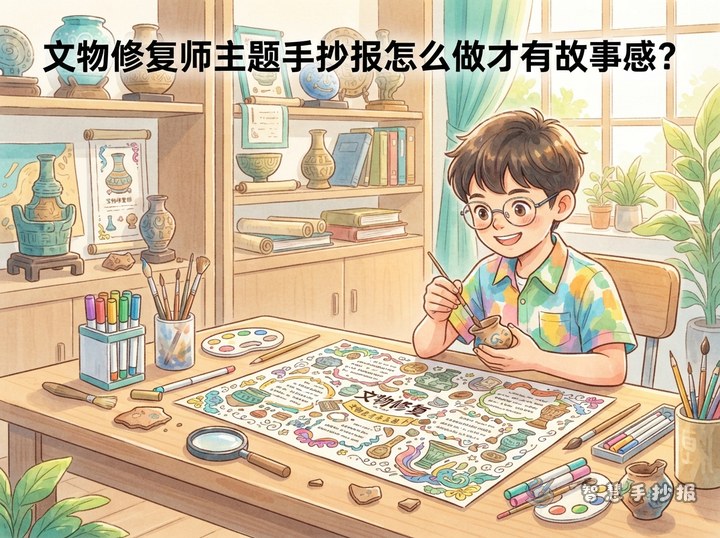
Think of the whole sheet as an interview. The relic speaks in the middle, and questions and notes surround it.
- Top: main title and one opening line, in the largest letters.
- Centre: a large drawing of the relic with a speech bubble for the monologue.
- Left and right: a relic fact file on one side, "what I want to say" on the other.
- Bottom: a timeline from being made to being displayed.
Keep column lines straight, leave a little space between boxes, and use different colours only for headings. One or two colours for body text is enough to keep the page tidy.
Opening Lines You Can Copy
- "Hello, I have been lying here for a very long time, and today I would like to say a few words."
- "This line on my body was not drawn at random."
- "I have seen busy days and quiet ones."
- Section headings: Who I Am, The Secret on My Body, My Long Journey, What I Want to Tell You.
Finishing Touches
Write all the text before you colour, so you can measure the wording and avoid crowding. Match the palette to the relic: blue-green with cream for bronze, earthy yellow with red-brown for pottery, and blue and white for porcelain. If you want a ready-made layout, open the Smart Handwritten Newspaper mini program in WeChat, pick a museum relic template, and fill in your finished monologue to complete the page quickly.