Decide what your page wants to explain
A handwritten newspaper on “Why do rainbows appear?” works best when it combines simple science with everyday observation. The page does not need difficult terms. Focus on three ideas: sunlight, water droplets, and separated colors. This helps children understand that a rainbow is a natural light phenomenon they can notice in daily life.
Your main title can be “Why Do Rainbows Appear?” or “Why Can We See Rainbows After Rain?” If you want a playful design, shape the title like an arch to match the rainbow itself.
Sections you can write directly on the page
The secret behind a rainbow
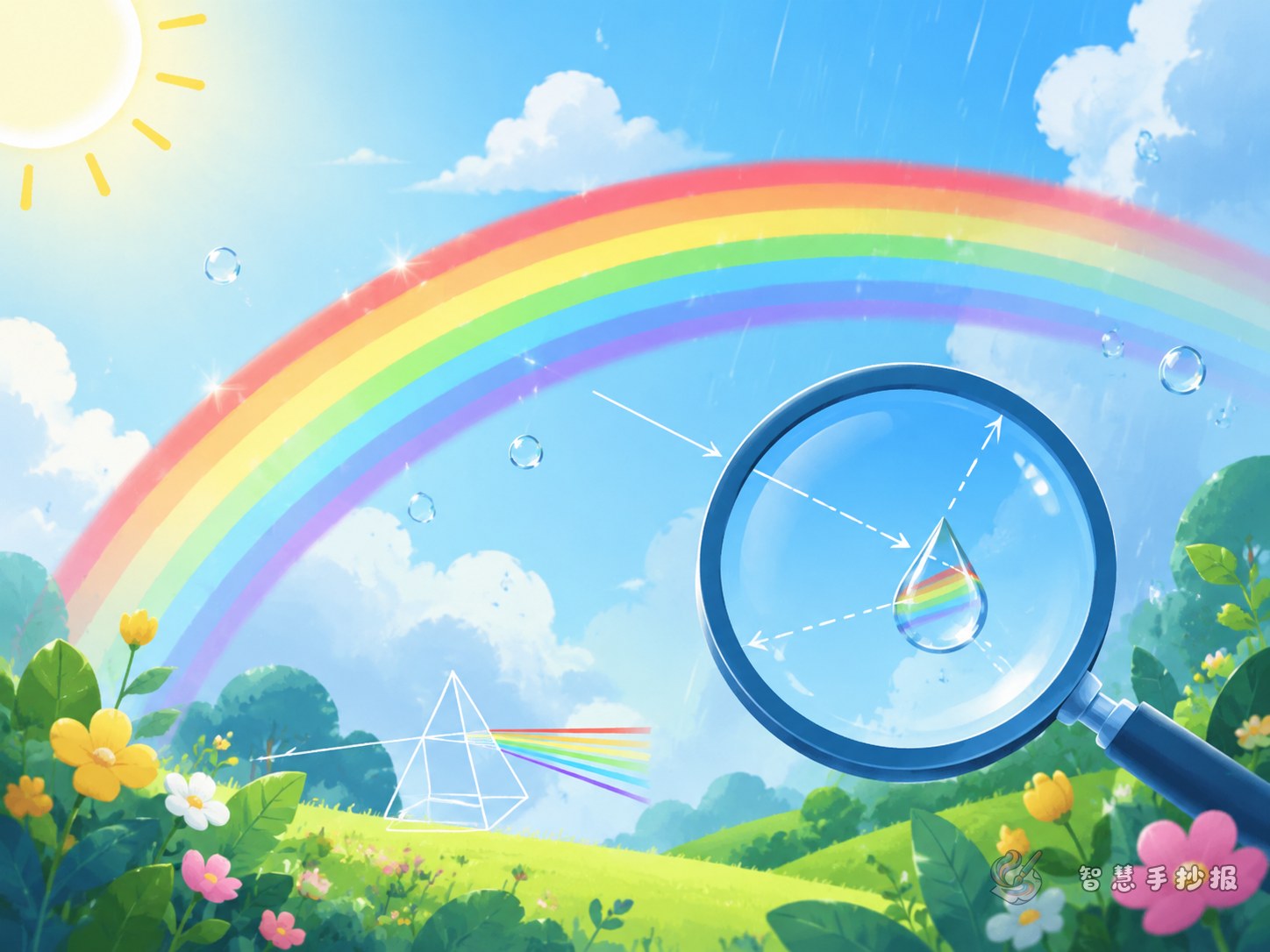
Sunlight looks white, but it actually contains many colors. When sunlight enters tiny water droplets in the air, the light changes direction and reflects inside the droplets. Because each color bends a little differently, the colors spread out and form a rainbow.
The seven rainbow colors
A rainbow is usually described with seven colors: red, orange, yellow, green, cyan, blue, and purple. You can display these as color strips or a vertical list to make the page more eye-catching.
When can we see a rainbow?
- After rain, when the sky starts to clear
- When sunlight is shining and water droplets are still in the air
- Near waterfalls or fountains with mist
- It is often easier to see one when the sun is behind you
My rainbow observation
Add a short personal note, such as “I saw a rainbow above the playground after the rain” or “The colors looked brighter on the outside edge.” This makes the page feel more like a student’s own work.
Fun and simple writing material for children
To make the page more lively, add short and friendly lines like these:
- A rainbow is not paint in the sky. It is sunlight showing its hidden colors.
- With sunshine and water droplets, a rainbow may appear.
- Science lives in everyday life. Sometimes all you need to do is look up.
You can also include a tiny experiment section. For example, use a prism, a glass of water, or a spray bottle in sunlight to observe color changes. Keep the instructions simple and mention that it should be done with a parent or teacher.
Try a curved layout instead of equal boxes
This topic is perfect for a more creative page structure. Draw a large rainbow across the top and place the main title in the middle. Put the science explanation on one side, observation scenes on the other, and use the lower part for color order and a mini experiment.
- Top: curved main title
- Middle: two main knowledge areas
- Bottom: observation notes or Q&A
- Corners: clouds, raindrops, sunshine, or mist
If the page still feels empty, use thin seven-color lines to divide sections. Do not overcrowd it with text. A little white space makes the page cleaner and easier to read.
Matching drawings and colors
Good illustrations for this theme include the sun, clouds, raindrops, a magnified water droplet, a fountain, hills, and children looking at the sky. Try to keep all drawings related to rainbow scenes instead of adding random decorations.
For colors, use light blue, soft yellow, and the seven rainbow colors. Avoid very dark backgrounds behind text. You can highlight key sentences with red or orange frames so important points stand out.
Three things to check before finishing
- Does the page clearly explain the connection between rainbow, sunlight, and water droplets?
- Does it include child-friendly headings and short science sentences?
- Does the layout visually match the rainbow theme with curves and color?
If your topic and sections are ready and you want to continue polishing the layout, wording, and visual style, you can move on in the Zhihui Handwritten Newspaper WeChat mini program to complete your work more easily.