A Hands-on Topic Children Can Understand
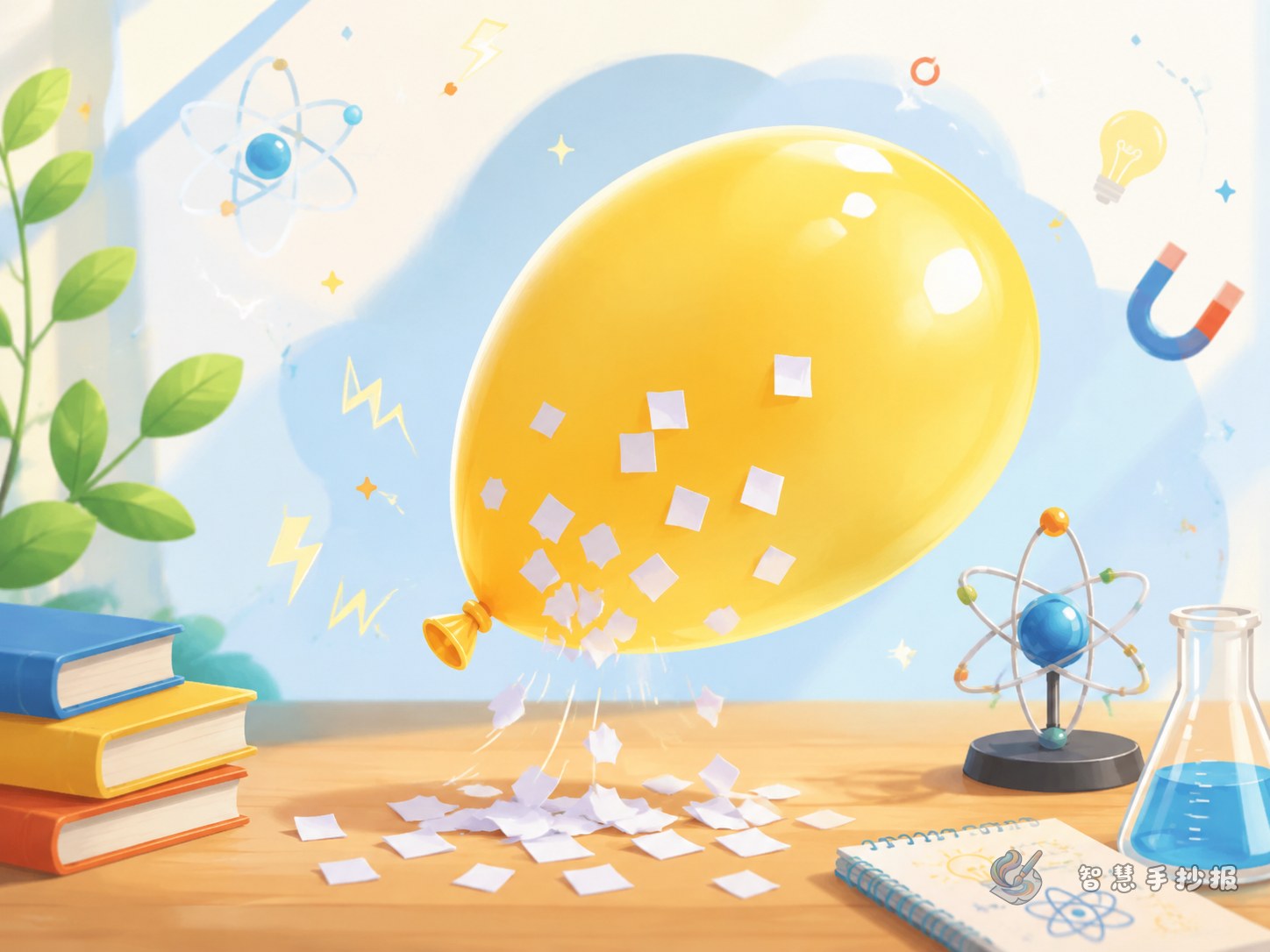
“Why can a balloon pick up tiny paper bits?” is a clear and fun topic for an introductory physics handwritten newspaper. It turns invisible static electricity into something children can see: after rubbing a balloon on hair or a sweater, the balloon can attract small pieces of paper, and hair may even stand up.
Short Text Materials for the Newspaper
What Is Static Electricity?
Objects can have tiny electric charges on their surfaces. Most of the time, these charges are balanced, so we do not notice them. When a balloon rubs against hair, some charges move from one surface to another. The balloon becomes statically charged and can attract light objects such as paper bits.
Static Electricity in Daily Life
- You may hear tiny crackling sounds when taking off a sweater in winter.
- Hair may stand up after being combed.
- A plastic ruler can pick up small paper pieces after being rubbed on cloth.
- In dry weather, touching a metal door handle may give a small static shock.
Column Ideas for the Page
- Observation Corner: Draw a balloon, hair, and tiny paper pieces, then write what you see.
- Science Secret: Explain in simple words that rubbing creates static electricity, which attracts light objects.
- Try It Yourself: List the materials: a balloon, paper bits, dry hair or a sweater, and write three easy steps.
- Everyday Discovery: Add examples such as clothes sticking together, a comb attracting hair, or a ruler picking up paper.
- Safety Reminder: Keep balloons away from fire, do not do the experiment near sockets, and clean up the paper bits afterward.
A Simple Experiment to Include
Prepare an inflated balloon and some tiny paper pieces. Rub the balloon on dry hair or a sweater several times. Then slowly move it close to the paper pieces without pressing down on them. Watch whether the pieces jump up or stick to the balloon. You can also compare the result on a dry day and a humid day to make the newspaper more exploratory.
Page Layout Suggestions
Place the title “Why Can a Balloon Pick Up Paper Bits?” at the top. Use blue, yellow, or purple to create a bright science-themed look. Draw a large balloon in the center, add small lightning symbols around it, put the experiment steps on the left, the explanation on the right, and daily examples at the bottom. To make a more complete draft, users can continue designing in the 智慧手抄报 WeChat mini program.