Build the page around a visible change
A baking soda and vinegar experiment poster works best when it highlights a change you can clearly see. The title can focus on bubbles, expansion, foaming, or what was discovered. This makes the poster feel like a real science observation instead of a plain list of facts.
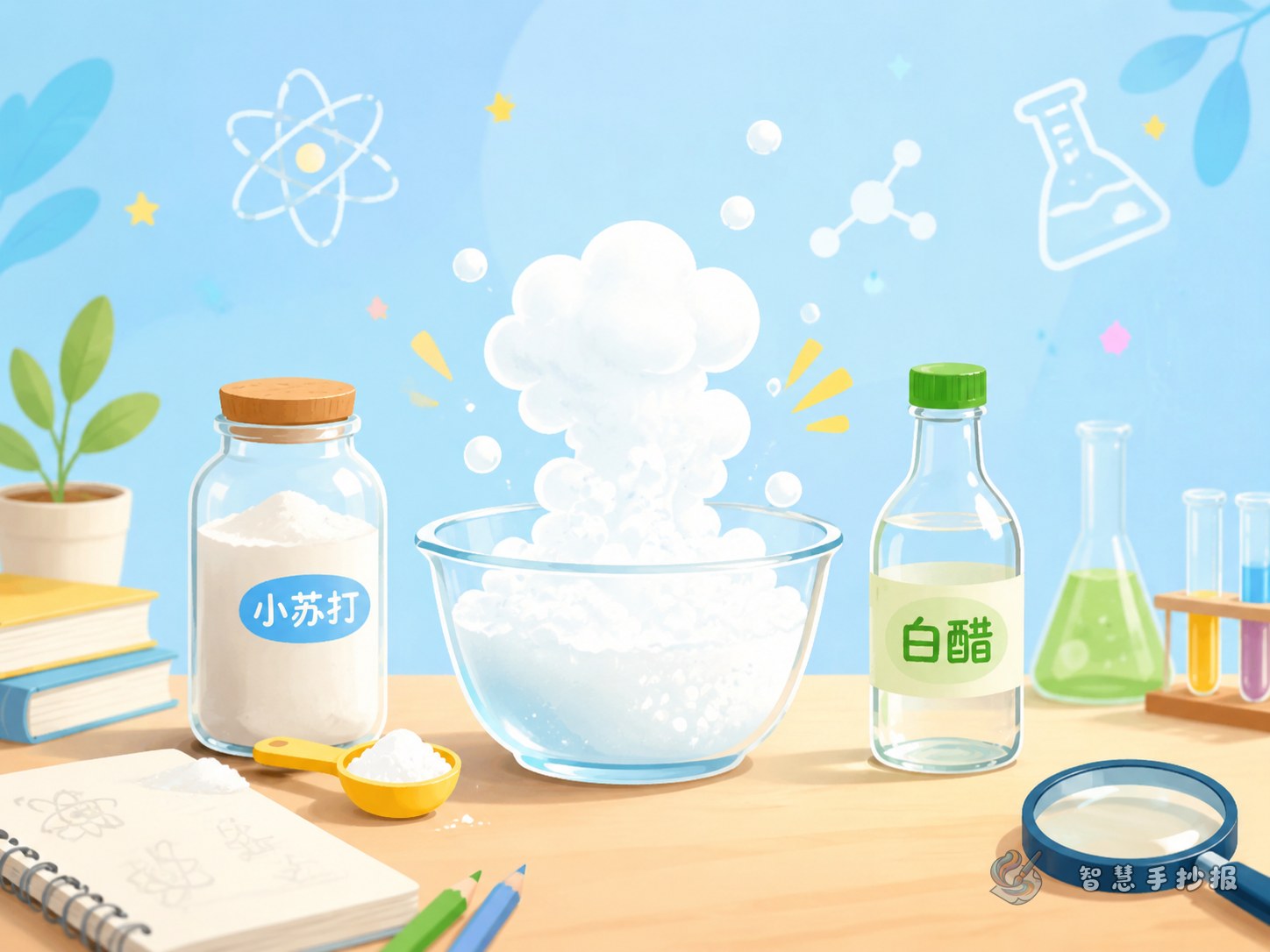
A simple introduction can say that when baking soda and vinegar are mixed, many bubbles appear quickly. It is an easy experiment with common materials, so it is a great topic for an elementary science poster.
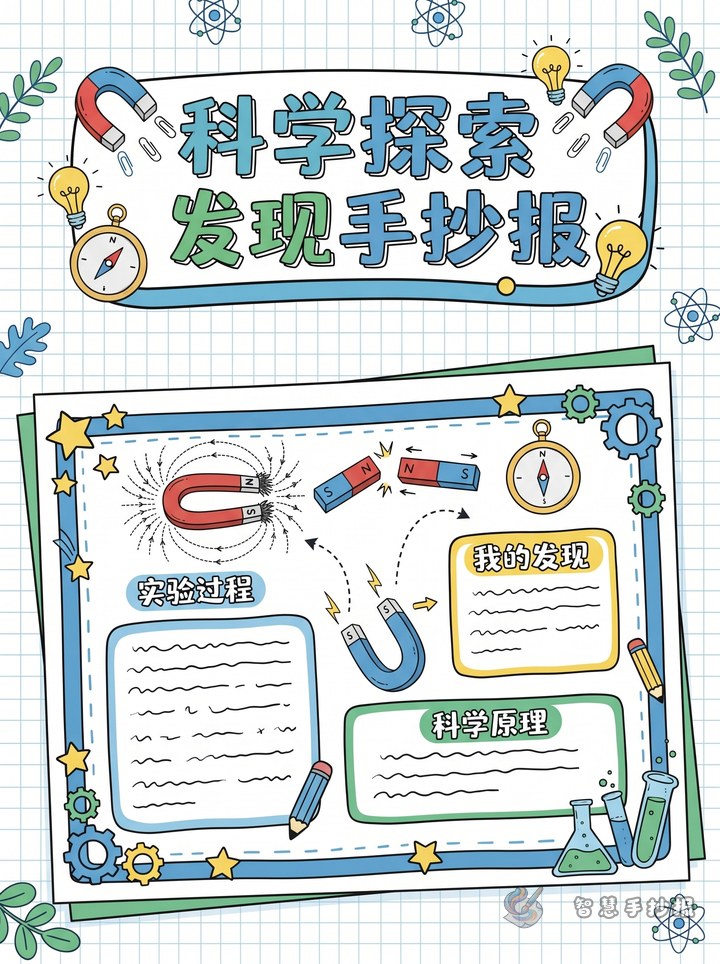
Easy sections to include
- Materials: baking soda, vinegar, a clear cup, spoon, balloon, or tray.
- Steps: write the process in order with clear numbers.
- What I Observed: describe bubbles, foaming, or a balloon getting bigger.
- Science Explanation: explain that mixing the two materials creates gas.
- Safety Notes: do not taste it, keep it away from eyes, and clean up after the experiment.
If there is extra space, add a section like “My Discovery” or “What I Want to Test Next” to make the poster feel more like a science record.
Ready-to-use writing ideas
Sample experiment steps
- Put some baking soda into a clean cup or bottle.
- Slowly pour in the vinegar and watch carefully.
- If a balloon is placed on the bottle, observe whether it expands.
- Record how fast the bubbles appear and how long they last.
Sample observation text
When vinegar was poured into the container with baking soda, many bubbles appeared right away. The liquid started to foam and move. In the bottle experiment, the balloon slowly became larger, showing that a new gas was produced.
Sample reflection
This experiment shows that science can be found in everyday life. Simple materials from home can create interesting changes. By watching closely and writing things down, we can learn science through real discovery.
How to make the poster look better
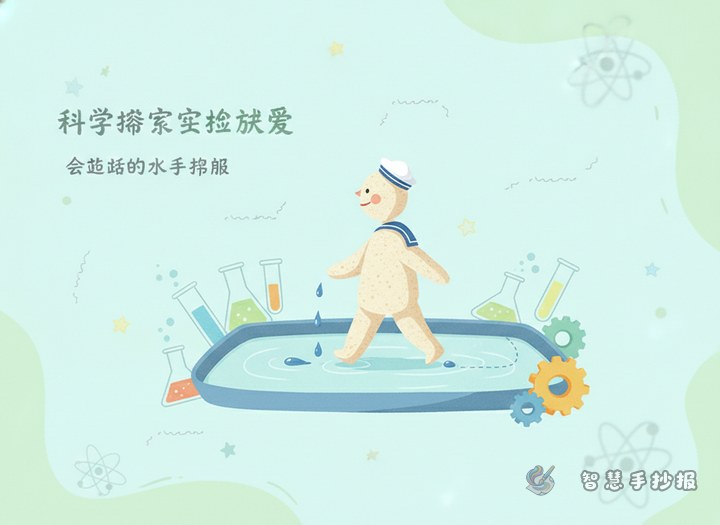
This topic looks great with bubble shapes, wavy lines, and bottle or beaker borders. The main title can be playful, with small bubbles, test tubes, or magnifying glass decorations around it. Keep the steps and observations in separate blocks so the layout is easier to read.
Blue, green, and orange work well on a white background. Important words like “bubbles,” “change,” and “discovery” can be bold to make the key ideas stand out.
A strong ending for the poster
You can end by connecting the experiment to science exploration: a small experiment is not only fun, it also teaches us to observe, ask questions, and record what we notice. With curiosity, we can discover more science in daily life.
If you want to keep improving the title style, layout, and decoration, you can continue designing your poster in the Zhihui Shouchaobao WeChat mini program.