Choose a clear focus before you start
If your topic is the evolution of Chinese characters, the goal is not to list facts randomly. The page should help readers see how characters changed from ancient times to today. A simple way to organize the content is around three questions: where Chinese characters came from, why their forms changed, and how we use them now.
You can also give the page an easy-to-understand title such as “The Journey of Chinese Characters” or “From Oracle Bone Script to Regular Script.”
Section ideas that are easy to fill
A good handwritten newspaper does not need too much text, but it should have clear sections. This structure works well for students:
- Origin of Chinese characters: a short introduction to the importance of Chinese writing.
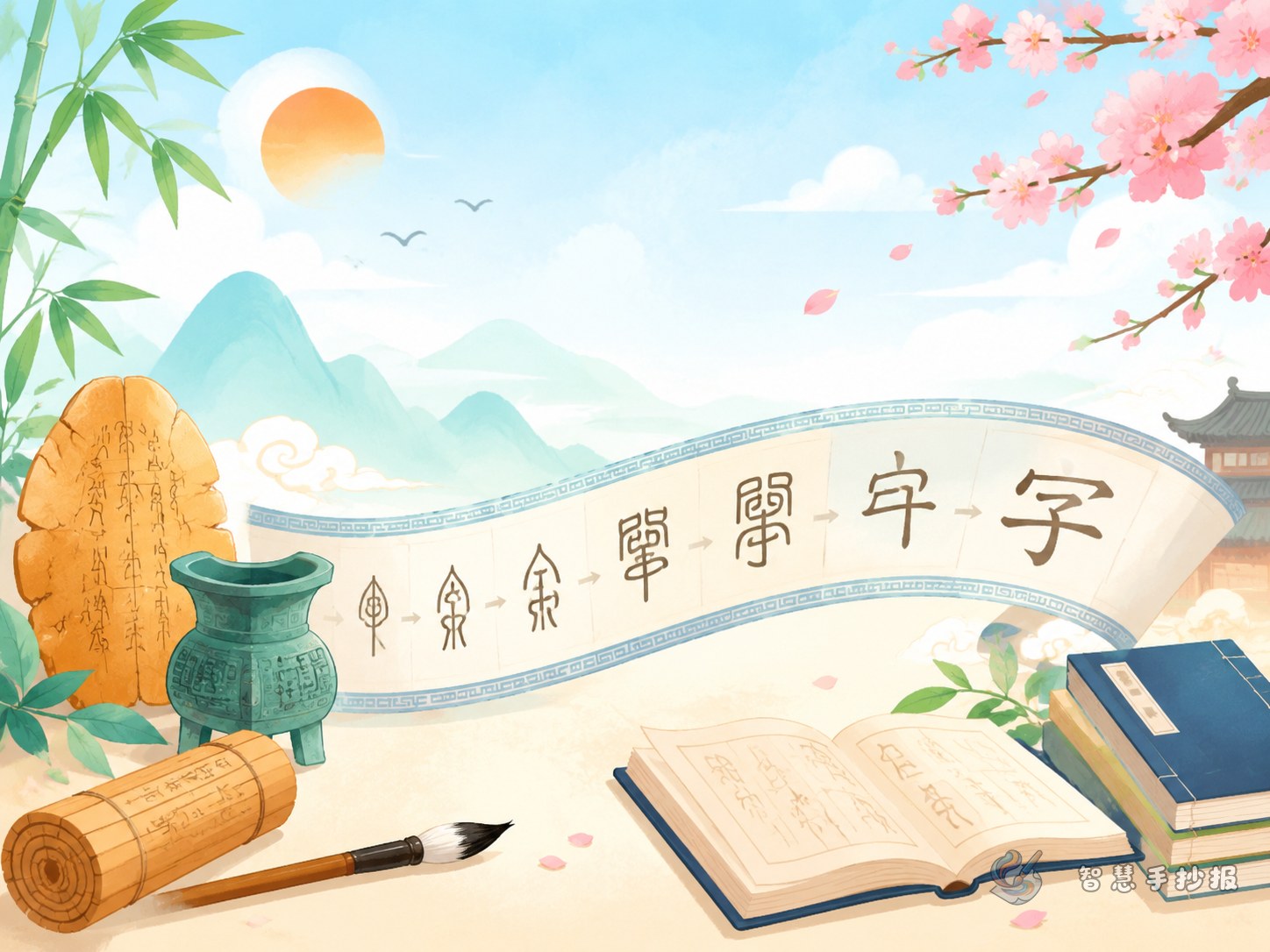
- Timeline of change: oracle bone script, bronze inscriptions, small seal script, clerical script, and regular script.
- Character comparison area: show how two or three characters changed over time.
- Interesting ways characters were formed: pictographs, associative compounds, and phonetic-semantic characters.
- Neat writing reminders: write clearly, follow stroke order, and keep good structure.
If you have more space, you can add a small personal section such as “My Favorite Chinese Character.”
Text materials you can use directly
1. Short introduction
Chinese characters are one of the world’s oldest writing systems. Over a long period of development, they gradually became the standardized characters we use today. Their forms moved from picture-like shapes to simpler and clearer structures that were easier to write and spread.
2. Stage notes
Oracle bone script: characters carved on bones and shells, often looking like drawings.
Bronze inscriptions: characters cast or carved on bronze objects, with fuller and rounder lines.
Small seal script: more even and unified in shape.
Clerical script: flatter and easier to write than seal script.
Regular script: neat and clear, and still important in handwriting practice today.
3. Pictograph examples
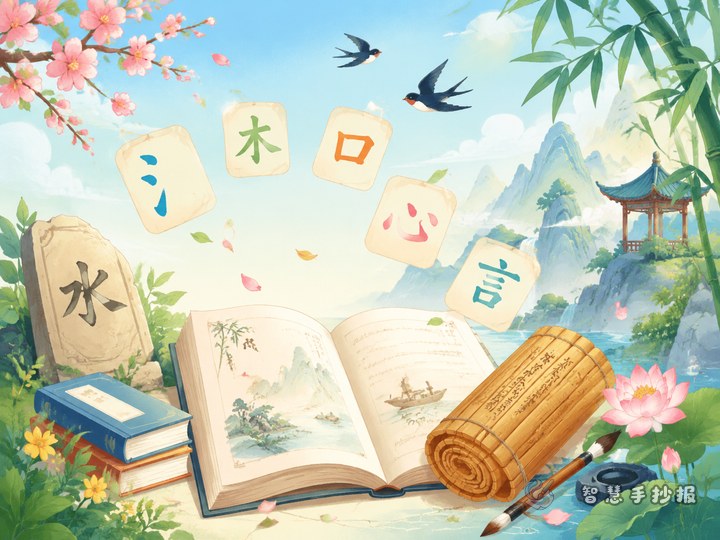
The ancient forms of characters such as sun, moon, mountain, and water were closely connected to the shapes of real things in nature. This makes them excellent examples for a student project.
Try a timeline as the main visual feature
This topic works especially well with a timeline layout. Put the development line in the middle or on one side of the page, then place short explanations and character samples around it.
- Put the main title at the top in a larger style.
- Create one timeline showing the major scripts in order.
- Use the other side for character comparison boxes.
- Reserve the bottom area for fun facts or personal reflections.
This kind of layout makes the page easy to read and gives it a strong sense of progression.
Colors and decorations that fit the topic
A Chinese character culture theme looks best with calm and elegant colors such as off-white, light brown, black, red, or soft green. Try not to use too many colors at once.
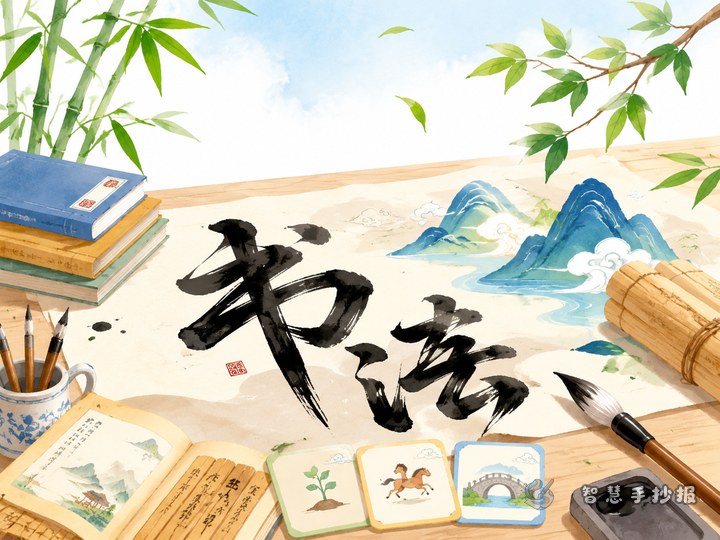
- Add small drawings like brushes, scrolls, seals, or bamboo slips.
- Use square boxes or grid shapes to echo handwriting practice.
- Make the title artistic, but keep body text easy to read.
- Highlight key words with bold text or small color blocks.
How to finish the page neatly
You can end with a short reflection such as this: Chinese characters not only record language, but also carry the wisdom of Chinese culture. Learning how they changed over time helps us appreciate them more and write them carefully today.
If you already have your topic but want to continue organizing the layout and content more efficiently, you can also keep working in the Smart Handwritten Newspaper WeChat mini program.