Start with one clear mini theme
An idiom story handwritten newspaper looks much better when it is focused. Instead of collecting many unrelated idioms, choose one direction such as fable idioms, diligence idioms, honesty idioms, or historical figure idioms. Then select 3 to 5 idioms that match the theme. This keeps both the content and layout organized.
For younger students, 1 to 2 idioms are enough if the page includes larger illustrations. Older students can add meaning, origin, and practical usage to make the project more complete.
Keep the sections simple and readable
A strong page does not need too many blocks. Four practical sections are usually enough:
- Idiom card: idiom, pinyin, and meaning.
- Story in one minute: a short retelling of the idiom story.
- I can use this idiom: one or two sample sentences.
- The lesson behind the idiom: what the story teaches us, such as hard work or honesty.
This structure is easy to read and also helps teachers quickly see that the content is complete. Keep each block short, especially the story part.
Ready-to-use content directions
Example 1: Zao Bi Tou Guang
Meaning: studying hard and making full use of time. Story idea: A student from a poor family had no lamp at night, so he made a small hole in the wall to borrow light from the neighbor and continued reading. It shows persistence in learning.
Example 2: Shou Zhu Dai Tu
Meaning: waiting for luck instead of making effort. Story idea: A farmer once got a rabbit by chance and then stopped working, hoping for the same good luck again. The story teaches that we should not depend on accidents.
Example 3: Wen Ji Qi Wu
Meaning: rising early to practice and improve oneself. Story idea: A determined person got up at daybreak every day to train and finally achieved success. This idiom fits inspiring school themes very well.
When writing, use child-friendly language instead of long original texts. Short and clear wording works best for a handwritten newspaper.
Easy ways to create a cultural feel
If you want the page to feel more traditional and elegant, use a few classic design elements without overdecorating:
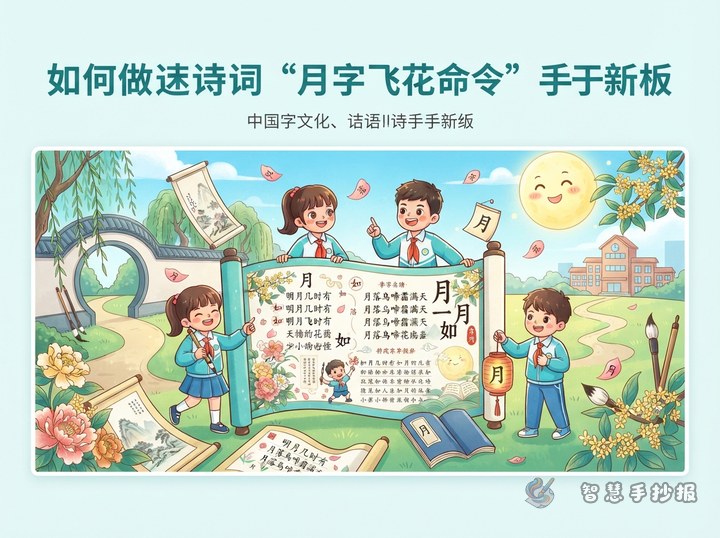
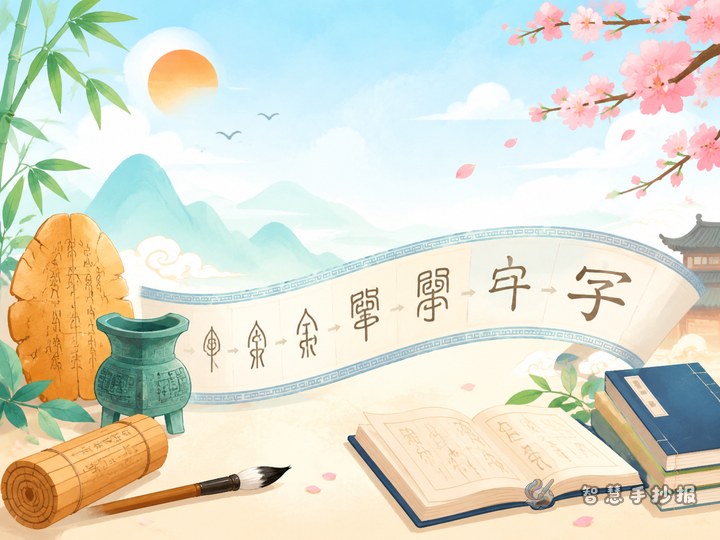
- Make the title area look like a scroll, a book, or a bamboo slip.
- Use small labels shaped like lanterns, fans, or old paper tags for subtitles.
- Draw simple illustrations such as a brush, an old tree, a window frame, or a young scholar.
- Choose soft colors like beige, brown, dark green, and red for harmony.
Leave enough blank space. For this kind of theme, neatness feels more cultured than a crowded page.
Title ideas for the top of the page
You can make the headline short and memorable. Here are a few directions:
- Into the World of Idiom Stories
- Wisdom Inside Idioms
- One Idiom, One Lesson
- Read Stories, Learn Idioms
You can also add a small subtitle such as “Discover the charm of Chinese language culture” or “Learning expression through stories.” This helps the whole page feel complete.
Common details students forget
- Do not choose idioms that are too rare or too difficult.
- Keep the story short so the page does not look text-heavy.
- Include at least two of these: meaning, sentence example, and lesson.
- Decorations should support the text, not overwhelm it.
- Check every character carefully, because the idiom itself must be written correctly.
If you already have a theme and content but want to finish the full layout faster, you can continue making the page in the Zhihui Shouchaobao WeChat mini program.