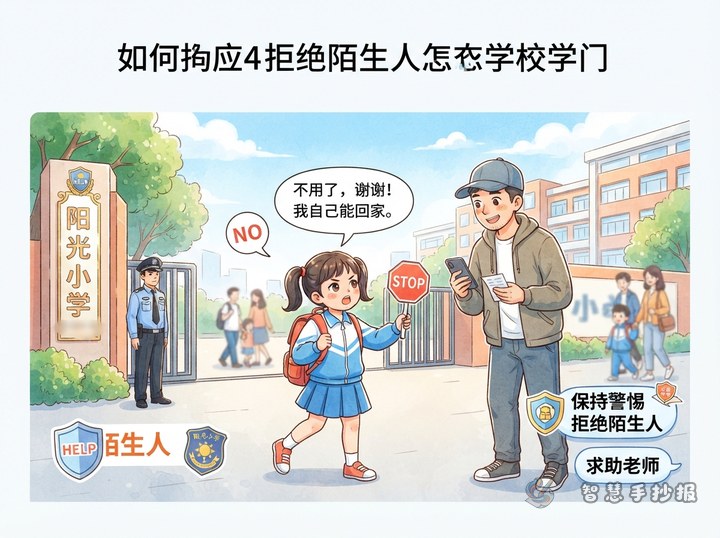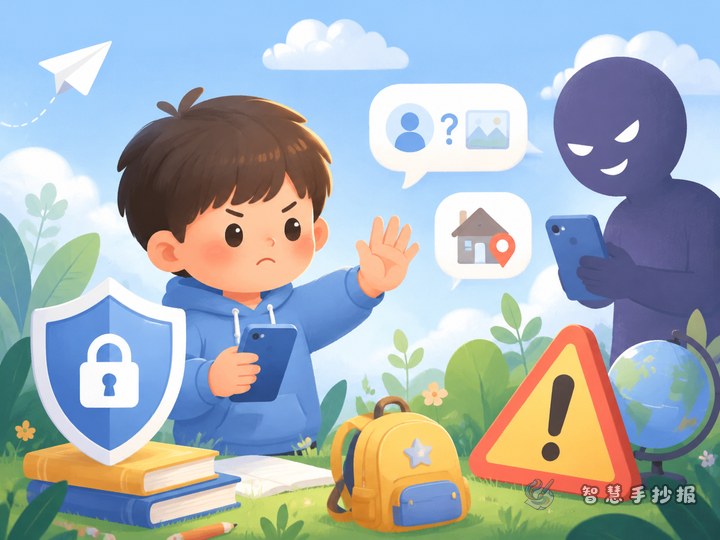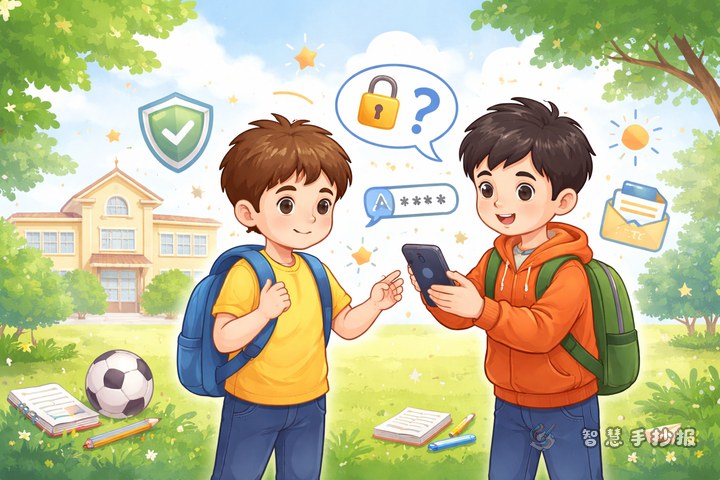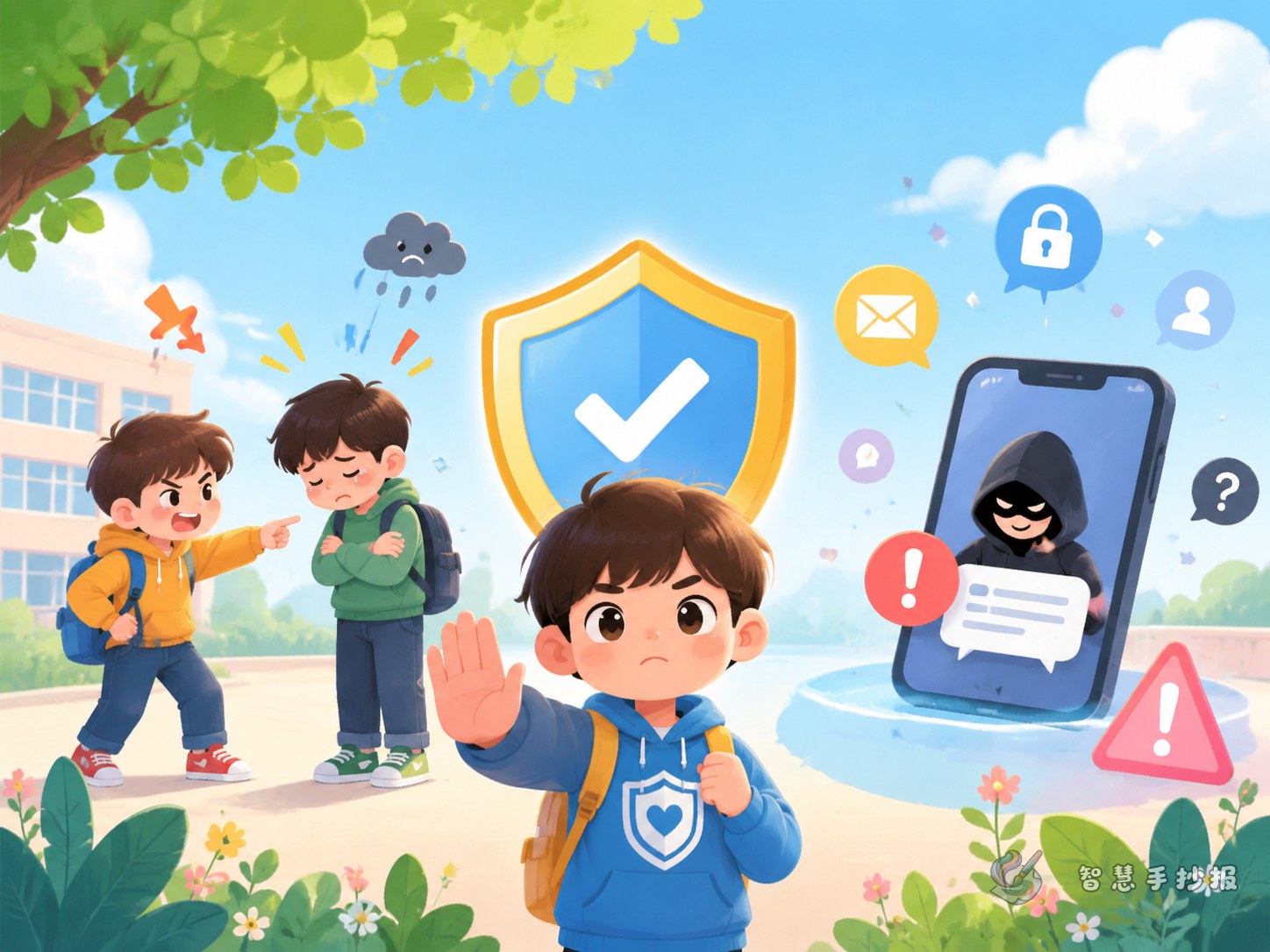
Start with a clear theme: show warning signs visually
This type of poster works best when it combines two ideas: spotting danger and knowing how to respond. The title can focus on things children really face, such as strange online messages, fake requests for money, name-calling, exclusion, or bullying on campus. That makes the poster practical instead of vague.
A short opening paragraph can explain that self-protection is not about being timid. It means staying calm, judging situations carefully, saying no when necessary, and asking trusted adults for help in time.
Build the main section as a warning-sign chart
A useful layout is to divide the center of the page into two parts. One side is for scam warning signs, and the other side is for bullying behaviors. This structure is easy for children to read and helps the whole poster stay organized.
Scam warning signs
- Strangers send links or QR codes and urge you to click right away
- Someone says you won a prize but asks for payment first
- Messages pretend to be from teachers, relatives, or customer service and ask for verification codes
- An online friend quickly asks for money, gifts, or a private meeting
- The other person creates panic so you do not have time to think
Bullying warning signs
- Repeated name-calling, mocking, or insulting
- Purposely leaving someone out of group activities
- Taking belongings, hiding school supplies, or pushing others
- Posting hurtful words or photos in group chats
- Using “just joking” to cover harmful behavior
What short text should you write?
The text on a handwritten newspaper should be short and memorable. A small section called “What I can do” makes the poster more practical.
- Do not trust quickly: Pause and check before believing strange calls, links, or prize messages.
- Do not transfer money: Never pay, recharge, or share codes before confirming the person’s identity.
- Say no clearly: If someone insults, threatens, or demands property, refuse firmly.
- Keep evidence: Screenshots, chat records, and time details can help when asking for support.
- Ask for help fast: Tell teachers, parents, security staff, or another trusted adult.
You can also add simple slogan lines such as “Ask one more question, avoid one more scam” and “Do not stay silent when facing bullying.”
Layout ideas that look clean and useful
For a school poster, a strong design choice is “main picture in the middle, small sections around it.” In the center, draw a child holding a shield labeled “Self-Protection.” Around it, place four sections: scam warning signs, bullying behaviors, smart responses, and help sources.
- Use blue and green as the main colors for a calm and safe feeling
- Add simple icons like a phone, chat box, schoolbag, or shield
- Put key sentences inside borders so they stand out
- Keep each section to three to five points to avoid crowding
End with a “Who can help me” section
Many posters say children should be brave, but they do not explain where to turn. A final section can list parents, teachers, the homeroom teacher, school counselors, and school security staff. That makes the message more complete and more useful in real life.
If you want to keep improving the title lettering, page layout, and color matching, you can also continue designing in the WeChat mini program by Zhihui Shouchaobao.