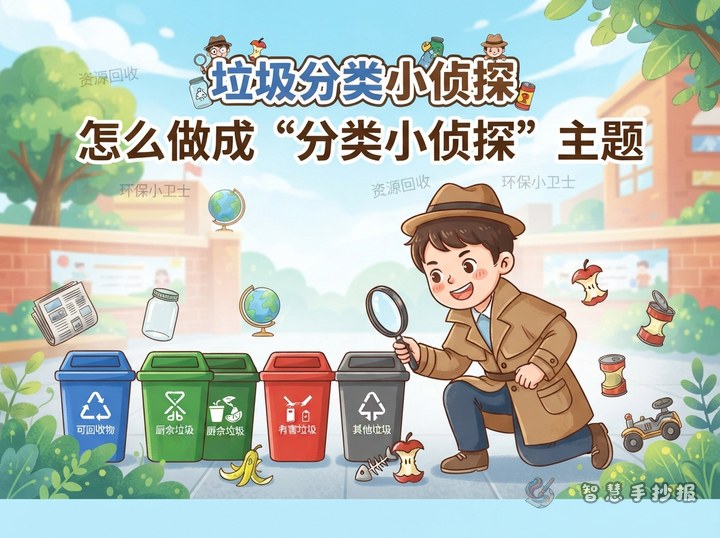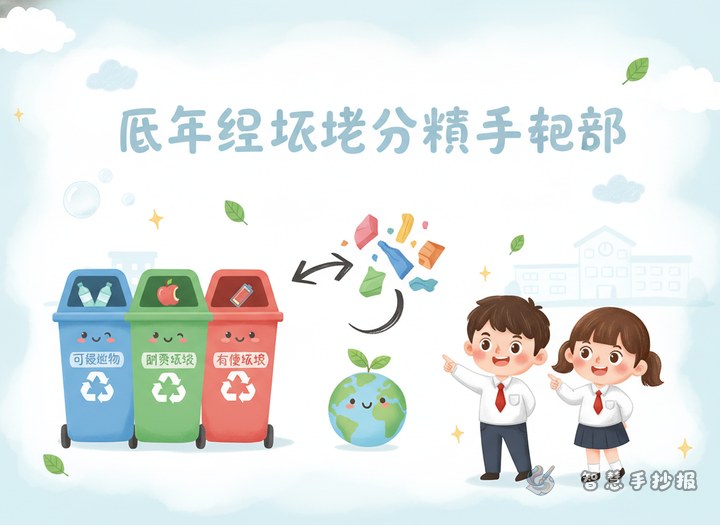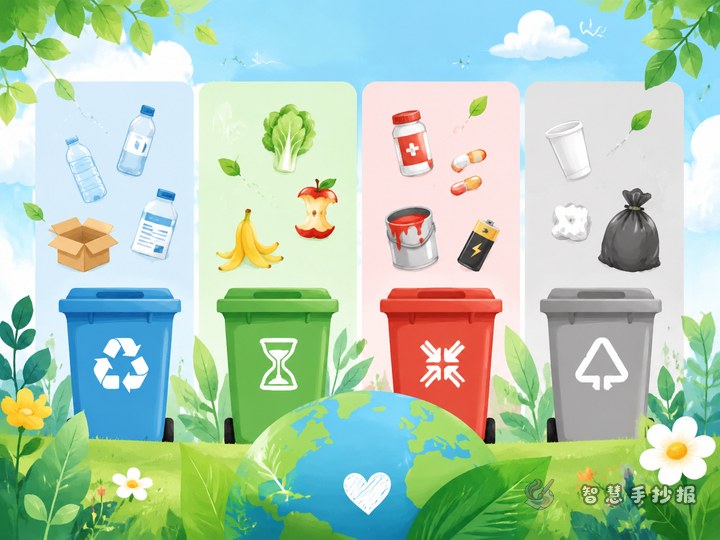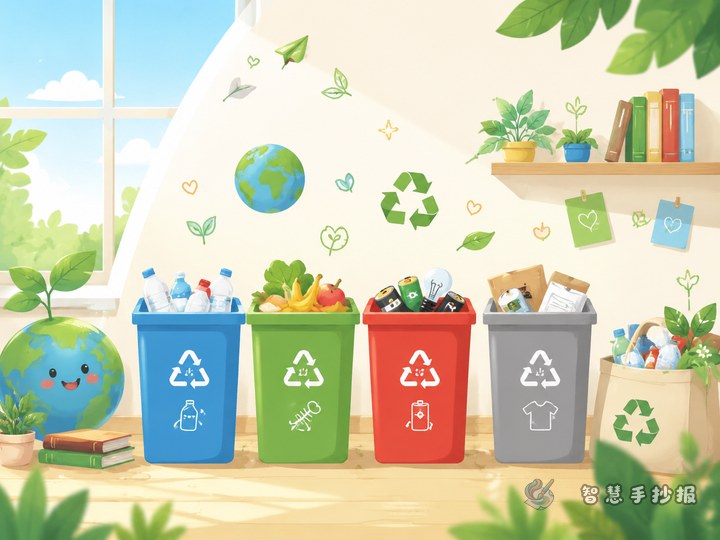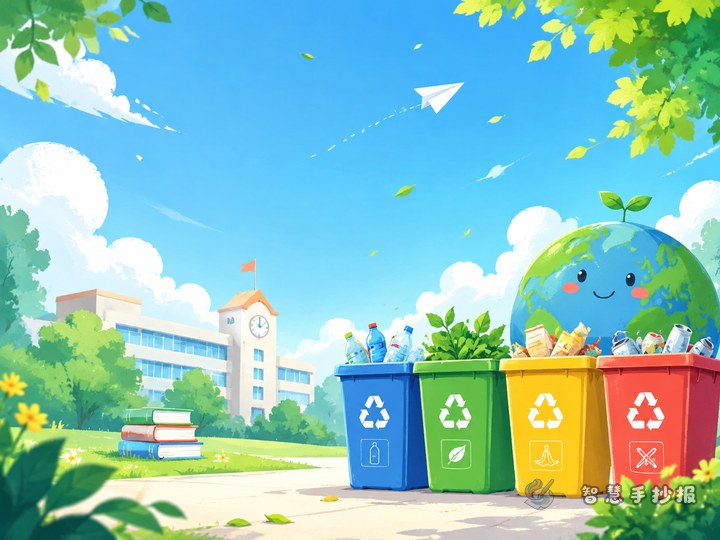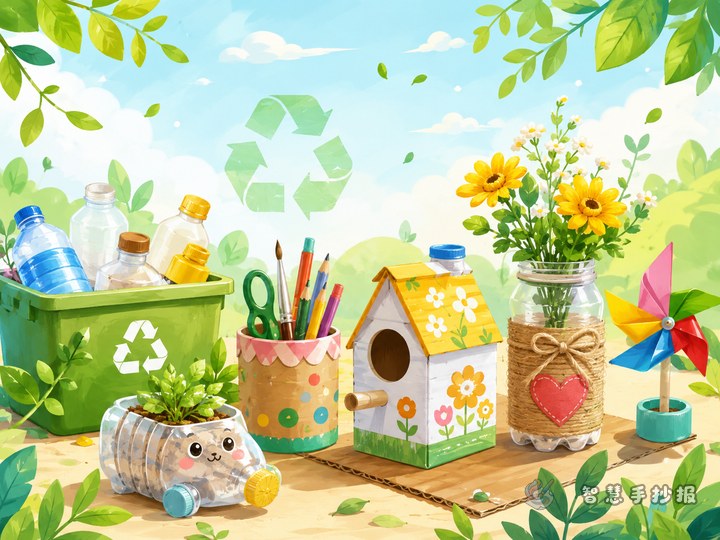
Build the theme around “Where Do Old Items Go?”
This kind of handwritten poster works best when it focuses on the journey of recyclable materials. Instead of only explaining sorting bins, students can show what happens to newspapers, plastic bottles, cardboard boxes, metal cans, and old clothes after collection. A title about the new life of old items makes the page more vivid and story-driven.
A simple opening idea
Waste sorting is not only about putting trash into different bins. The more important step is helping recyclable items become useful resources again, reducing waste and protecting the environment.
Four sections can organize the whole page
- Section 1: What counts as recyclables — include paper, plastic, metal, glass, and textiles.
- Section 2: How to prepare items before recycling — write about emptying, drying, flattening, and keeping recyclables separate from food waste.
- Section 3: New uses for old things — for example, waste paper can become new paper, plastic bottles can be reused in new products, and metal can be melted and reused.
- Section 4: Small actions I can do — such as sorting at home, using fewer disposable products, donating old books, and saving cardboard for recycling.
These four parts are clear, practical, and easy for elementary students to write.
Short lines students can copy onto the poster
- Sort waste well, save more resources.
- Old things are not useless; they are just in the wrong place.
- Recycle one sheet of paper, protect more trees.
- Sort plastic bottles carefully, and resources can return.
- Careful sorting today brings a cleaner tomorrow.
If there is extra space, add a short call to action: start at home, in the classroom, and in the community by collecting recyclable items separately and giving resources a new beginning.
Do not limit the design to trash bins
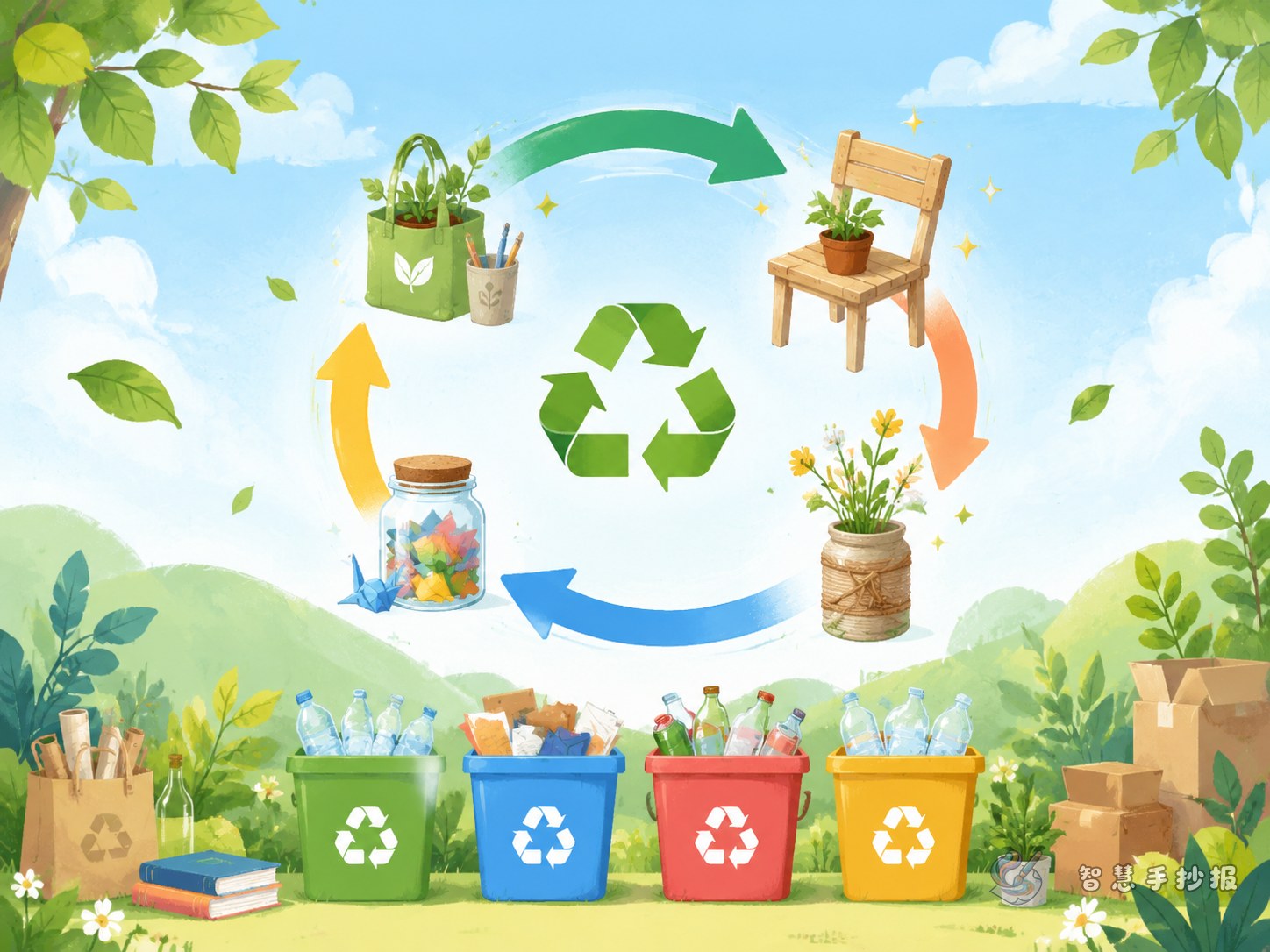
To make the poster more creative, use an arrow-style route map to show the process: home sorting, collection, transport and sorting, recycling and reuse. Add small drawings of boxes, bottles, cans, and books to make the page more lively.
Layout tips
- Place the main title at the top center and make it bold.
- Use the left side for common recyclable items and the right side for what happens after recycling.
- Add a small “My eco-friendly action list” at the bottom for interaction.
- Choose green, blue, and orange for a bright and clean look.
One detail many students forget
Do not turn the poster into a page of copied facts. It is better to include real-life examples, such as what to do with a drink bottle, how to fold a delivery box, or where to place old newspapers. This makes the content more relatable and more useful.
If you want to keep improving the title style, section arrangement, and decorative borders, you can continue designing your work in the WeChat mini program by Zhihui Shouchaobao.