Start with a clear theme line
If you are wondering what to include in a garbage sorting and recycling handwritten newspaper, begin with one simple theme line, such as “Sort waste, save resources” or “Recycle more, waste less”. A clear theme helps students keep the whole page focused and easy to read.
This topic works best when it covers two key ideas: waste sorting and resource recycling. One part can explain why sorting matters, and another part can show what items can be recycled and how to throw them away correctly.
A four-part layout is simple and practical
You do not need too many sections. A neat page with four content blocks is often enough:
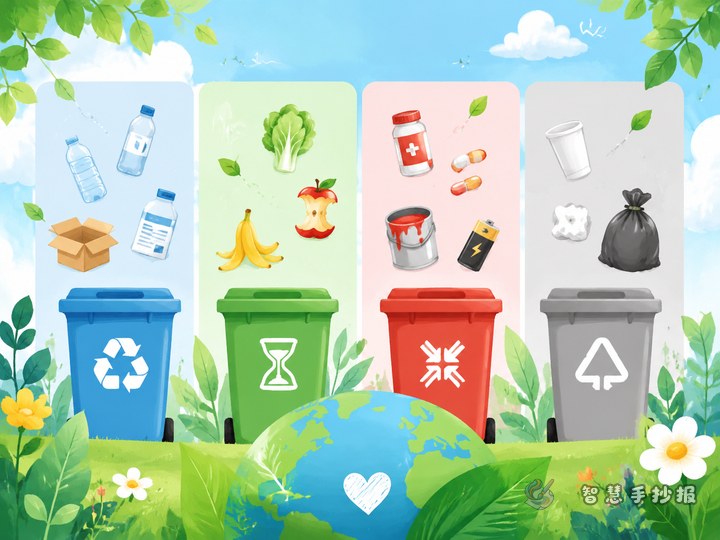
- Section 1: Basic facts about waste sorting — explain the difference between recyclable waste, kitchen waste, hazardous waste, and other waste.
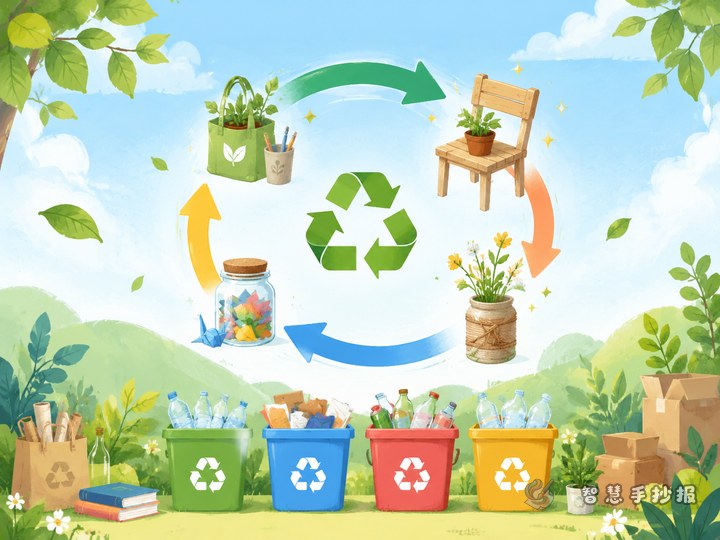
- Section 2: Common recyclable items — list paper, cardboard, plastic bottles, cans, glass bottles, and old clothes.
- Section 3: What students can do every day — write about small actions at home, at school, and in the community.
- Section 4: Green slogans and promises — add short lines to make the page lively and memorable.
This structure is easy for students to finish and also helps teachers quickly see the key points.
Ready-to-use writing material
Why waste sorting matters
Waste sorting helps reduce pollution and save useful materials. When recyclable items are separated properly, paper can be turned into new paper products, metal can be reused, and plastic can be processed again. Good sorting means less waste and better use of resources.
Examples of recyclable waste
Recyclable waste usually includes paper, plastic, glass, metal, and fabric. Common examples are newspapers, cartons, drink bottles, cans, glass jars, and old clothes. It is better to keep these items clean and dry before putting them into the recycling bin.
Student action ideas
Students can bring environmental protection into daily life. Use fewer disposable products, sort bottles after drinking, save reusable paper, and remind others not to litter. Small habits can make a big difference over time.
How to make the page look more lively
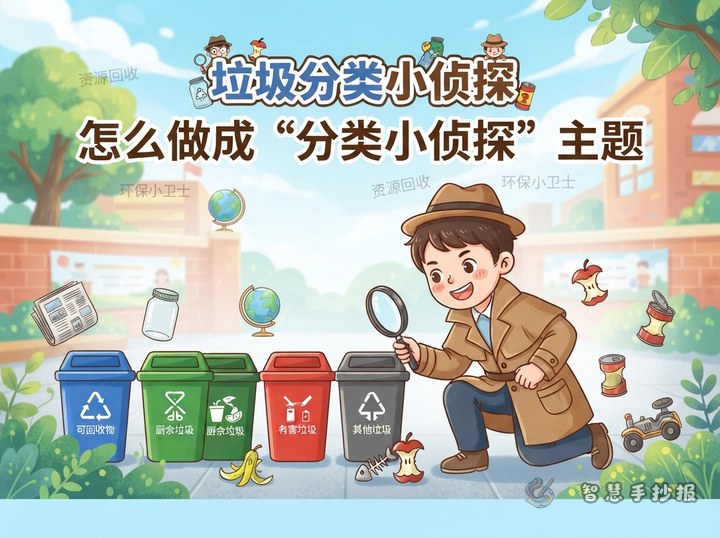
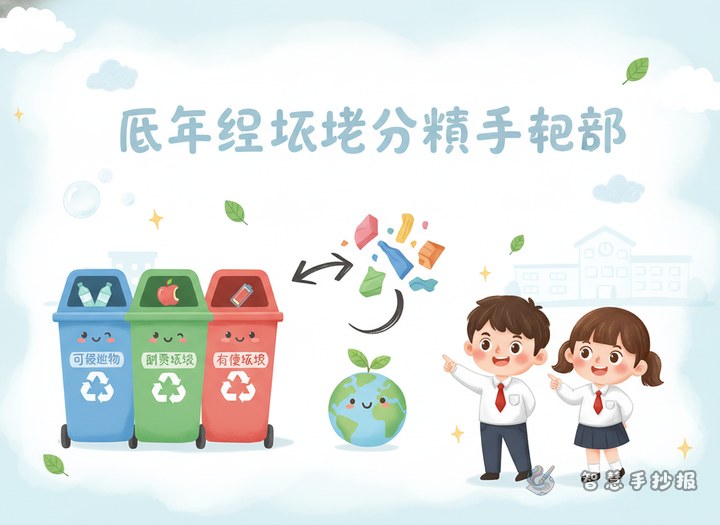
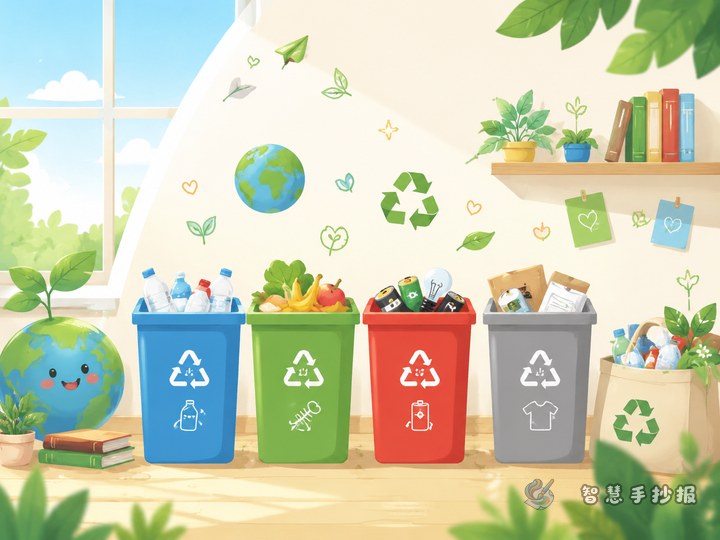
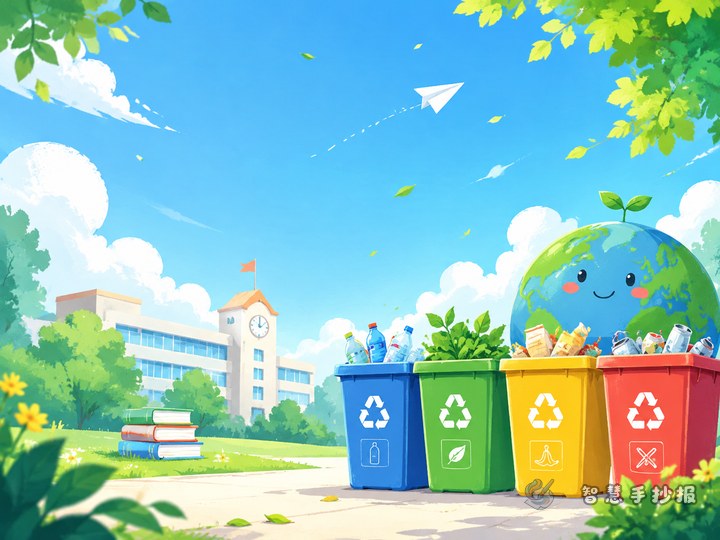
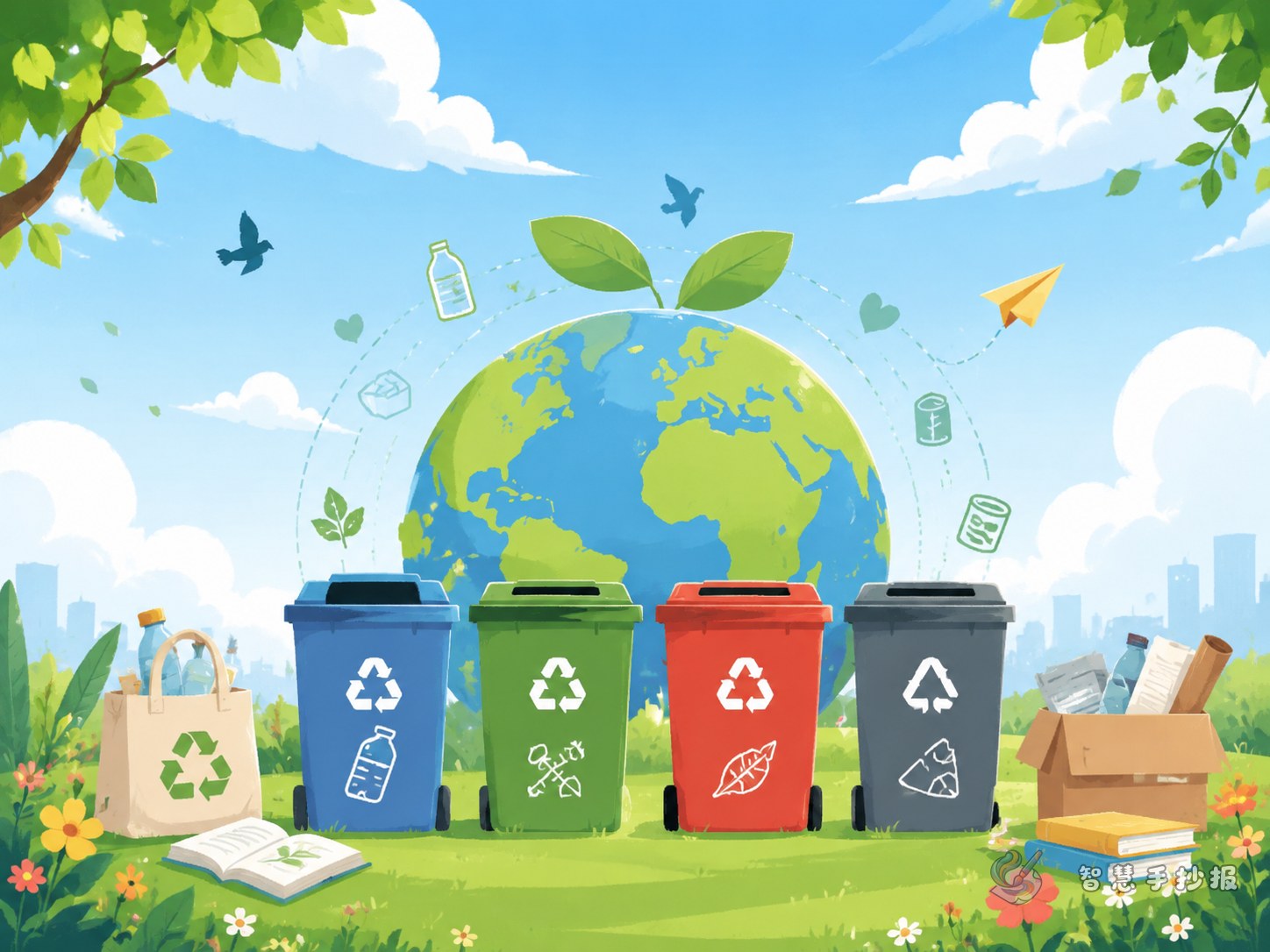
This kind of handwritten newspaper looks great with a fresh environmental style. Green, blue, and yellow are good main colors. You can decorate the title with recycling arrows, trees, the Earth, bins, paper boxes, and bottles.
If the page feels empty, add small icons beside each section. For example, use a recycling symbol for recyclable waste, fruit peels for kitchen waste, and a battery icon for hazardous waste. These simple drawings make the topic easier to understand.
Neat layout tips for students
Many students write too much in one area, which makes the page crowded. Keep the main title large, make section titles clear, and use short paragraphs. Important phrases like “recyclable waste”, “save resources”, and “reuse” can be highlighted in bold.
- Write the main title first.
- Plan the sections before filling in text.
- Use short blocks instead of long paragraphs.
- Leave some blank space to keep the page clean.
If you want to finish faster, you can organize your text ideas first and then continue polishing the layout in the WeChat mini program.
Short slogans for the ending
- Sort waste today, protect Earth tomorrow.
- Recycle more, waste less.
- Small sorting habits create a cleaner world.
- Turn waste into useful resources.
- Green living starts with me.