Choose a home-based theme that feels easy to draw
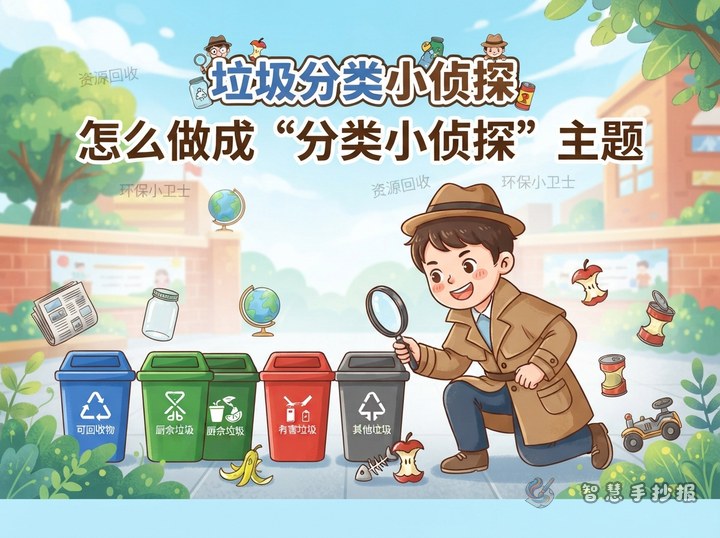
For this topic, a practical angle is “Where does our daily household waste go?” Instead of writing only about waste sorting in general, this home-life perspective helps students build a poster that feels specific and relatable. A main heading such as “How to Sort Kitchen Waste and Other Trash” or “Small Recycling Actions at Home” works well.
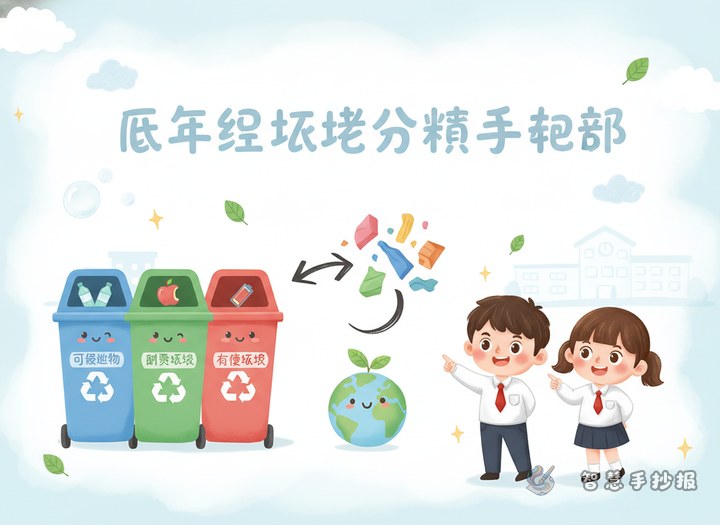
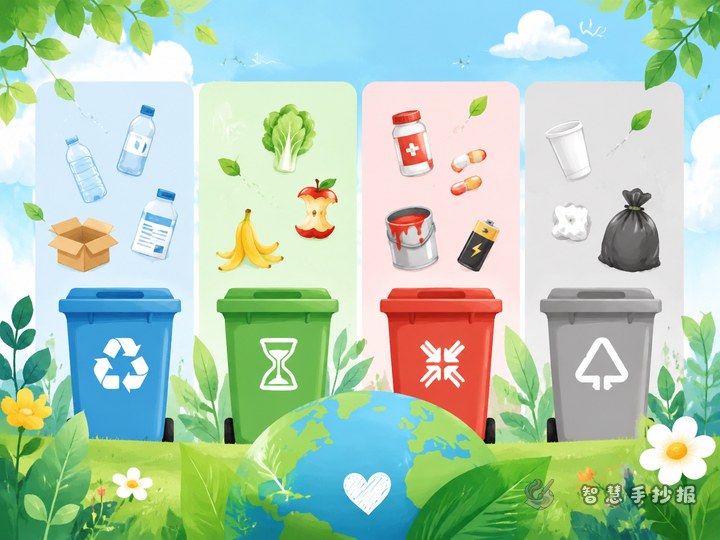
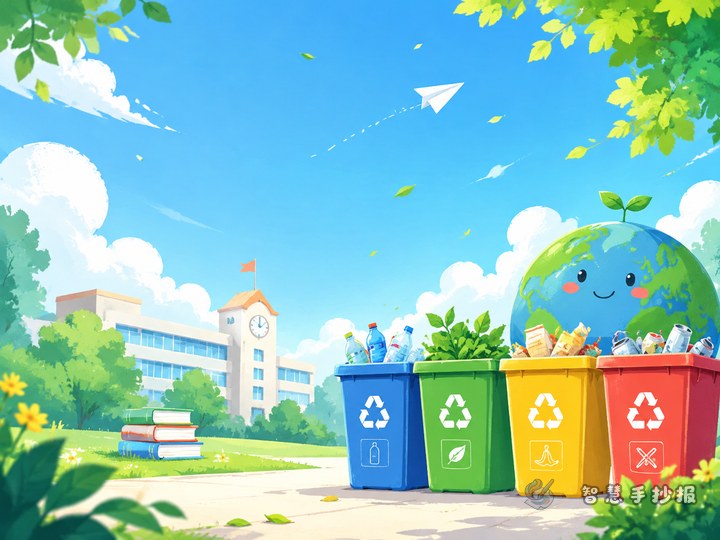
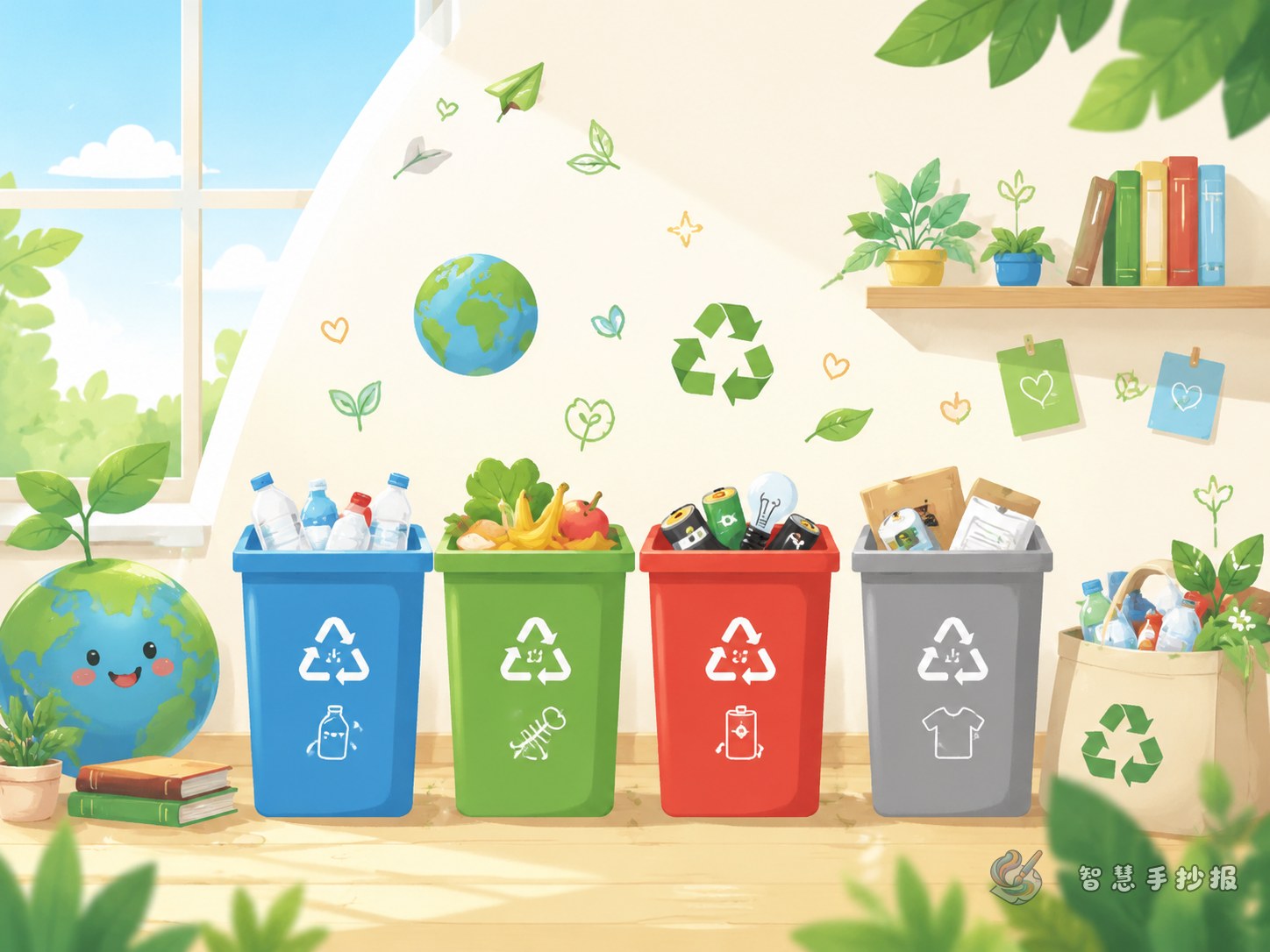
The center illustration can be four sorting bins, or a simple family scene with fruit peels, paper boxes, bottles, batteries, and leftover food moving into the right bins. This makes the poster more vivid and easier for children to complete.
A clear layout that works well for students
A simple and neat structure is “one central picture with sections around it.” You do not need too many blocks. Four or five sections are enough.
- Section 1: A short sorting rhyme to help memorization.
- Section 2: Common household waste examples such as fruit peels, cartons, books, bottles, batteries, and bulbs.
- Section 3: Why recycling matters to explain how recovered materials can be reused.
- Section 4: My green actions to show what students can do at home.
- Section 5: Items people often sort incorrectly to make the poster more useful.
Different title colors like green, blue, and orange can help each section stand out while keeping the eco-friendly theme.
Ready-to-use text ideas for the poster
A short sorting rhyme
Recyclables can live again, paper, plastic, metal—separate them. Kitchen waste breaks down fast, food scraps and peels in the right place last. Harmful waste needs special care, batteries and medicine should not go anywhere. Other waste that cannot be reused should be placed correctly to keep our world clean.
Common examples from home
- Recyclables: newspapers, cardboard boxes, drink bottles, cans, old books.
- Kitchen waste: vegetable leaves, fruit peels, leftovers, eggshells, tea leaves.
- Hazardous waste: used batteries, expired medicine, old light tubes.
- Other waste: dirty tissues, heavily contaminated disposable containers, dust, broken ceramics.
Why resource recycling is important
Recycling is not only about removing trash. It means collecting useful materials and giving them another chance to be used. Recycling paper helps save trees, recycling plastic and metal helps save raw materials, and proper sorting reduces pressure on landfills and waste treatment.
How to make the recycling part more vivid
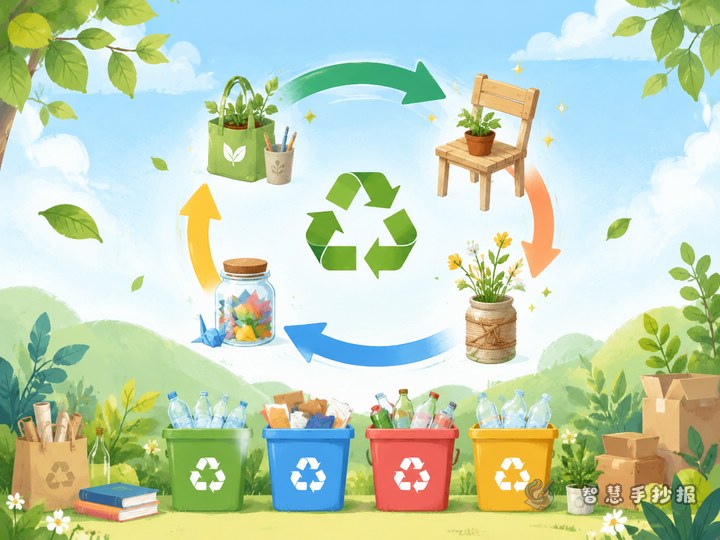
Many students write only “protect the environment,” which can sound too general. A better way is to show what happens before and after recycling.
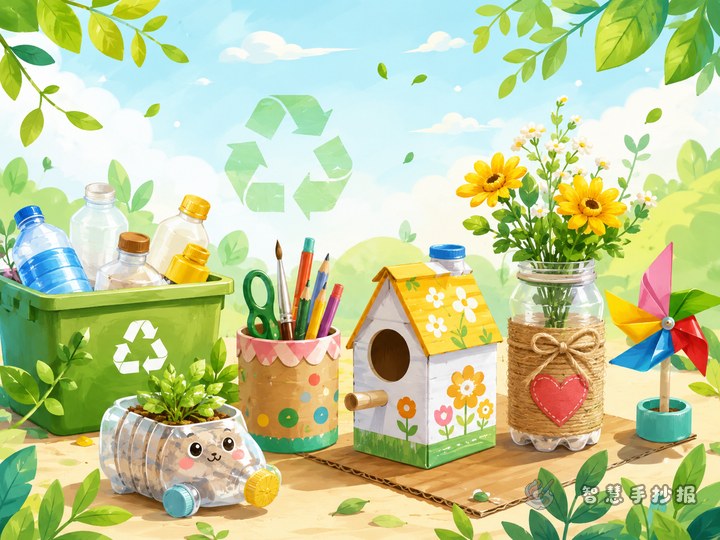
- Old newspapers and cardboard can be collected and made into new paper products.
- Plastic bottles can enter a reuse process after proper sorting.
- Metal cans can be recovered to save natural resources.
- Used clothing, when suitable for collection, can also reduce waste.
You can also add a short closing line: Good sorting makes recycling more effective, and green living begins at home.
Small design tricks to make the poster look better
For borders, draw recycling arrows, leaves, the Earth, bins, boxes, bottles, or cans. These are easy to sketch and match the topic well. Green and blue can be your main colors, with a little yellow or orange for highlights. Do not fill every space with text. Some blank space makes the whole page cleaner.
If there is too much writing, divide the page into one rhyme section, one icon section, one example list, and one action section. This mix of words and drawings usually works very well for school posters. After organizing your ideas, you can also continue refining your design in the Zhihui Shouchaobao WeChat mini program.
A natural way to end the poster
The ending does not need to be long. Three or four sentences are enough. You can write that waste sorting may seem small, but it is a habit worth keeping. Sorting household waste correctly and sending recyclables to collection points helps protect the environment. Let us start today and build cleaner surroundings together.