Start with a Waste Clue
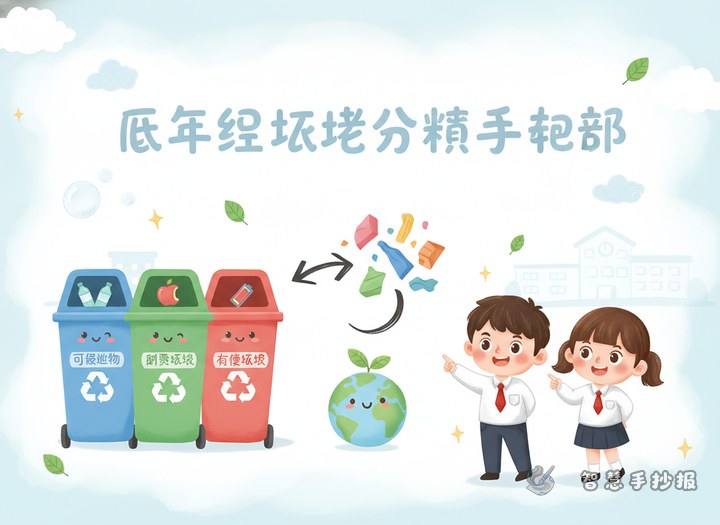
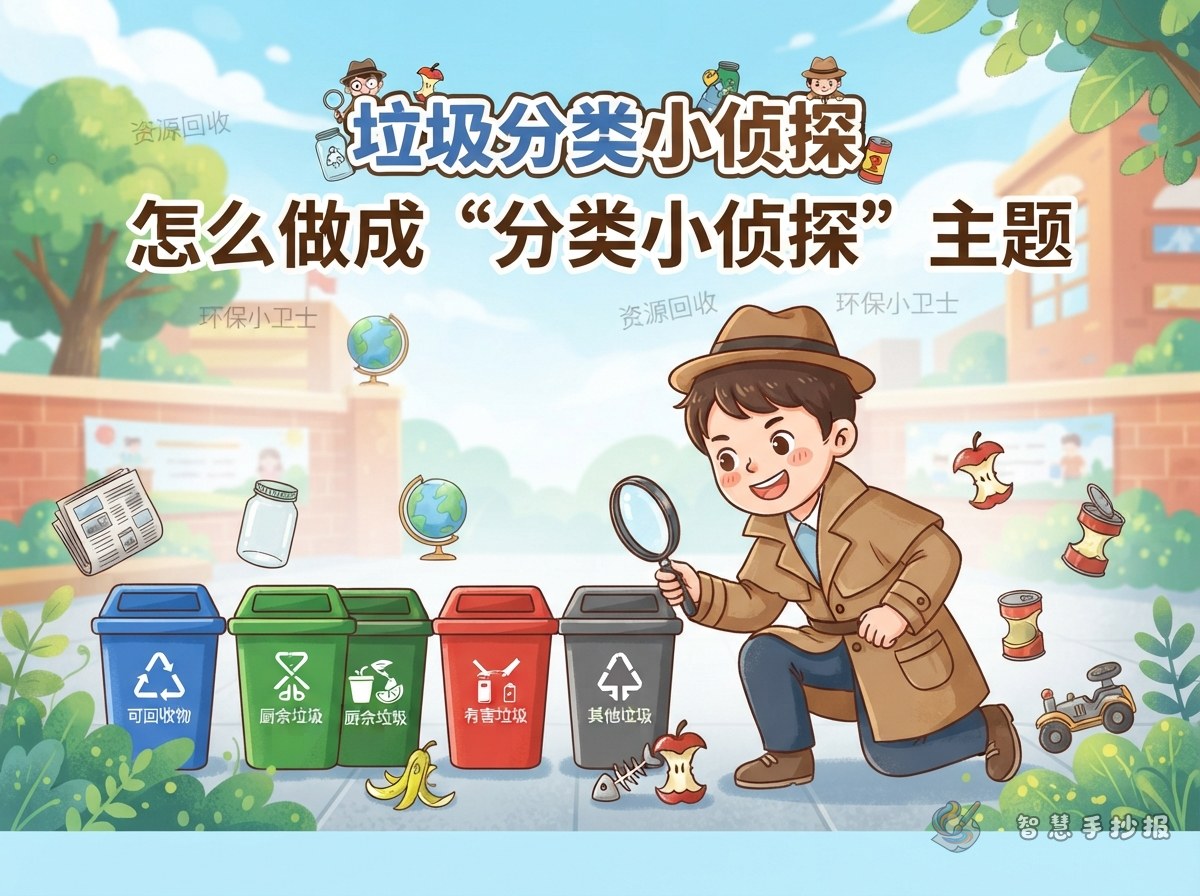
Instead of filling the poster with long explanations, turn each piece of waste into a clue waiting to be solved. Build the whole idea around one question: Where should it go, and why? Draw a young detective with a magnifying glass in the center and add the line “Find the right home for every piece of waste” so the theme is clear at a glance.
Title and opening lines
- Main title: The Waste-Sorting Detective
- Subtitle: Follow the clues, sort waste with confidence
- Opening line: Every correct disposal choice is a helpful clue for our planet.
Turn Four Waste Groups into Clue Cards
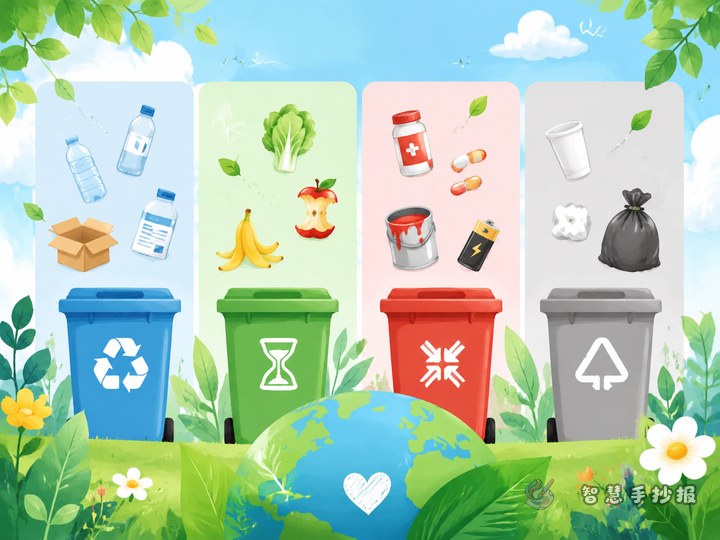
Keep the information light by drawing four clue cards and connecting them with arrows to the matching bins. The examples below are suitable for a children’s poster. Add a small note that local sorting rules may differ and the local guide should be followed.
- Recyclables: Paper boxes, newspapers, metal cans, plastic bottles, and glass bottles. They are generally easier to recycle when kept relatively clean and dry.
- Kitchen waste: Leftover food, fruit peels, vegetable leaves, eggshells, and other food scraps that decompose easily.
- Hazardous waste: Used batteries, expired medicine, and discarded fluorescent lamps that may harm the environment. Look for the designated disposal sign.
- Other waste: Used tissues, dust, cigarette butts, and household waste that is temporarily difficult to recycle.
Plan the Page as a Detective Trail
Rather than arranging the content as a plain list, draw a winding investigation trail. Begin with a waste clue in the upper-left corner, pass through a decision station in the middle, and finish at the correct bin in the lower-right corner. Each stop should carry only one key idea, allowing readers to follow the arrows and complete a small sorting mission.
- Clue zone: Draw four or five familiar objects, such as a fruit peel, drink bottle, used battery, and tissue.
- Decision station: Add three simple questions: “Can it be recycled? Does it decompose? Could it be dangerous?”
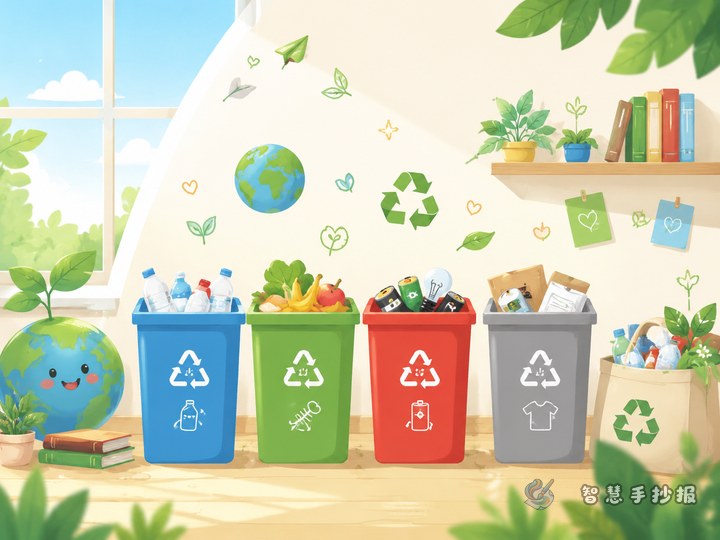
- Sorting finish: Draw four differently colored bins and label each with its category and one short reminder.
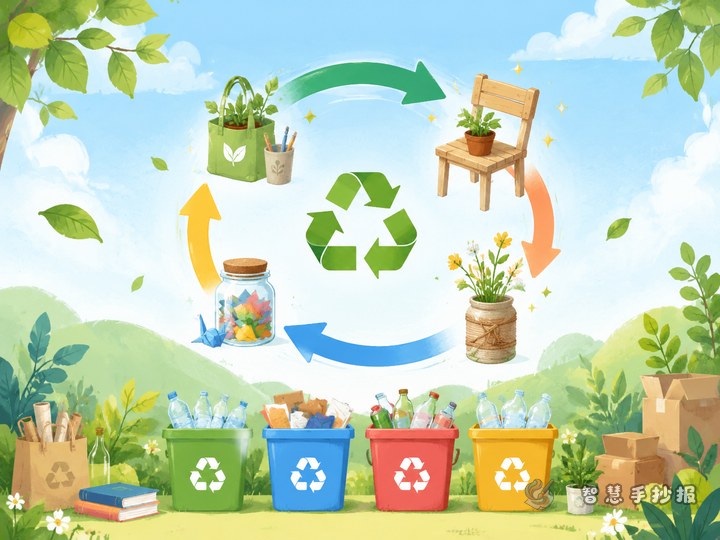
- Action corner: Include practical actions such as using fewer disposable items, repairing things before replacing them, and keeping recyclables separate.
Write the Facts as Mini Case Files
Short questions and answers make the poster feel like a game instead of a list of definitions. These examples can be copied beside the detective trail:
- Question: What should I do with an empty plastic drink bottle? Answer: Empty it, keep it as clean and dry as possible, and place it with recyclables according to local rules.
- Question: Where should a fruit peel go? Answer: It is usually kitchen waste and should not be mixed with plastic packaging.
- Question: Can a used tissue be recycled? Answer: It is usually treated as other waste, but check local sorting rules.
- Question: Can I throw away a used battery anywhere? Answer: Check the local guide and collection-point signs first. Batteries classified as hazardous waste belong in the designated container.
Add Detective Details Without Making the Page Busy
Use green, blue, and yellow as the main colors, with a small amount of red for warnings and hazardous-waste reminders. Clue cards can look like magnifying glasses, folders, footprints, or sticky notes. Keep the bin icons similar in size, limit each section to two or three lines, and leave breathing room around borders and arrows.
Sketch the investigation trail in pencil first, then add the title and short lines before drawing the characters, waste icons, and colors. After planning the page, you can scan to enter the WeChat Mini Program “智慧手抄报” and continue arranging the sections and making your own waste-sorting handwritten poster.