Begin with One Object and One Clear Story
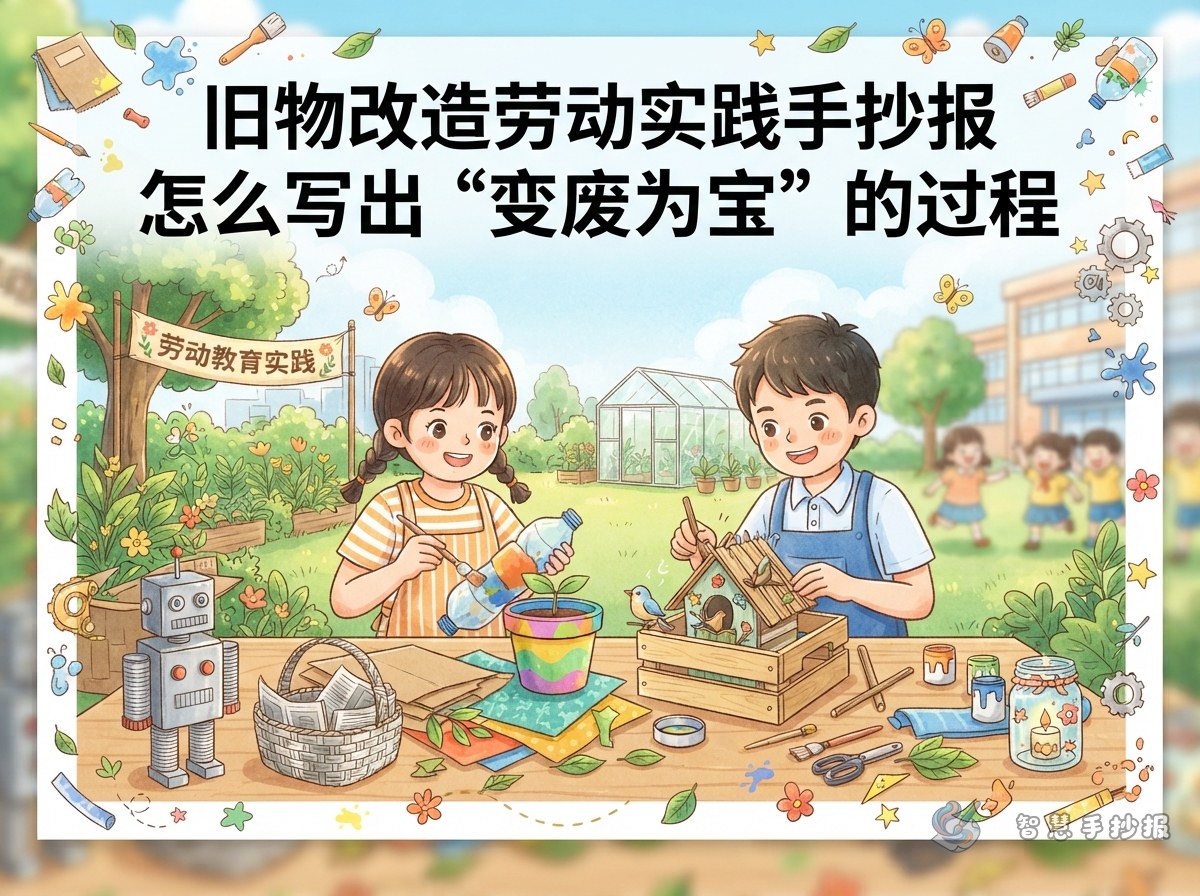
An upcycling handwritten newspaper should not stop at the slogan turn waste into treasure. Choose one specific item, such as a delivery box, a drink bottle, an old newspaper, or a paper tube. Make sure the material is clean and easy to handle, and ask an adult for help when cutting thick pieces. Build the story around three questions: What did I find, what problem did it have, and what did I want to make?
A title such as My Upcycling Project: Giving an Old Item a New Use works well. A subtitle like Changing an object with my hands also changed the way I think adds a personal touch.
Turn the Experience into a Labor Trail
Arrange the main text in the order of discovery, preparation, making, improvement, and use. Write two or three sentences for each stage, then connect them with arrows or small icons so the reader can follow the work from beginning to end.
What I noticed before starting
Sample text: I found an old paper box that was no longer being used. Throwing it away seemed wasteful, so I decided to turn it into a small organizer for stationery.
Materials and tools
List the old box, colored paper, glue, a ruler, a pencil, and safety scissors. Mention that the material was cleaned first and that the cutting lines were measured in advance. A clear list makes the page feel like a real practice record.
Making, finding a problem, and improving
Sample text: I measured and drew the lines before cutting and folding. The corners were not neat enough after the first attempt, so I adjusted them and covered the joins with colored paper to make the box stronger and cleaner.
How the finished item is used
Sample ending: The old box became a desktop organizer for pencils, rulers, and notes. This activity taught me to be patient and to look for solutions when something does not work the first time.
Ready-to-Use Copy for the Page
- Theme sentence: An old object is not always rubbish. With careful thinking and hands-on work, it can be useful again.
- Labor diary: Today I measured, cut, glued, and decorated the material. Keeping the corners neat was the most difficult part.
- Small discovery: Planning the size first reduces waste. Checking the joints afterward helps the finished item last longer.
- What I learned: Upcycling taught me to observe, plan, and finish a task patiently. It also made me more willing to take care of everyday objects.
Draw the Layout as a Mini Project Route
- Place a large title at the top and draw the outline of a box, bottle, or paper tube beside it.
- Use the left section for Before Upcycling, including the item's former use and the problem to solve.
- Use the center for a curved route with three stops: Materials, Making, and Improving the Details.
- Use the right section for After Upcycling, including the new item, its purpose, and a personal reflection.
- Reserve the bottom for Labor Tips, such as saving materials and using scissors and glue safely.
A palette of cardboard brown, leaf green, and bright yellow can suggest both used materials and nature without overpowering the writing. Tape shapes, dotted lines, folded-paper marks, and recycling arrows make useful borders. Keep decorations around the information instead of covering it.
Keep the Record Honest and Personal
The project does not need to be complicated. Even turning an old box into a pencil holder can show meaningful labor if the page explains the actual materials, steps, small difficulties, corrections, and final use. Small labels such as My Part, Where I Needed Help, and What I Will Improve Next Time can make the handwritten newspaper feel like a careful practice record.
After deciding on the copy and layout, you can continue organizing the sections and choosing a suitable design in the 智慧手抄报 WeChat Mini Program, then add details from your own experience.