Begin with a Lunar Day Calendar
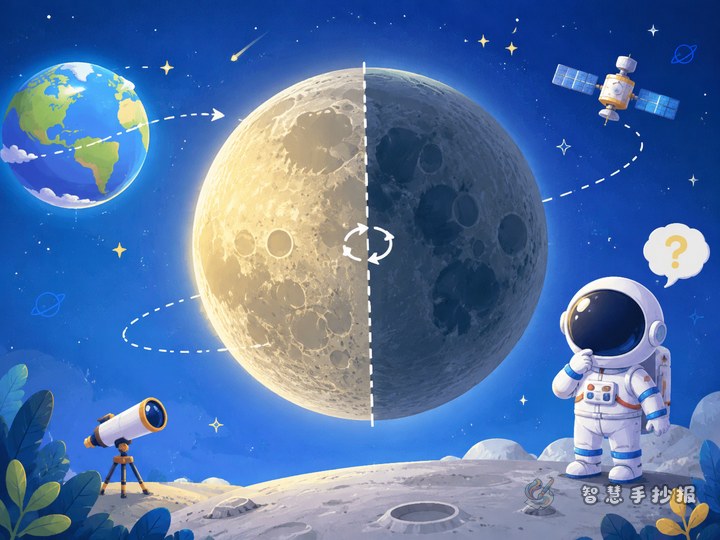
This handwritten newspaper can begin with one clear question: why is a day on the Moon much longer than a day on Earth? Draw a gray-white Moon in the center and place a circular timeline beside it, moving from sunrise to daylight, sunset, and night. This helps readers understand the lunar day before learning how astronauts plan exploration work around sunlight.
Opening text: The Moon rotates, so its surface also has day and night. However, the Moon rotates very slowly. From one sunrise to the next, a lunar location experiences about 29.5 Earth days.
Three Time Ideas to Explain Clearly
- Lunar rotation: The Moon takes about 27.3 Earth days to rotate once when measured against the distant stars.
- Day and night on the Moon: From one sunrise to the next takes about 29.5 Earth days, with daylight and darkness each lasting roughly two weeks.
- Moon phases: The crescent, half Moon, and full Moon we see from Earth are different views of the sunlit part of the Moon. They are not the same as day or night at one particular place on the lunar surface.
Place these ideas on three colorful information cards. Add a rotation arrow, sunlight rays, and small Moon-phase drawings so the difference between lunar phases and lunar daylight becomes easy to see.
Turn an Astronaut Mission into a Light-and-Time Timeline
Astronauts and lunar equipment must pay attention to the direction of sunlight, visibility, power conditions, and changes on the surface. The handwritten newspaper does not need to read like a technical report. Use four small panels to show the rhythm of exploration:
- Lunar sunrise: Show sunlight rising above the horizon and the gradual change in the lunar landscape.
- Lunar daylight: Explain that surface observations, information gathering, and equipment checks can be planned according to the light.
- Lunar sunset: Record changes in the sky and surface light as the next stage of a mission approaches.
- Lunar night: Emphasize the low-light environment and the fact that the change from day to night is very slow.
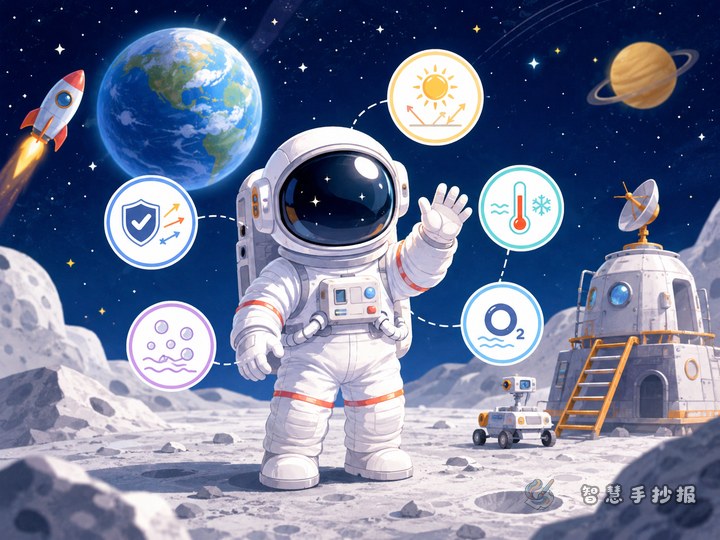
Ready-to-copy fact: The Moon does not have a thick atmosphere like Earth. Its surface experiences noticeable changes in light and temperature between day and night. Lunar missions must consider the location, equipment condition, and position of the Sun, so exploration requires both courage and careful planning.
Design the Page So the Day-Night Change Is Obvious
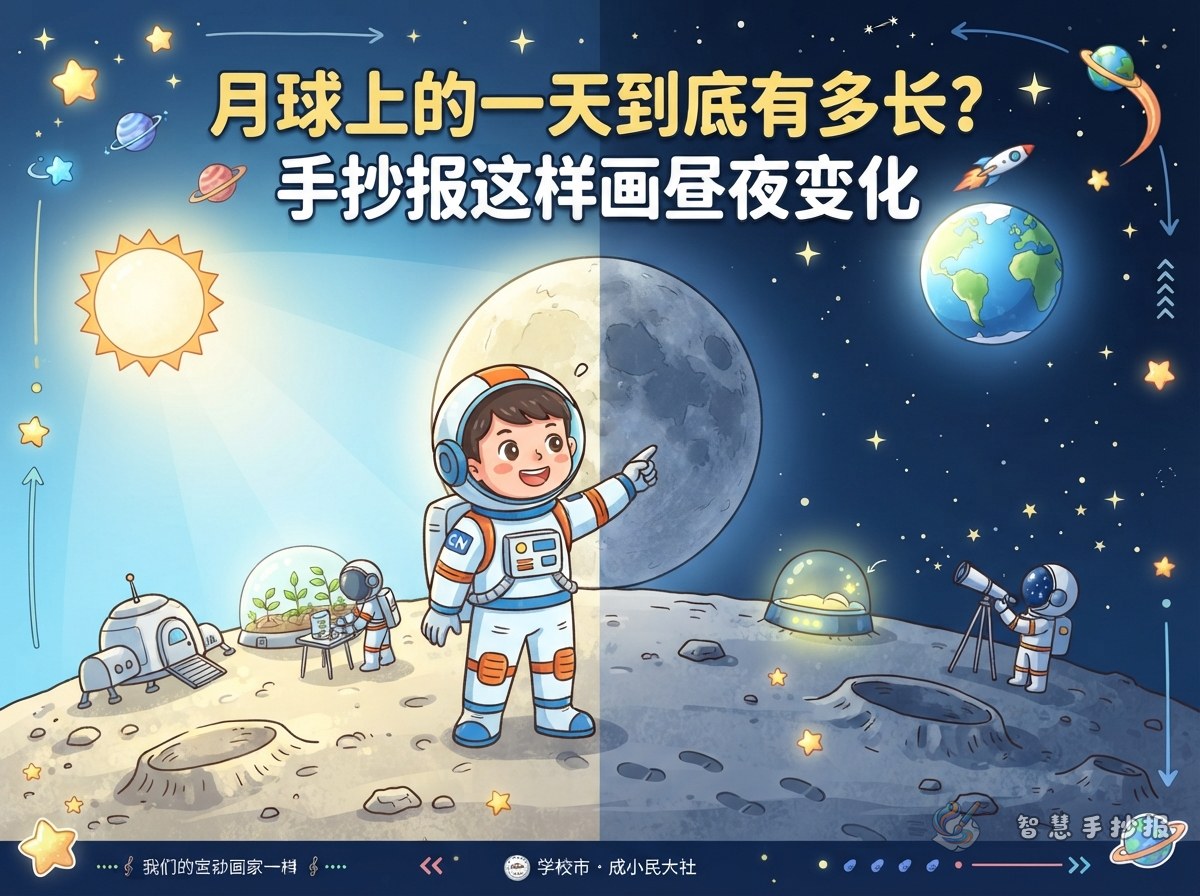
Try a split layout with a central timeline. Use yellow, orange, and light gray for the daylight side, and deep blue, purple, and white star dots for the night side. Put sunrise, sunset, and the roughly 14-day length on the timeline.
- Place the main title at the top and highlight 29.5 Earth days inside a large circle.
- Leave some space on the central Moon for short notes about rotation, orbit, and Moon phases.
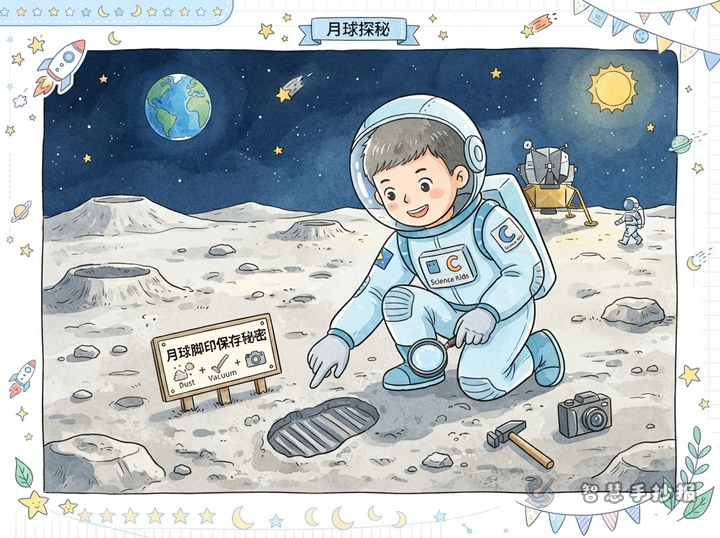
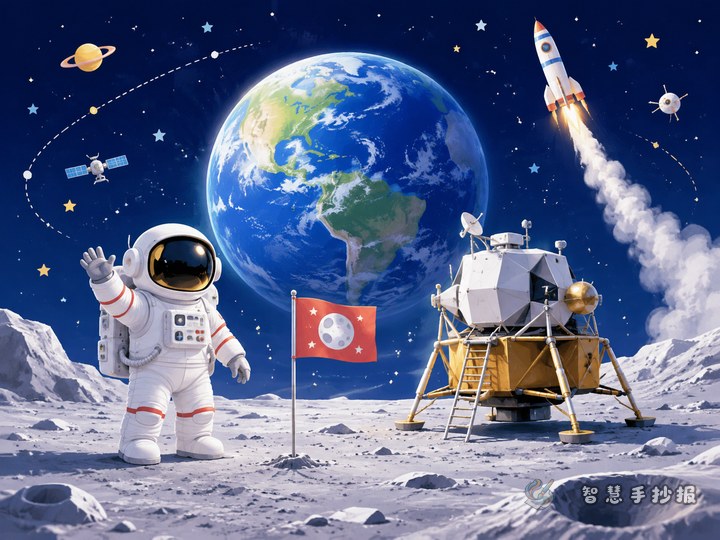
- Add an astronaut mission card at the bottom, using small flags, footprints, a Sun, and instrument symbols.
- Write a short corner caption such as: The lunar sunrise is like a very slow sky clock.
A Final Checklist Before You Finish
Check four details: Does the page say that one lunar sunrise-to-sunrise cycle lasts about 29.5 Earth days? Does it explain that lunar daylight and darkness each last about two weeks? Does it distinguish Moon phases from local lunar day and night? Does the astronaut section focus on exploration and light conditions instead of simply listing technical words?
If you want to arrange the columns, colors, and drawing ideas more quickly, continue creating the page in the Zhihui Handwritten Newspaper WeChat mini program and turn this lunar day-and-night plan into a neat page ready to copy.