Start with one clear question in the center
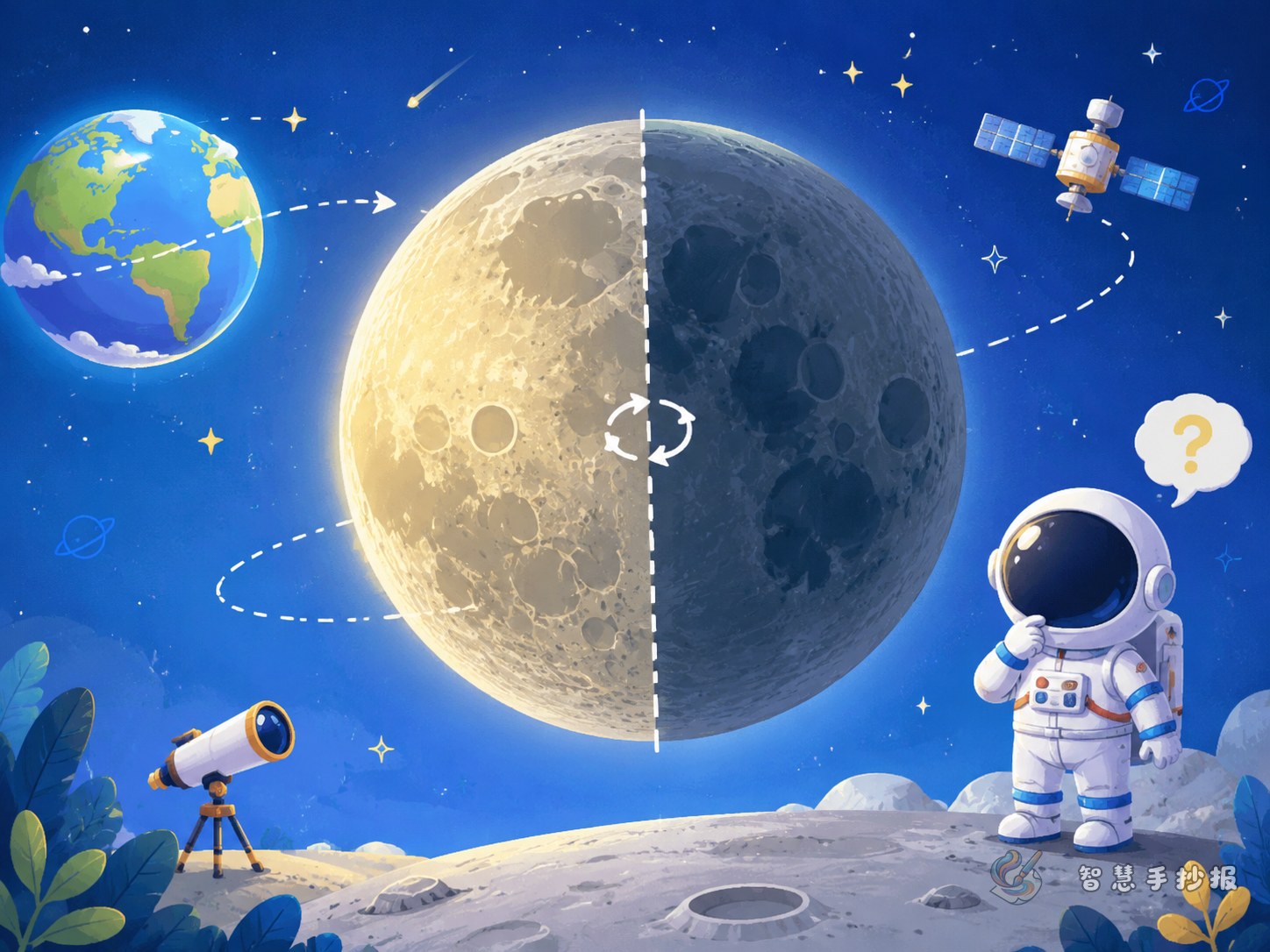
This topic works best when the main title is a question: Why does the Moon always show one side to Earth? It sounds natural, invites curiosity, and suits a school handwritten newspaper well. In the middle of the page, place a short answer: the Moon rotates, but its rotation period is nearly the same as its orbit around Earth, so we usually see the same side.
If the page is small, turn the explanation into a question box and an answer box so readers can understand the point quickly.
Easy science text students can copy
1. The Moon does rotate
Some students think the Moon does not spin at all, but that is not true. The Moon moves around Earth and also rotates on its own axis.
2. Why we keep seeing the same side
The Moon takes nearly the same amount of time to rotate once as it takes to orbit Earth once. This is called synchronous rotation. Because of this, the side facing Earth stays almost the same over time.
3. The far side is not the dark side forever
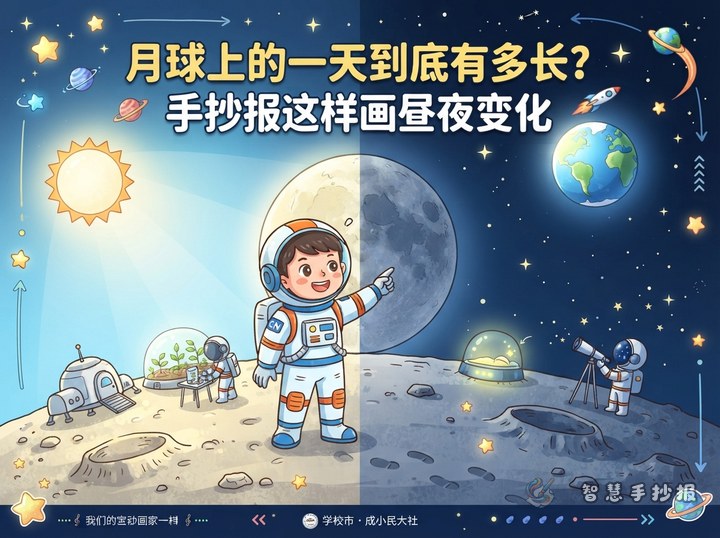
The far side simply means the side that does not usually face Earth. It still receives sunlight during the Moon's motion in space.
4. Is this related to moon phases?
Moon phases change because we see different amounts of the sunlit half of the Moon from Earth. Moon phases do not mean the Moon is turning a different face toward us each night.
How to organize the sections
A science-themed handwritten newspaper looks neat with one main idea in the center and supporting sections around it.
- Center section: Why the Moon shows one side to Earth
- Top left: Rotation and revolution facts
- Top right: A short moon phases note
- Bottom left: Near side and far side differences
- Bottom right: Lunar exploration and astronaut observations
You can also add a small myth box with short lines such as “Far side does not mean always dark” and “Not seeing it does not mean it does not exist.”
Short lines for the poster
- The Moon is always moving.
- The Moon rotates and revolves at nearly the same pace.
- That is why Earth usually sees the same lunar side.
- The far side of the Moon still gets sunlight.
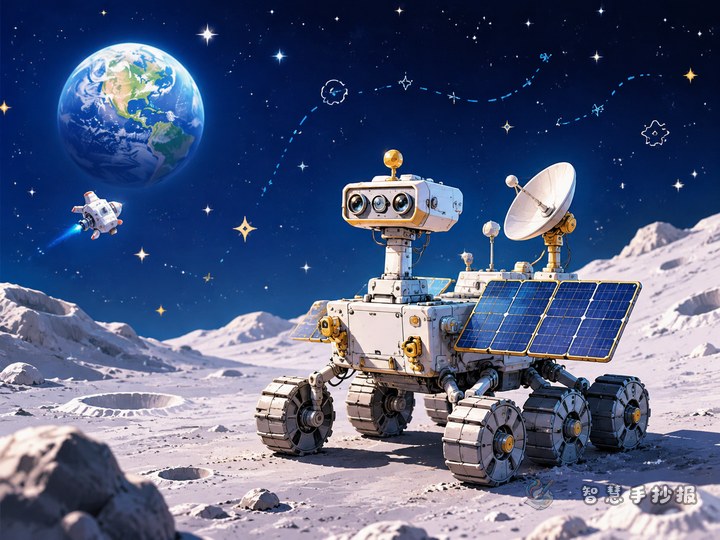
- Lunar exploration helps people learn more about the Moon's surface and environment.
These short sentences are useful for labels, side notes, or decorated boxes on the page.
Add astronaut knowledge naturally
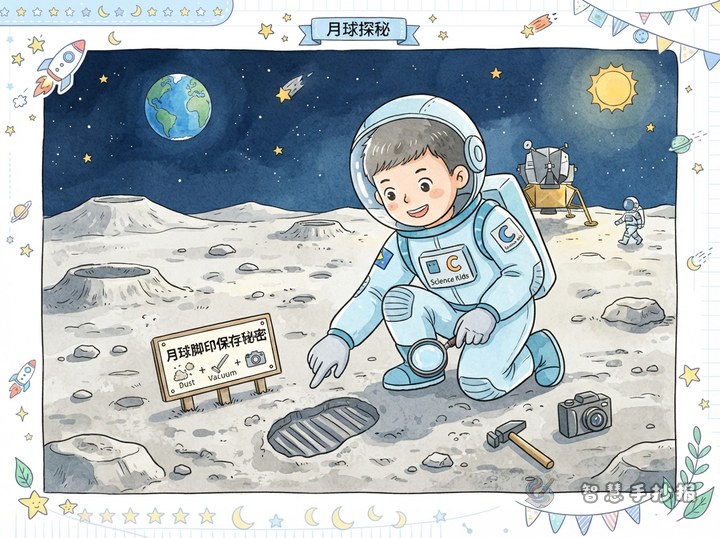
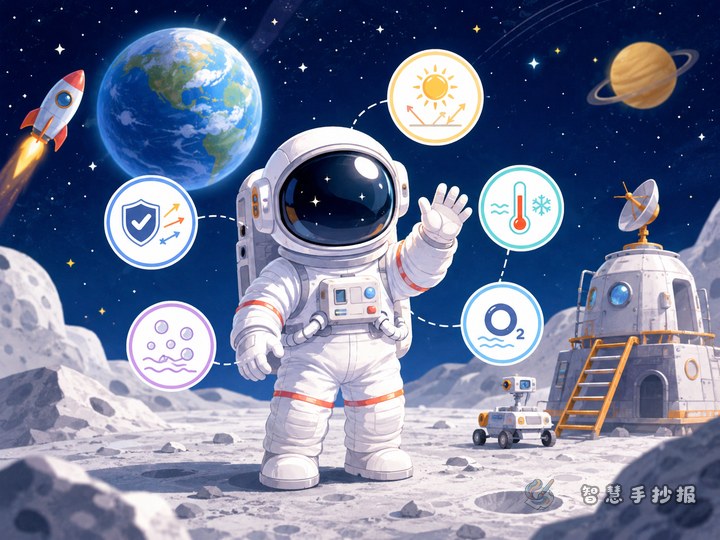
Even though this topic is mainly about lunar motion, it becomes richer if you include astronaut and exploration knowledge. You can write that astronauts, spacecraft, and scientists study the Moon through observation, photography, and exploration missions. Space probes have helped humans learn much more about the far side of the Moon.
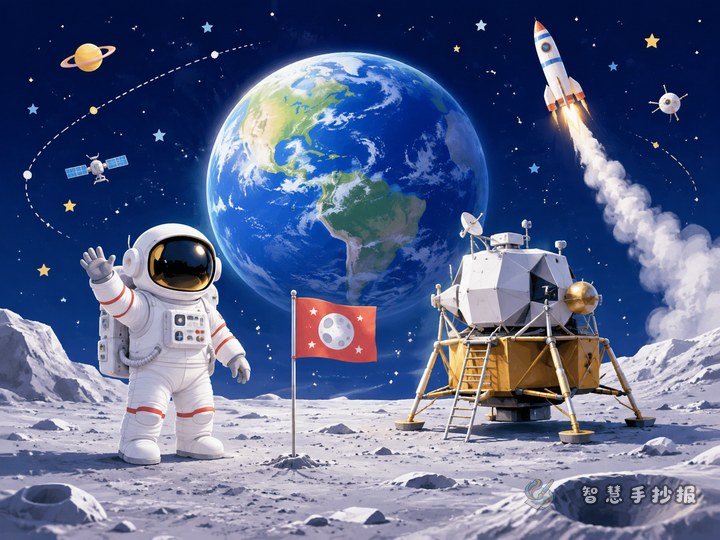
A fun extra section is: What would astronauts see if they stood on the Moon and looked at Earth? This connects Moon science with space travel in a lively way.
Layout and making tips
- Use dark blue or purple for the title to create a space feeling.
- Draw Earth, the Moon, and circular arrows to explain the motion clearly.
- Highlight key words such as rotation, revolution, and synchronous rotation.
- Do not fill the page with long paragraphs. Mix text with boxes and small diagrams.
- End with a line such as “Looking at the Moon means asking questions about the universe.”
If you want to keep improving the page design, you can continue organizing titles, sections, and layout ideas in the Zhihui Handwritten Newspaper WeChat mini program.