Use Port Cities as the Main Angle
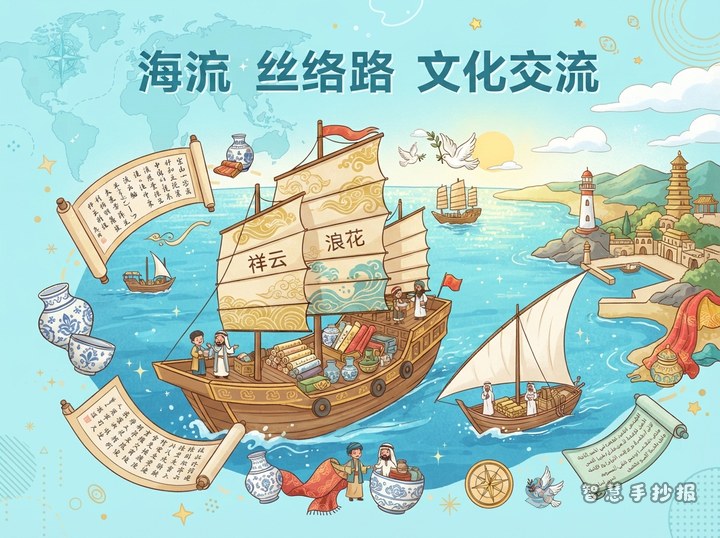
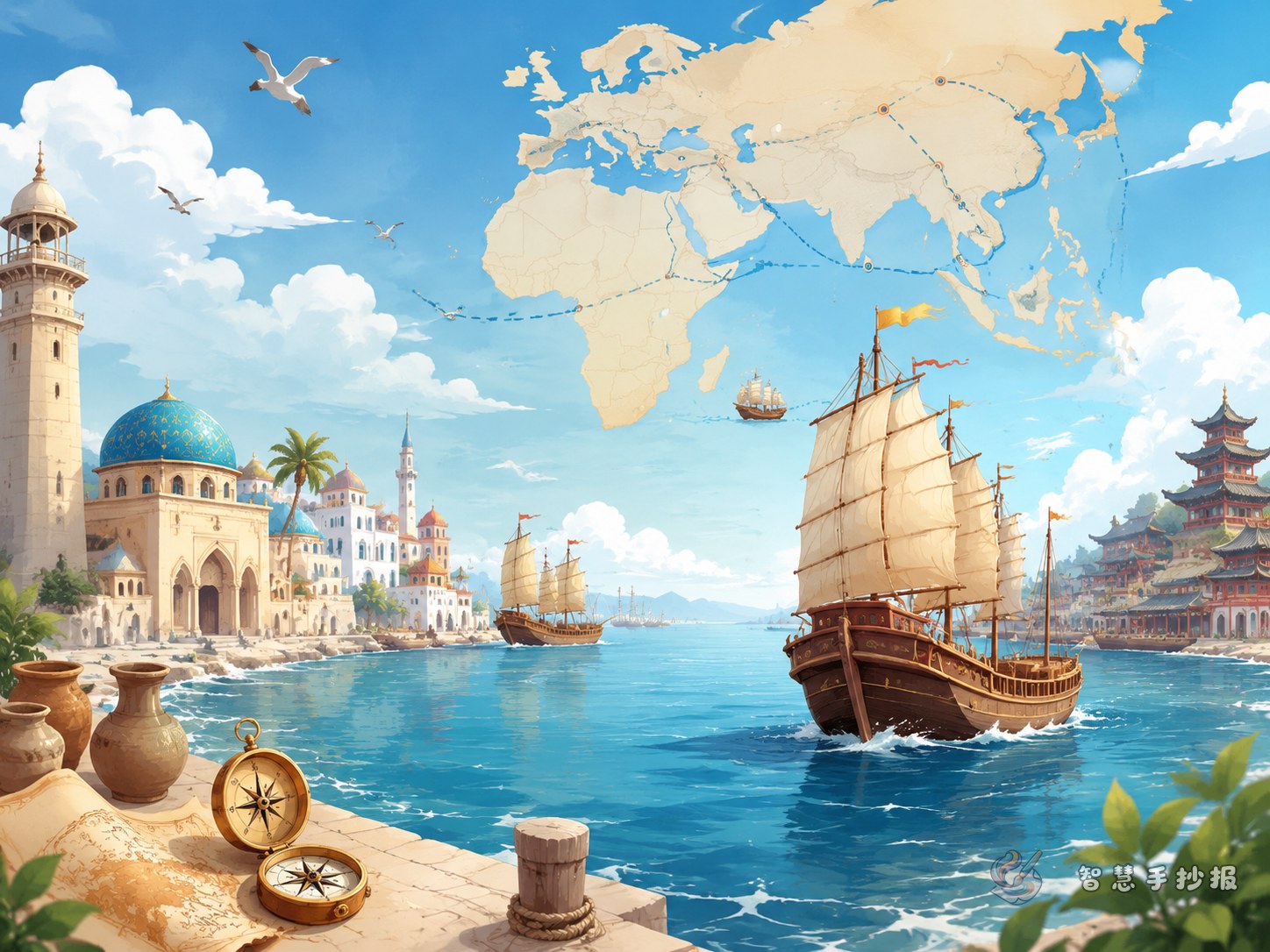
If you want your Maritime Silk Road handwritten newspaper to feel focused rather than too broad, choosing port cities along the Maritime Silk Road is a smart idea. Ports connect ships, trade, and cultural exchange, so this angle gives you both historical facts and visual design ideas.
A title like “Port Cities on the Maritime Silk Road” or “Ancient Ports and Nautical Culture” sounds clear and natural for a school project.
Simple Sections You Can Add
- Opening introduction: Explain in two or three sentences that the Maritime Silk Road linked coastal ports, merchant ships, trade, and cultural exchange.
- Famous port cards: Introduce cities such as Guangzhou, Quanzhou, and Ningbo, with short notes about their roles.
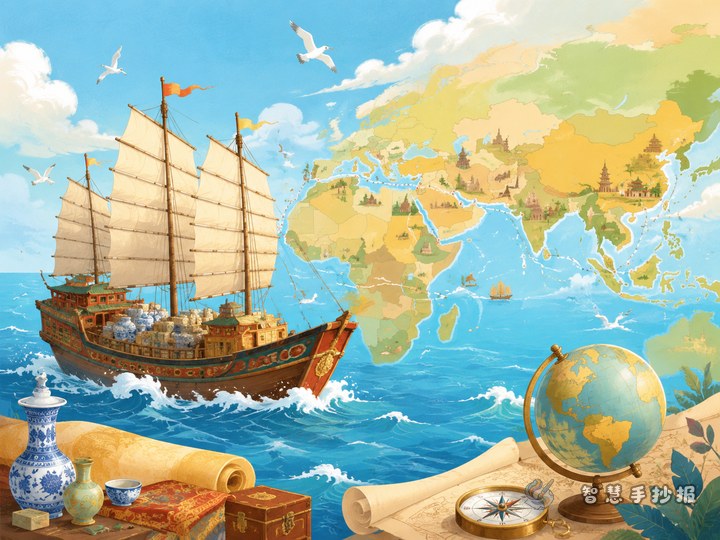
- Goods carried by ships: Mention silk, porcelain, tea, spices, and other items.
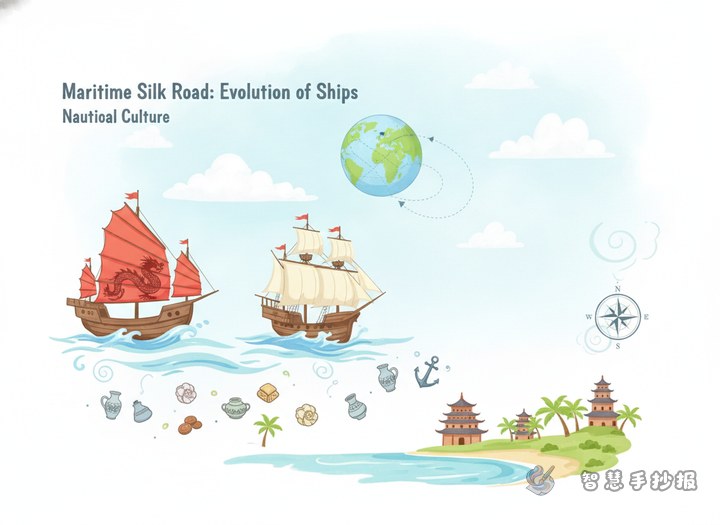
- Nautical culture corner: Add short facts about the compass, sails, wind, and stars.
- My conclusion: Write one sentence about what you learned from studying these ports.
Ready-to-Use Writing Material
The Maritime Silk Road was an important sea route in ancient times. Merchant ships sailed from busy ports and carried Chinese silk, porcelain, and tea to distant places. They also brought back spices, crafts, and cultural ideas from other regions. Port cities became gateways for trade and friendship.
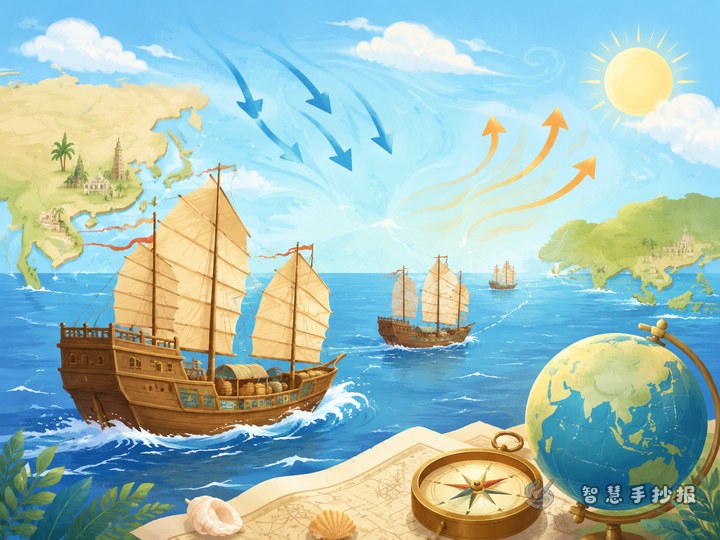
Ancient sailing was not easy. Sailors had to observe the wind, waves, and stars, and they relied on experience to find the right route. As navigation skills improved, ports became more active, and nautical culture grew richer. Learning about these cities helps us understand both history and cultural exchange.
Try a Route Map Layout
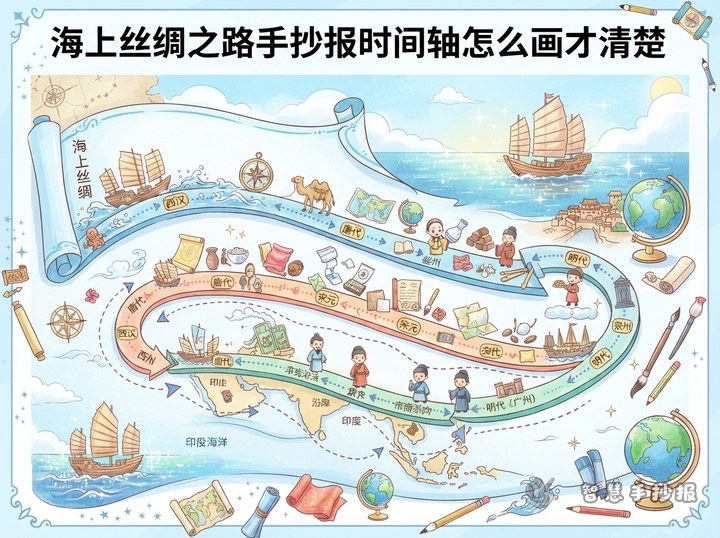
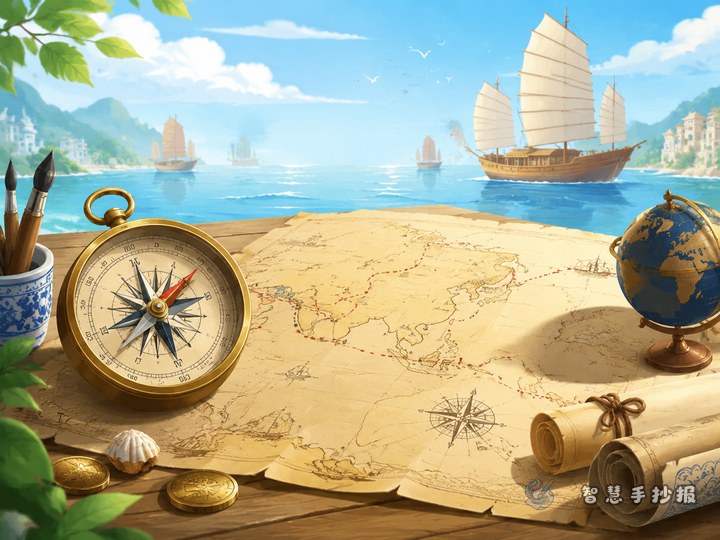
This topic works very well with a map-style page design. Put the main title in the center, then draw curved route lines around it. Place port city notes on one side, nautical culture facts on the other, and a small goods list at the bottom.
- Use dark blue or sea green for the main title.
- Decorate borders with waves, ropes, or compass shapes.
- Add small drawings of sailboats, seagulls, anchors, shells, or lighthouses.
- Choose light blue, beige, and soft brown for a classic sea-port feeling.
Keep the Text Short and Easy to Read
A common mistake is writing too much. For a better-looking handwritten newspaper, each section should stay short and clear. Three to five lines per box is usually enough. When introducing a port, you can simply write its location, role, and main goods.
If you want to keep improving the layout, adjust the title style, or find more ready-to-use material, you can continue creating in the Zhihui Shouchaobao WeChat mini program.