Start by deciding what your main title should emphasize
A Zheng He voyages handwritten newspaper does not need to feel like a dense history page. It works better when the theme focuses on maritime exploration, friendly exchange, and sea culture. A main title such as “Zheng He’s Voyages,” “My View of the Maritime Silk Road,” or “Sailing Toward Friendship” gives the whole page a clear direction.
You can add one short opening line under the title. For example: Zheng He led great sea voyages that showed ancient navigation skills and encouraged friendly exchange among different regions. A short lead-in helps the whole page feel complete.
Four sections are enough to make the page rich
Section 1: Who was Zheng He?
Use two or three simple sentences to introduce him. You can say he was a famous navigator in the Ming dynasty and an important figure in Chinese maritime culture. Keep this part short so it fits well beside a portrait or icon.
Section 2: Where did the fleet travel?
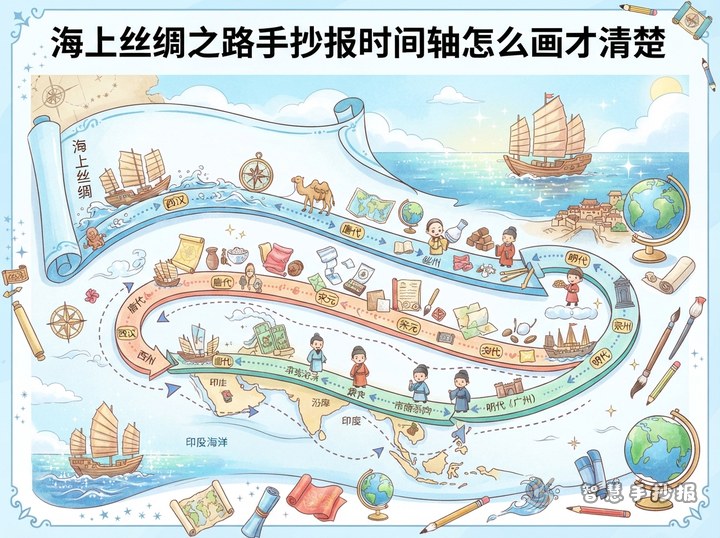
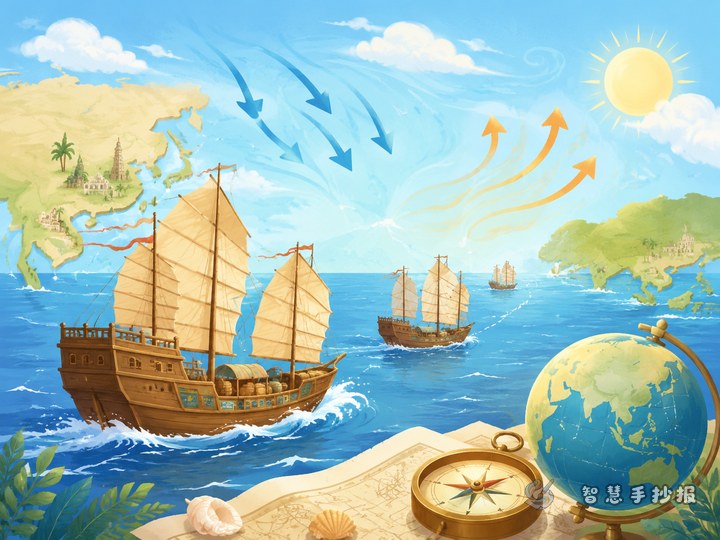
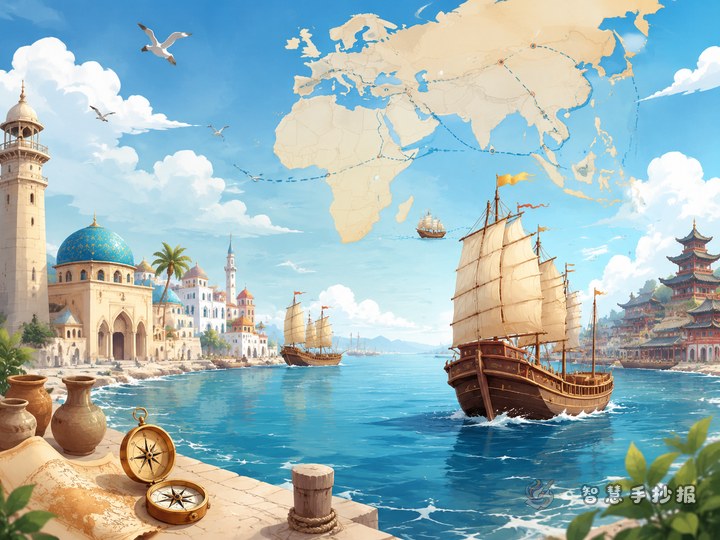
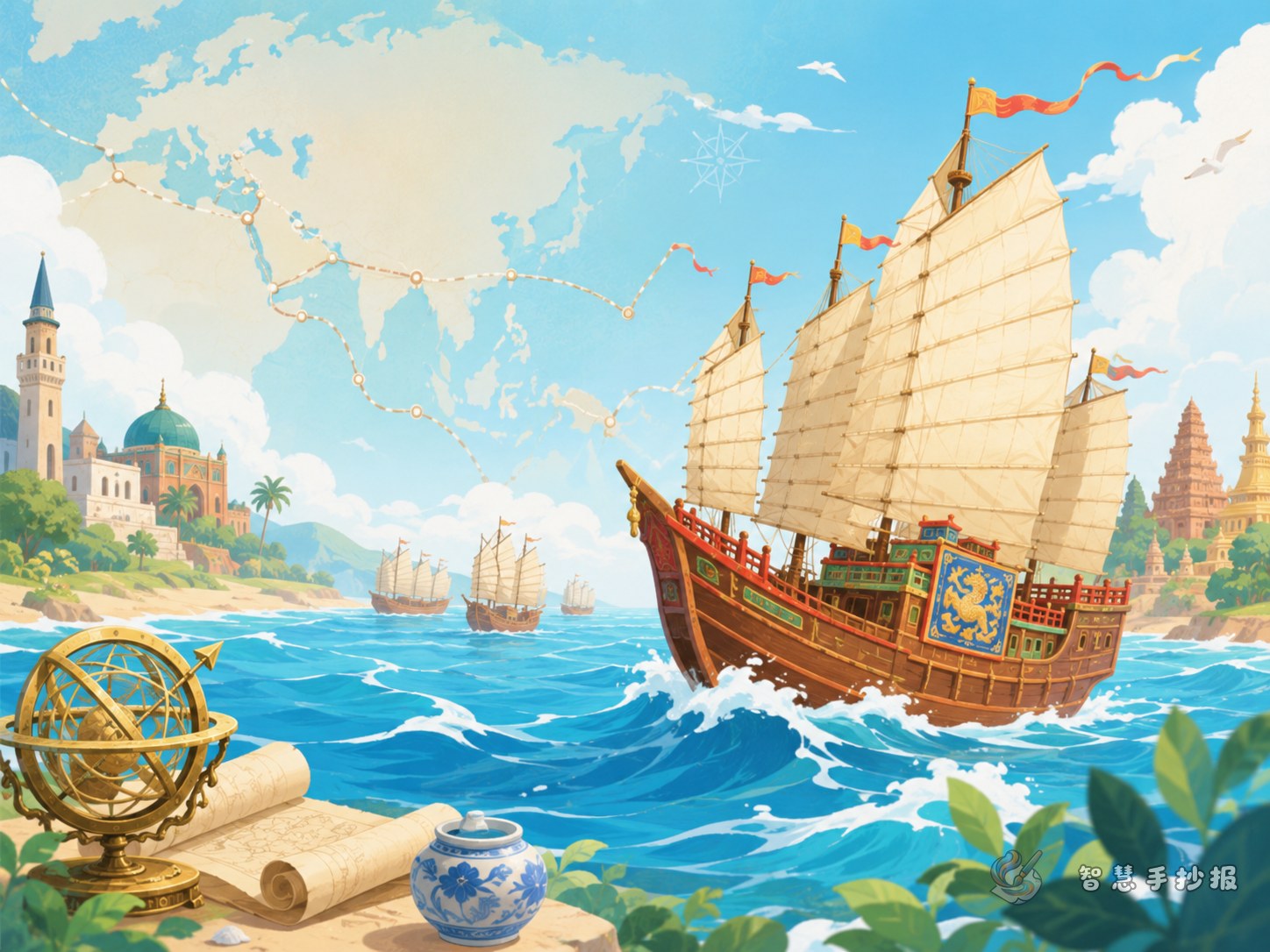
This section can explain the route in a simple way, such as traveling from China to Southeast Asia, South Asia, and farther waters. A handwritten newspaper does not need every place name. A clean route line with arrows is often better.
Section 3: What did sea exchange bring?
Write from the angles of goods, culture, and friendship. You may mention silk, porcelain, tea, and also the sharing of customs and knowledge between different places.
Section 4: What spirit can we learn from navigation?
This is a great place for student reflection. Words like courage, teamwork, wisdom, and exploration fit the theme well. It helps the project feel thoughtful instead of only copied from materials.
Short writing materials you can use directly
- Zheng He’s voyages showed strong ancient Chinese navigation skills.
- Long sea travel needed not only ships, but also courage, teamwork, and wisdom.
- The Maritime Silk Road connected trade and culture across the sea.
- Every route across the ocean carried friendship and understanding.
- Maritime culture helps us imagine a wider world beyond the shore.
If you still have blank space, add a short slogan such as “Sail far, connect widely” or “See a bigger world by sea.”
Do not divide the page too evenly
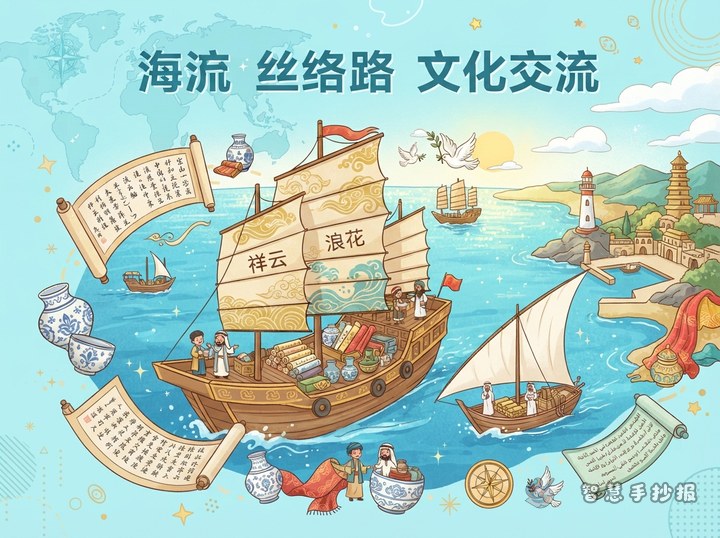
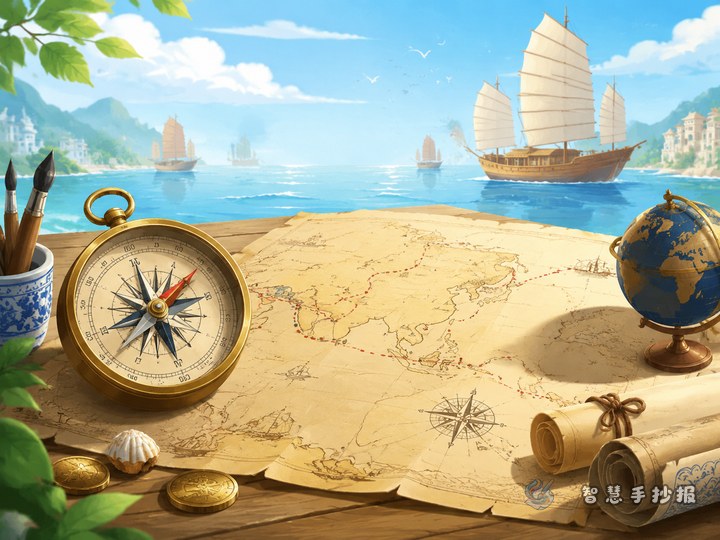
Many students make every block the same size, and the final page can look flat. A better idea is to create one visual center first, such as a sailing ship, a large compass, or a route map in the middle. Then place the text sections around it.
- Put the main title at the top in the largest letters.
- Place one main picture in the center.
- Add four smaller content blocks around it.
- Use wave lines, rope-style borders, or arrows to connect the areas.
- Decorate at the end so you still have enough room to write clearly.
Use colors and details that feel nautical
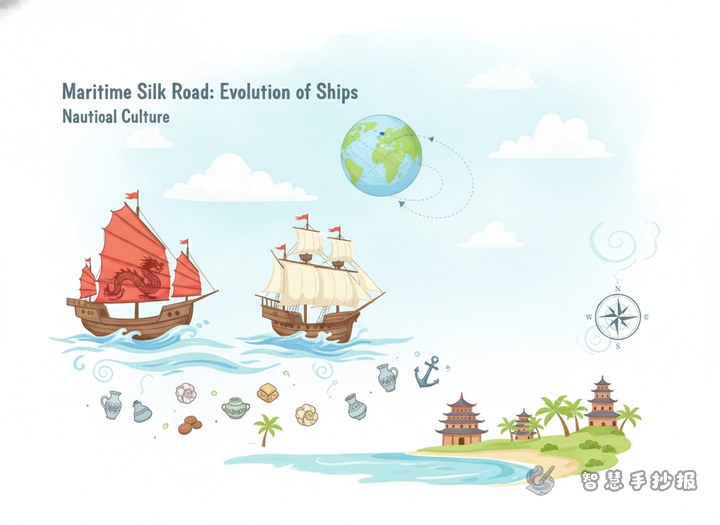
Blue is the best main color for this topic, with light yellow, brown, and a little red as support colors. Blue suggests the sea, brown suggests wooden ships and old maps, and light yellow keeps the page bright. Borders can be waves, ropes, shells, or tiny flags. The key is to keep the style consistent.
If you want the title to stand out, change the colors slightly between words. A steady color for “Zheng He” and a sea tone for “voyages” can make the heading look lively without becoming messy.
End with a personal takeaway
A strong handwritten newspaper is not only about facts. Add a small final box such as “What I learned.” You might write: By learning about Zheng He’s voyages, I understood that ancient navigation was difficult and that peaceful exchange is valuable. This kind of closing line is especially good for classroom display.
If you already have the topic but want to improve the title style, layout, or section arrangement, you can continue refining your design in the Zhihui Shouchao Bao WeChat mini program.