Build the page around one clear idea
This handwritten newspaper does not need to explain every detail of maritime history. One strong main idea is enough: ancient fleets could travel far because they used monsoon winds wisely. A short opening line under the title can immediately explain the topic, such as “Ancient sailors watched the winds and chose the right season to cross the sea.”
To make the page more meaningful, connect monsoon knowledge with the Maritime Silk Road. Sea trade was not only about goods. It also reflected shipbuilding skills, navigation experience, weather observation, and human wisdom.
Useful sections students can write directly
Section 1: What is a monsoon?
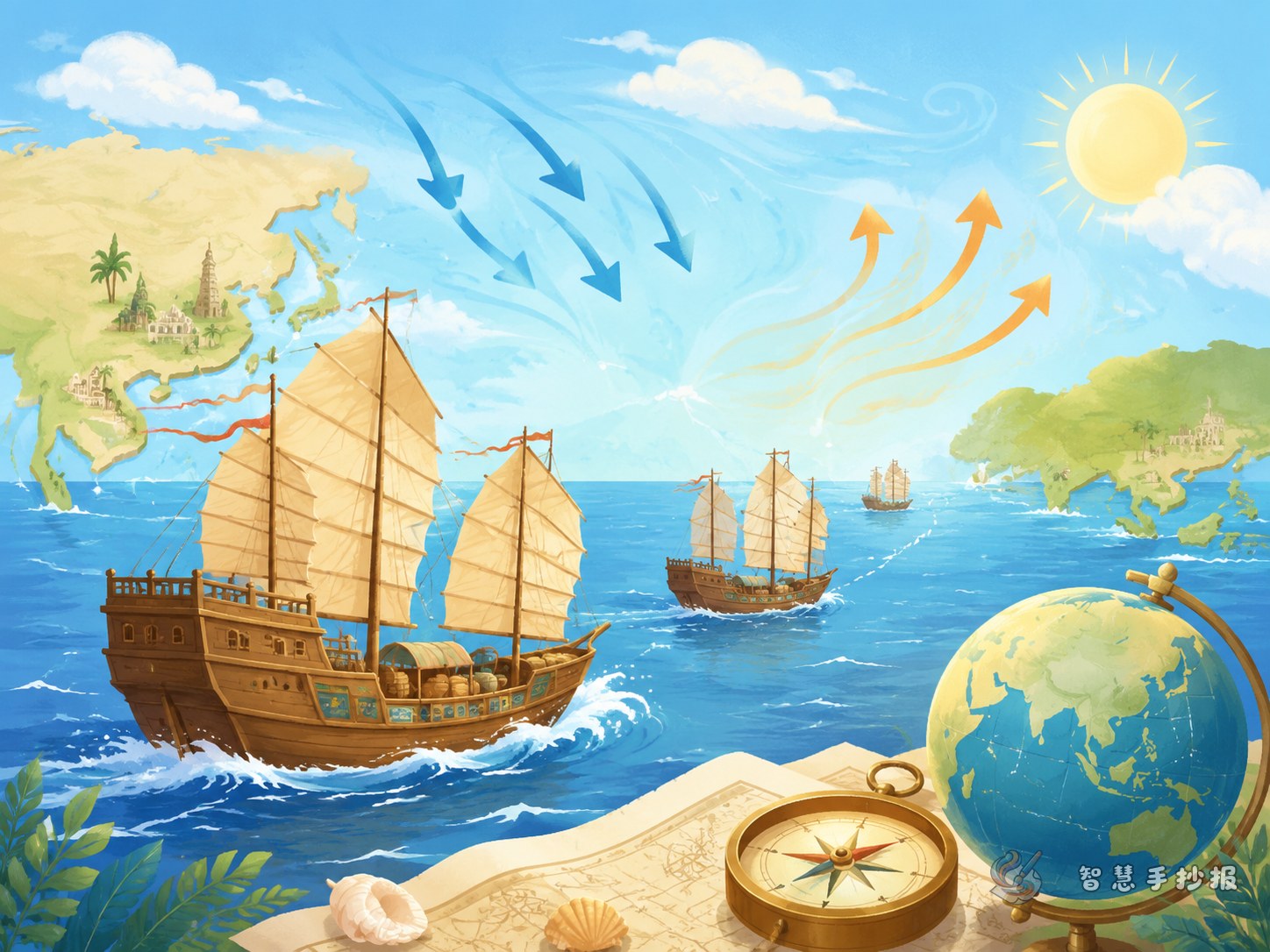
A monsoon is a wind pattern that changes direction with the seasons. In ancient times, sailors depended heavily on natural forces. Watching wind direction and weather conditions was an important part of sea travel.
Section 2: Why did sailors wait for the right wind?
Ancient sailing ships moved mainly by wind power. When the wind was favorable, travel was faster and safer. When the wind was against them, trips became slower and more difficult. That is why departure time mattered so much.
Section 3: How did monsoons help round-trip voyages?
Because wind directions changed with the seasons, ships could plan one season for sailing outward and another for returning home. This made trade routes more regular and helped long-distance sea exchange continue.
Section 4: What does this show about navigation culture?
Using monsoons was not luck. It came from careful observation, repeated practice, and accumulated knowledge. This reflects the intelligence and courage of ancient navigators.
A layout idea that feels like a sea route map
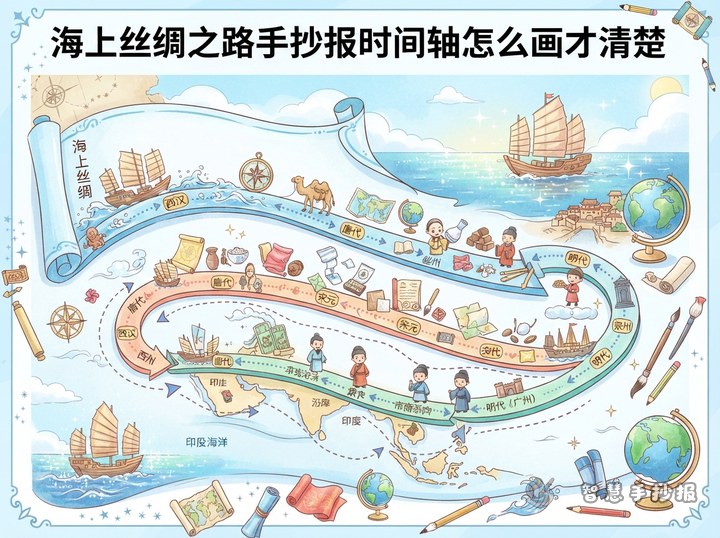
Try a route-based design. Put the main title at the top, draw a curved sailing line across the page, and add arrows to show wind direction. Then place your content sections around that line so the whole page looks like a moving voyage.
- Use blue, teal, or sea-green for the title.
- Add simple borders with waves, anchors, shells, or sails.
- Highlight key words such as “monsoon,” “voyage,” “return trip,” and “Maritime Silk Road.”
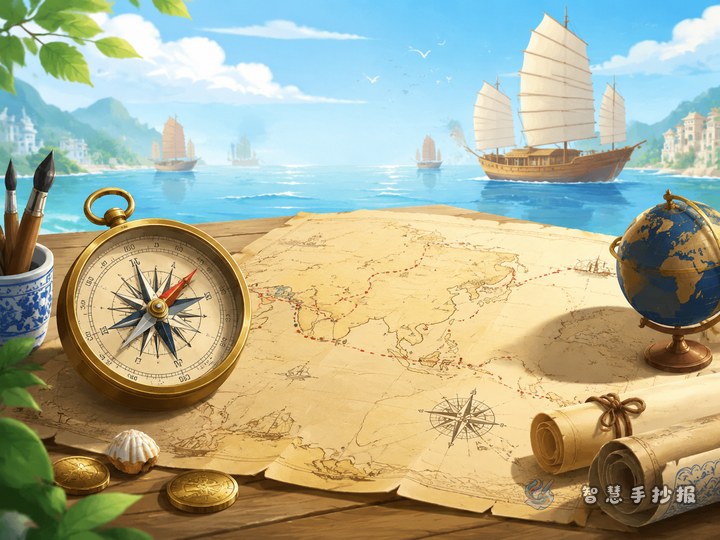
- If there is extra space, add a small compass in one corner.
Do not overcrowd the page with long paragraphs. Short blocks of text mixed with diagrams make the handwritten newspaper easier to read and more attractive.
Short sentences that fit the theme
- Ancient sailing ships traveled with the help of seasonal winds.
- Monsoons were like natural helpers on the sea.
- The Maritime Silk Road carried both goods and knowledge.
- Ancient people learned from nature and used it wisely.
- A successful voyage required experience, courage, and careful judgment.
These lines can be placed in a quote box, knowledge corner, or “What I learned” section to enrich the page.
How to finish the newspaper neatly
The ending does not need to be long. Two or three sentences are enough. For example: “Monsoons made ancient sea travel more regular and helped the Maritime Silk Road thrive. By learning about monsoons and voyages, we can better understand the wisdom of ancient sailors.”
If you want to keep improving the title style, colors, and section arrangement, you can continue designing your work in the Zhihui Handwritten Newspaper WeChat mini program.