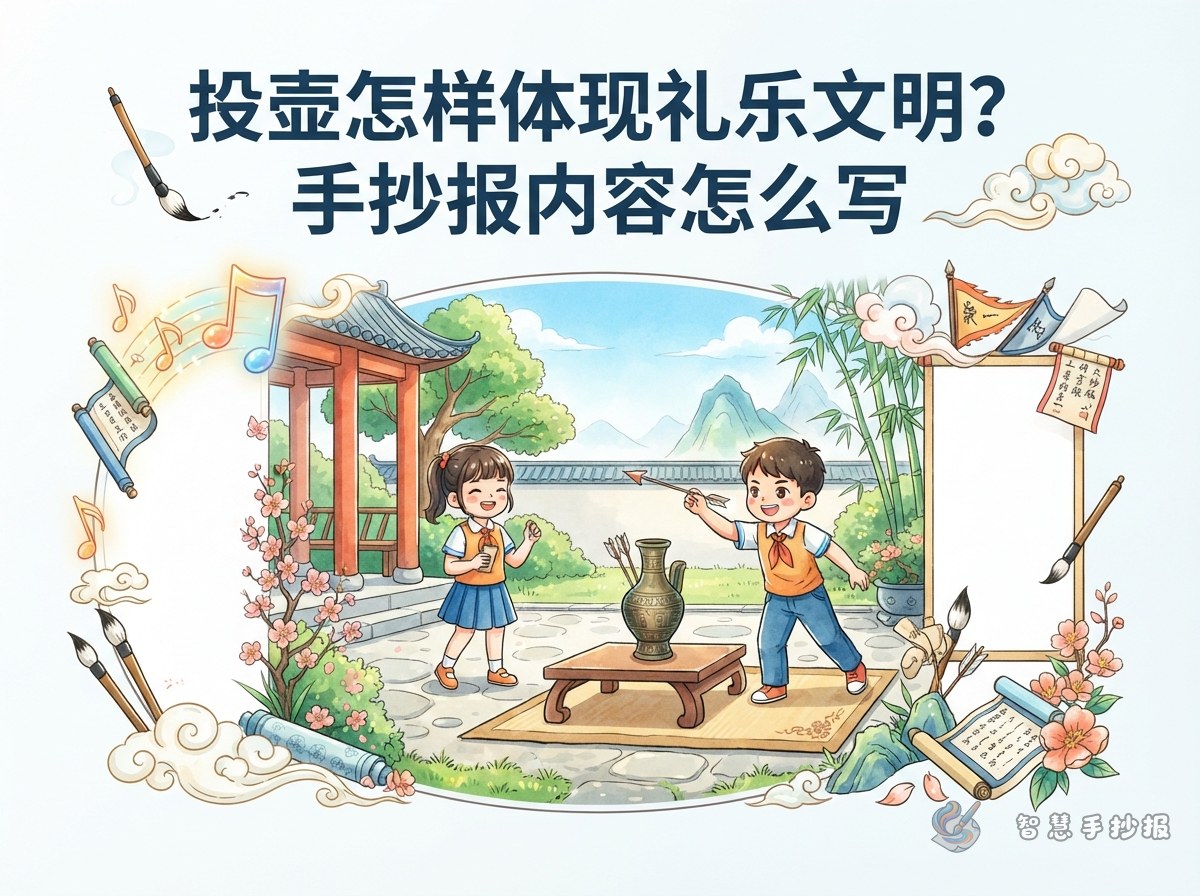
Tell the Story Through a Game of Pitch-Pot
Pitch-pot was a ritual game played at banquets in ancient China. Players tried to toss arrows into a narrow-mouthed vessel, but accuracy was only part of the activity. They were expected to invite one another politely, wait for their turns, follow the rules, and remain courteous after the result. A poster can highlight three ideas: respect others, act in order, and stay modest in victory.
Turn the Ritual Into a Visual Route
Place a left-to-right sequence across the center of the poster:
- The invitation: The host invites the guests, and both sides exchange polite words.
- Taking turns: Players toss the arrows in an agreed order instead of rushing or arguing.
- Music and scoring: Rhythm and counting help give the activity structure and ceremony.
- A courteous ending: Everyone treats the result calmly and continues to show respect.
Add a small symbol to each step, such as a greeting gesture, an arrow, a drumbeat, or smiling players.
Short Texts Ready for the Poster
What Was Pitch-Pot?
Pitch-pot developed from ancient archery rites. Players stood at a set distance and tossed arrows into a vessel. The number of successful throws determined the result. The game tested concentration and skill while teaching courtesy, order, and self-control.
Where Do Ritual and Music Appear?
Ritual appeared in the invitation, polite refusals, order of play, and treatment of others. Music added rhythm and helped create a harmonious atmosphere. Ritual guided behavior, while music balanced emotion, allowing competition to remain civilized.
A Lesson for Today
Following rules, avoiding boastfulness after winning, accepting a loss without complaint, and applauding other participants are modern ways to practice the same spirit of courtesy.
Build the Page Around the Vessel
Draw a pitch-pot vessel near the lower center, with several arrows directing the eye toward its opening. Put the title at the top, a “Quick Facts” section on the left, and “Ritual and Music Keywords” on the right. The four-step route can connect the sections across the middle.
- Use vermilion, green, and small touches of golden yellow for a bright historical palette.
- Keep the title prominent and divide body text into short blocks of three to five lines.
- Show greeting, waiting, and orderly tossing so the illustrations emphasize courtesy.
- Leave open space between patterns, pictures, and text for easy reading.
Check the Message Before Finishing
Make sure the title clearly connects pitch-pot with ritual and music, the sequence is complete, and each drawing supports a text section. To adjust the columns, colors, and layout for a particular paper size or grade level, continue the project in the Smart Handwritten Newspaper WeChat Mini Program.