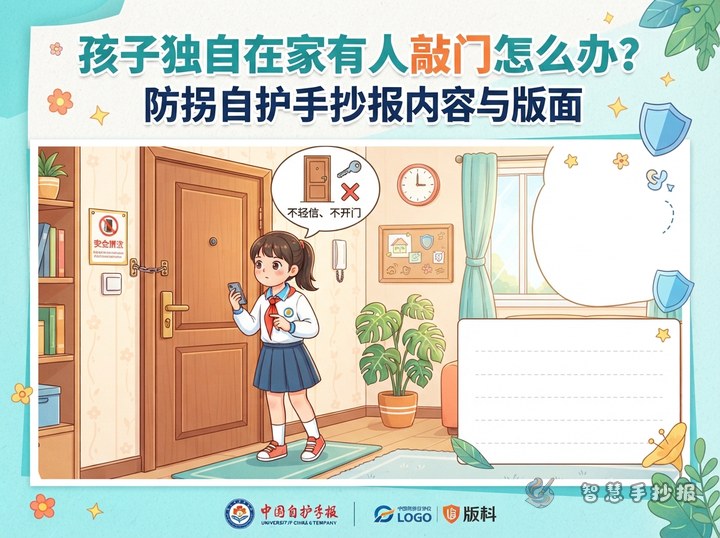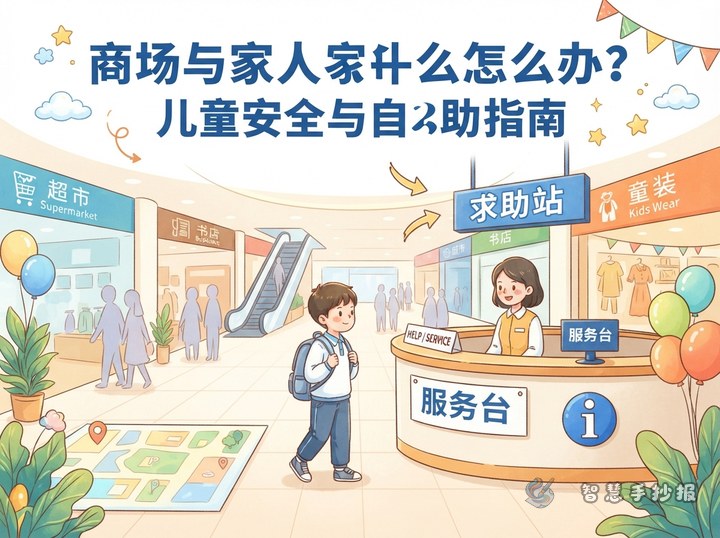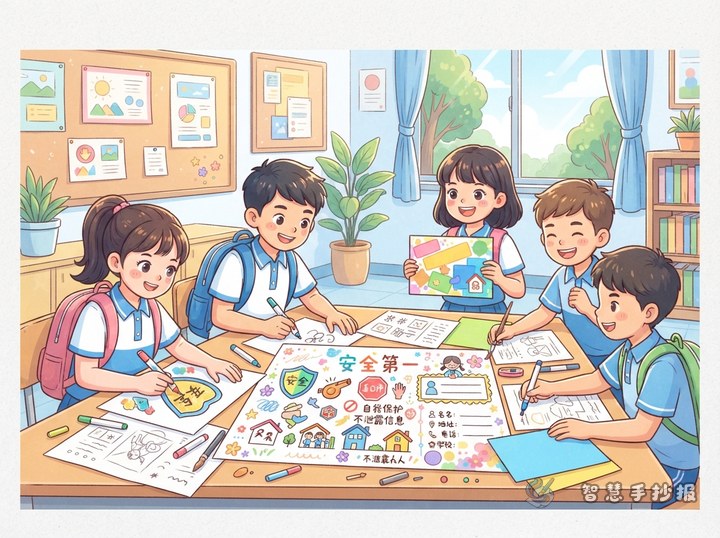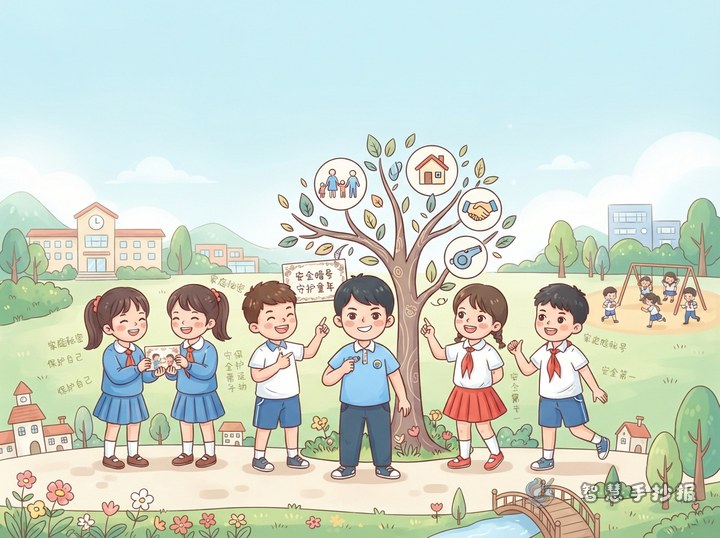
Choose a familiar theme: safe pick-up after school
This poster can focus on a situation children may face every day: who is allowed to pick them up, what to do if someone claims to be a family friend, and how to confirm a sudden change of plans. A clear title such as “Do Not Leave with Unconfirmed People” or “My After-School Safety Rules” helps readers understand the topic quickly.
The tone should be calm and practical. Instead of frightening children, the poster should teach useful actions: wait at the agreed place, check with a trusted adult, and ask a teacher or school guard for help when something feels wrong.
Safety phrases students can write
- Wait in the right place: Stay in the classroom area, school gate waiting zone, or another place agreed with parents.
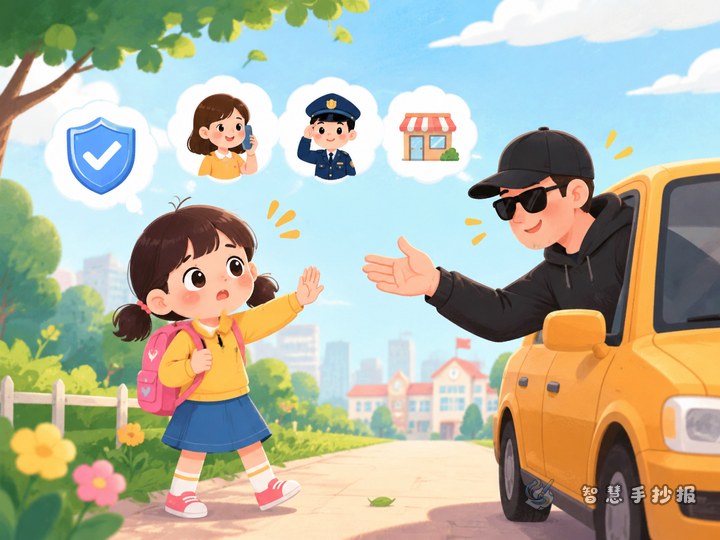
- Confirm the pick-up person: If the person is not the usual caregiver, ask a teacher to contact your parents first.
- Use a family code word: Families may agree on a simple code word. If the person does not know it, do not leave with them.
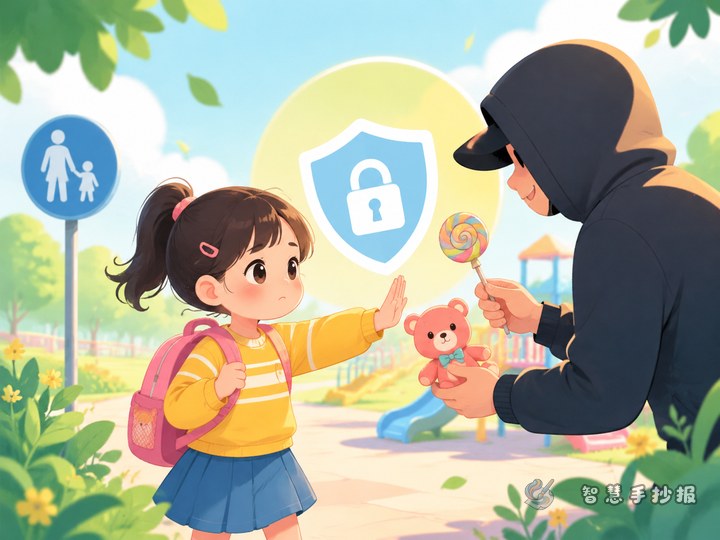
- Refuse gifts and snacks: Keep a safe distance if someone uses toys, food, pets, or games to attract you.
- Ask trusted adults for help: Go to teachers, school guards, police officers, or staff members on duty.
Short writing materials for the poster
Short paragraph: The most important step after school is confirmation. Even if someone knows my name, I should not leave right away. Even if the person says there is an emergency at home, I should ask my teacher to call my parents. Being careful is not being timid; it is learning to protect myself.
My pick-up agreement: I remember my parents’ phone numbers and know safe places near my school and home. After school, I do not run around, accept invitations from strangers, or get into a car without confirmation. If I feel scared or unsure, I will say no loudly and ask for help.
Layout idea: draw a safe route home
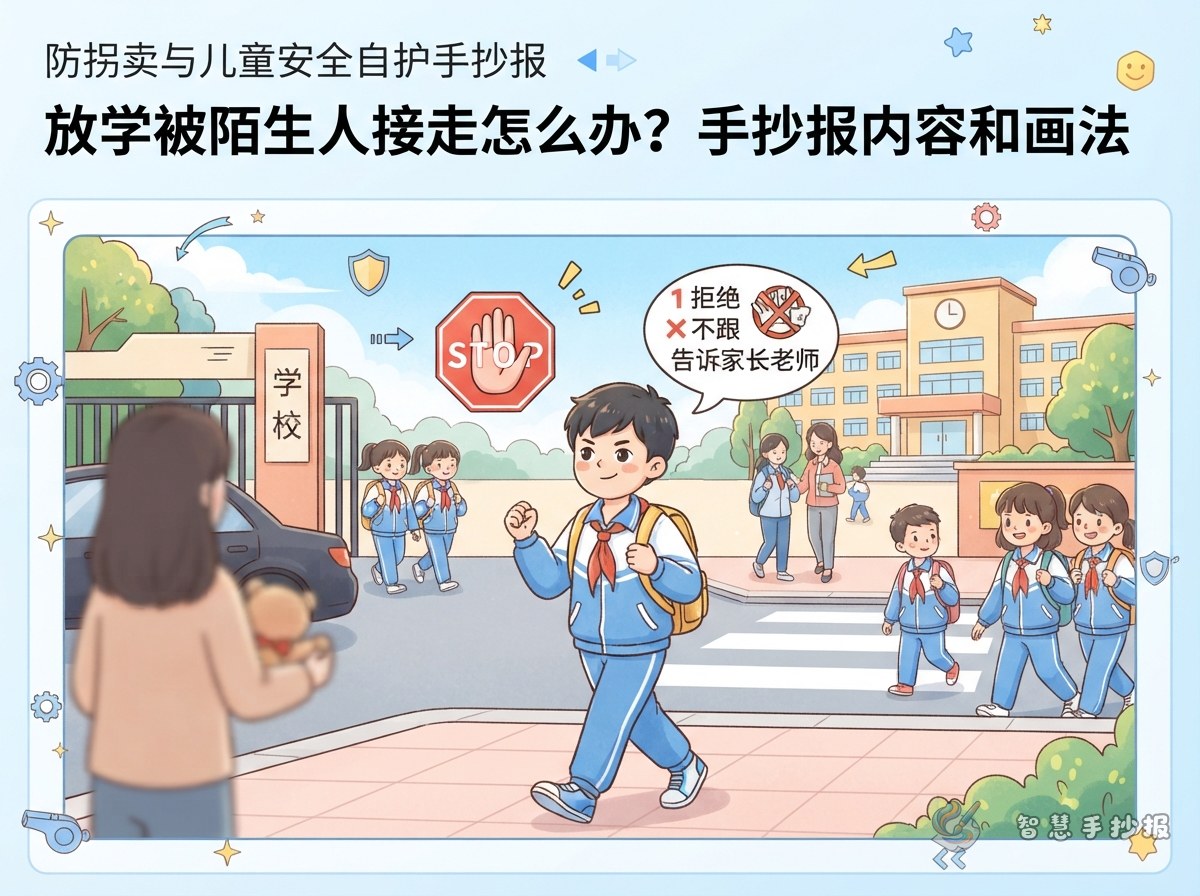
Design the page as a route map from school to home. Draw the school gate, crosswalk, bus stop, and neighborhood entrance. Next to each scene, place a small section such as “Waiting Area,” “Do Not Follow Strangers,” “Code Word Check,” and “Help Station.”
Use bright but clear colors such as blue, yellow, and green. Decorate the borders with small shields, schoolbags, phones, and traffic lights. These elements match the child safety theme and are easy for students to draw.
Interactive details for parents and teachers
- Add a box called “People I Can Ask for Help”: teacher, school guard, police officer, parent.
- Draw a “family code word card,” but do not write the real code word on the poster.
- Create speech bubbles for saying no: “I need to ask my teacher first” or “I do not know you, so I cannot go with you.”
- Leave a small area at the bottom to remind students that they can use the Smart Handwritten Poster WeChat mini program to organize text and continue making their poster.
Small touches that make the poster stand out
You can organize the poster around four keywords: wait, check, refuse, and ask for help. Keep the drawings simple and positive, such as a child waiting at the school gate, asking a teacher for help, or confirming information with parents. This makes the poster educational, clear, and suitable for primary school students.