Turn the Story of Money into a Flowing Timeline
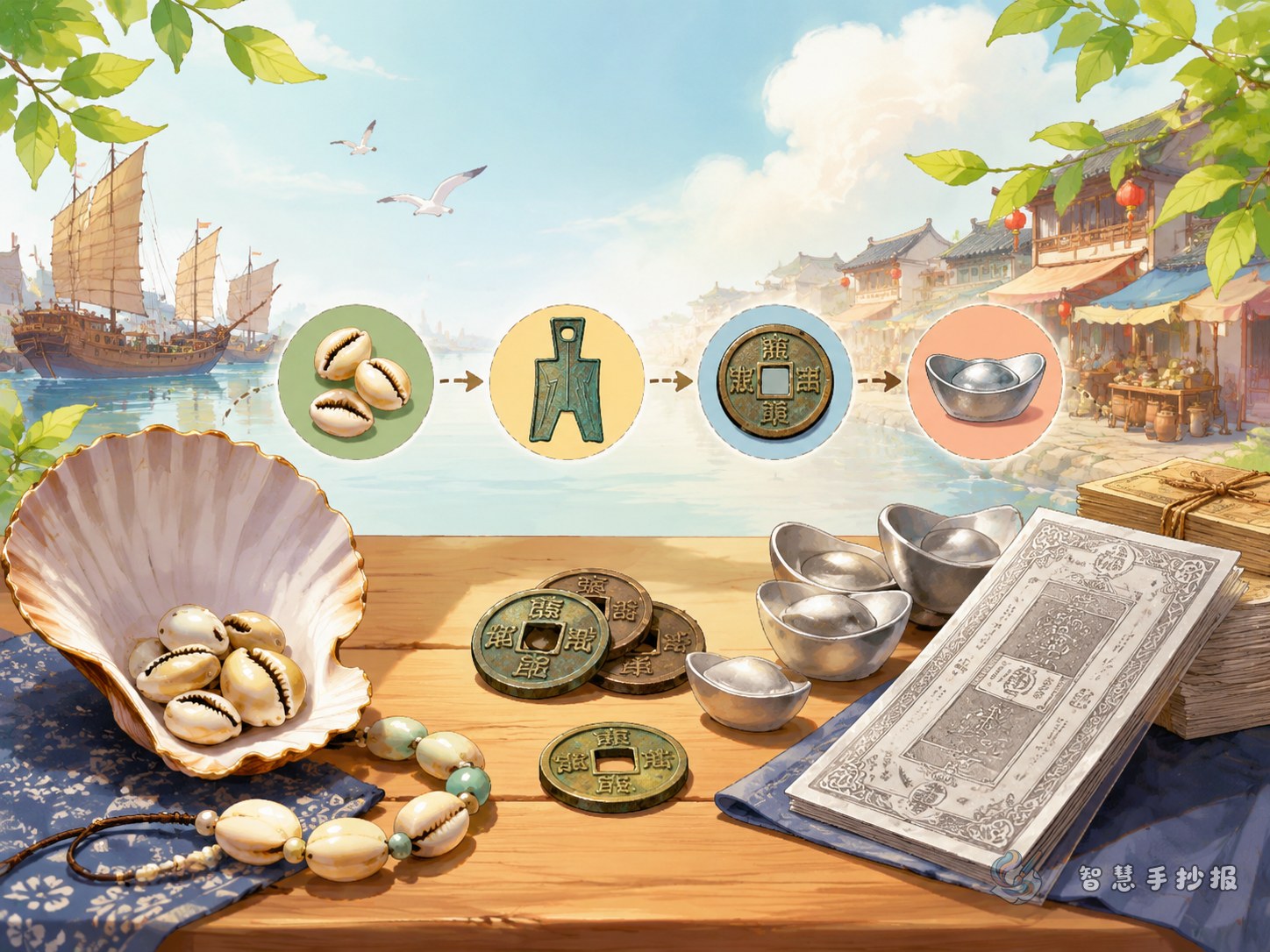
This handwritten newspaper can focus on the idea of from shells to paper notes. Instead of drawing only one coin, students can use a winding river or road to show how ancient Chinese money changed as trade became more active and convenient.
- Starting point: Draw shells and simple barter scenes to show early forms of value.
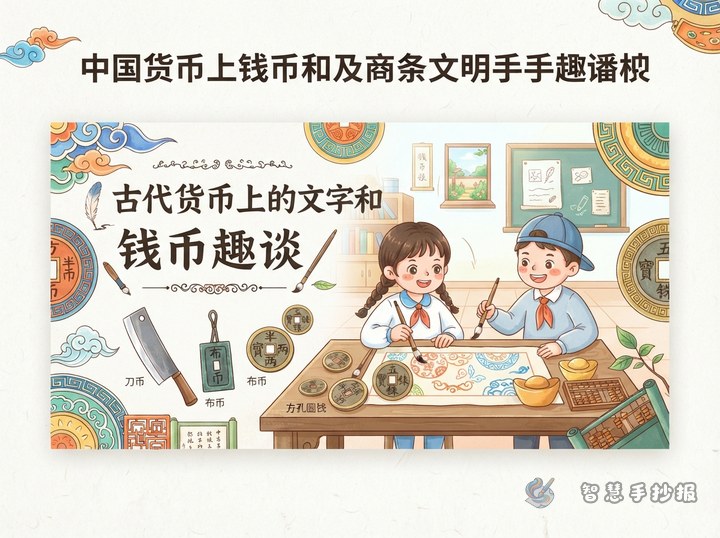
- Middle section: Add knife money, spade money, and round coins with square holes to show the development of metal currency.
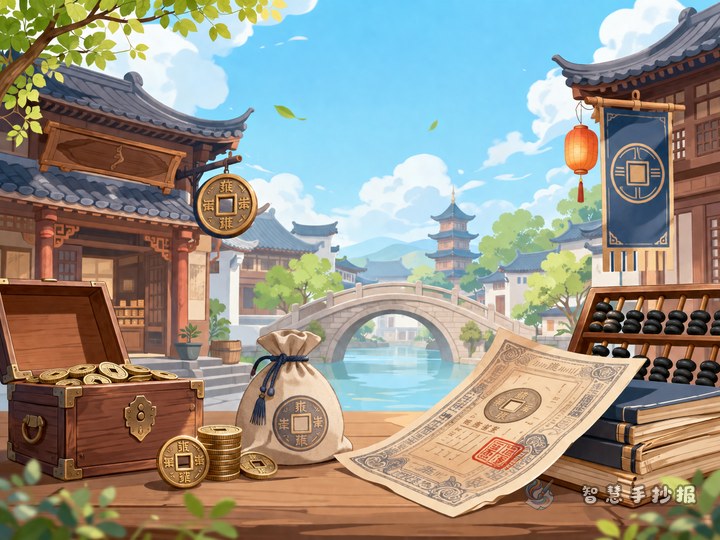
- Ending point: Draw paper notes, account books, shops, and merchant boats to connect money with commerce.
Short Writing Materials for the Page
A Small Note about Ancient Money
Money in ancient China did not look the same from the beginning. Shells were once seen as valuable because they were beautiful, rare, and easy to carry. Later, metal casting developed, and different forms of money appeared. Round coins with square holes became an important style because they could be strung together and carried more easily.
A Small Note about Trade
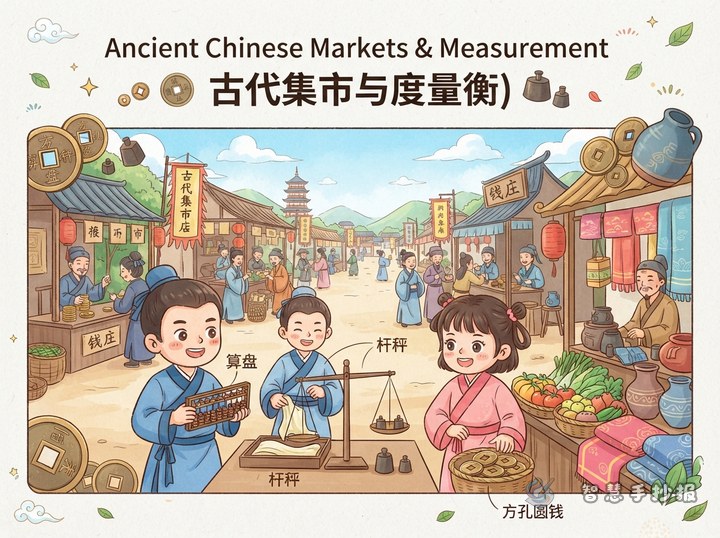
Better forms of money made buying and selling easier. Markets, shops, trade routes, and cities became more active. People could use money to exchange grain, cloth, tea, porcelain, and many other goods. A useful central sentence is: “When money became more convenient, trade became more lively.”
Page Sections That Work Well
- Title area: Use a title such as “From Shells to Paper Notes” and decorate it with coin patterns.
- Currency timeline: Introduce each form of money with a small drawing and one sentence.
- Ancient market corner: Draw stalls, scales, cloth, tea bags, and customers.
- Little guide section: Write a short first-person paragraph, such as “If I were an ancient coin, I would travel with merchants to many places.”
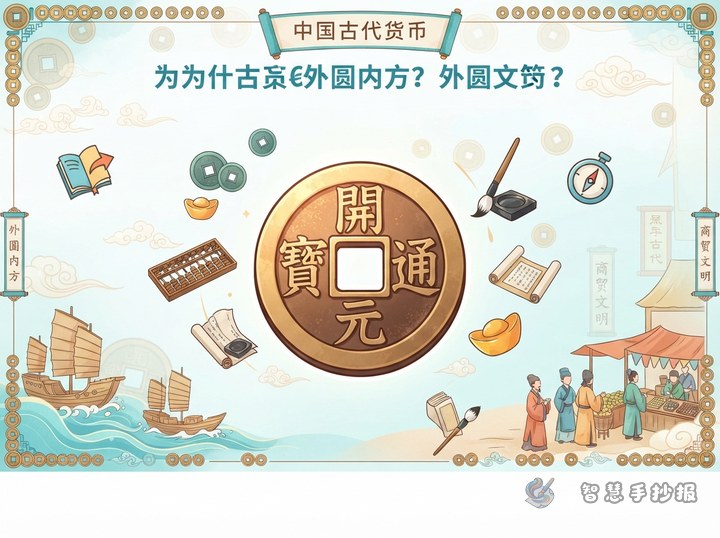
- Fun question box: Add questions like “Why did coins have square holes?” or “Why were paper notes useful?”
Layout Ideas with Coin Designs
A clear layout is to place a large coin in the center and divide the surrounding space into four sections. Inside the square hole of the coin, students can write key words such as “exchange,” “unity,” “trade route,” and “city.” Shells, knife money, account books, and boats can be placed in the corners as decorations.
For colors, soft yellow, light brown, green, and red can create a bright but ancient feeling. Borders can look like bamboo slips, account books, or strings of coins. Leave enough blank space so the page is easy for younger readers to understand.
Before You Start Drawing
Choose a simple order first: early exchange, the rise of coins, unified currency, paper notes and trade. Then turn each part into two or three short sentences with small illustrations. If you want to organize titles, sections, and layout ideas more quickly, you can continue creating the design in the Zhihui Shouchaobao WeChat mini program.