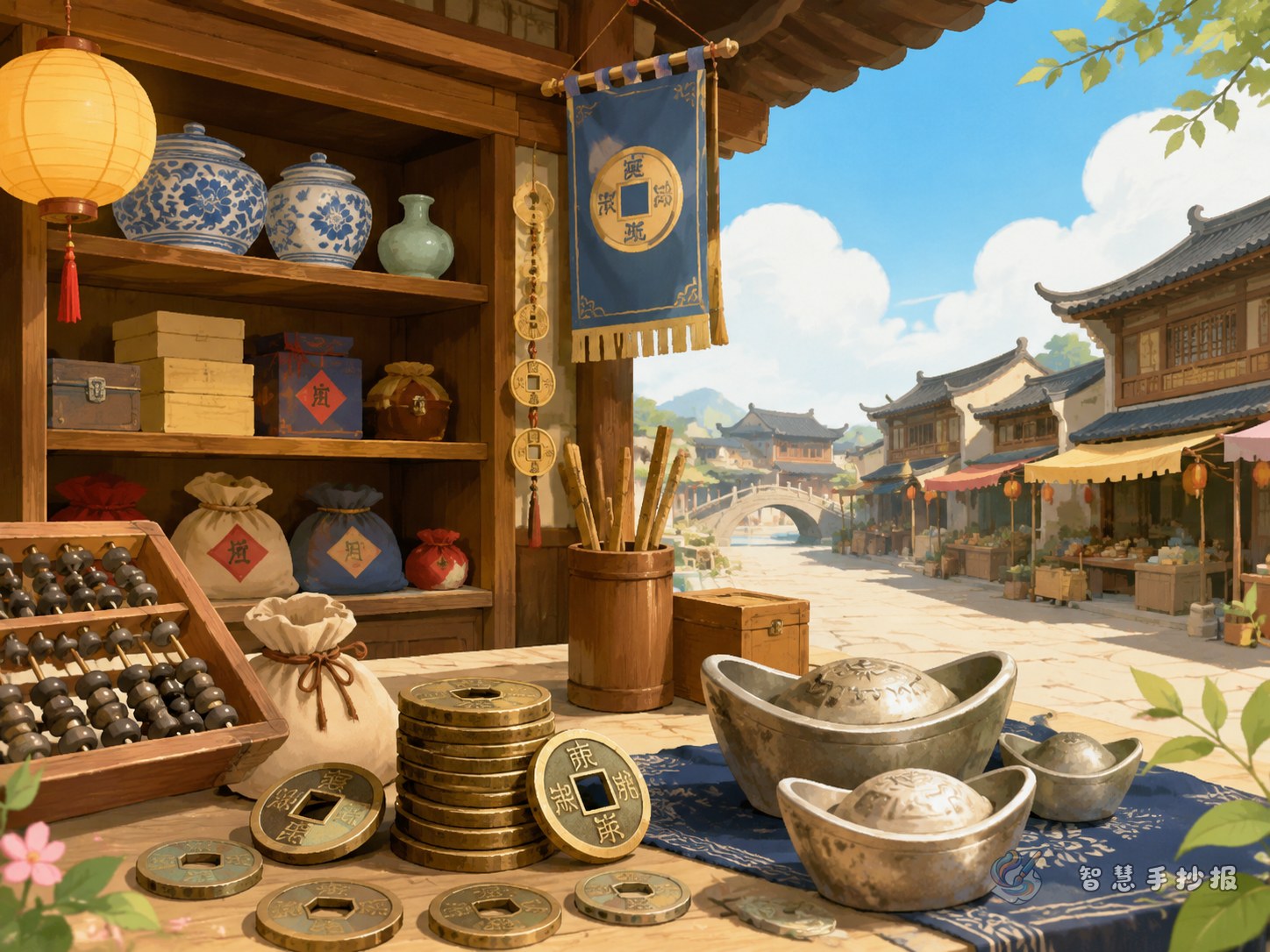
Build the Theme Around a Day in an Ancient Shop
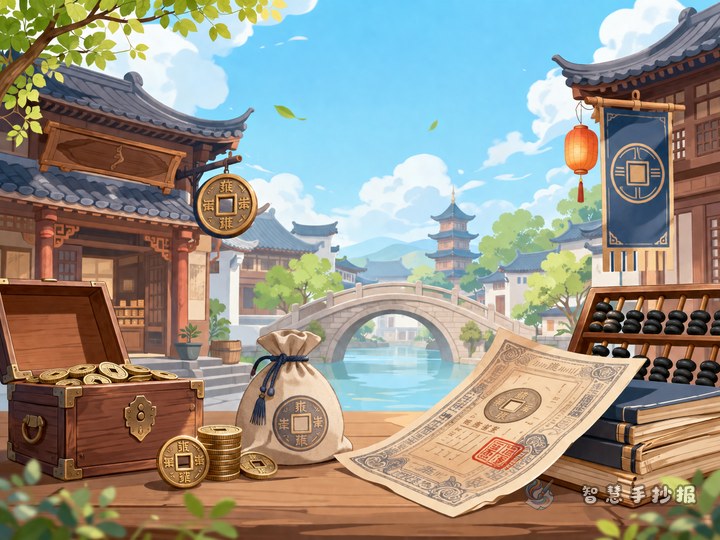
Instead of beginning with dry historical facts, students can shape the handwritten newspaper around a day in an ancient shop. This makes the topic easier to imagine and much more visual. The page can show the shop opening in the morning, goods displayed on the counter, customers entering, payment with coins or silver, and the shopkeeper recording the transaction.
This storytelling method helps connect currency, trade, and business culture in one clear theme.
Section Ideas That Fit the Topic Well
What Was Sold in Ancient Shops
Students can mention cloth, tea, grain, writing tools, and ceramics to show how commerce moved useful goods from place to place.
How People Paid for Goods
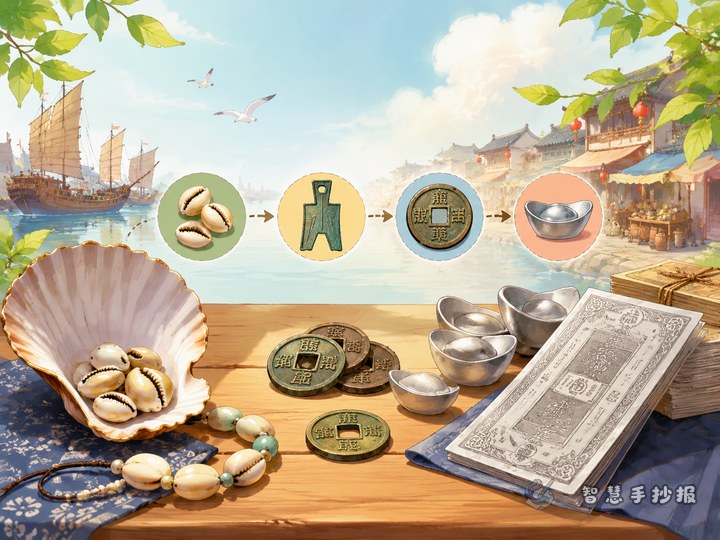
This section can introduce copper coins, strings of coins, and silver, with a simple note that prices depended on the type and value of the goods.
How Shopkeepers Kept Records
Students can write about ledgers, abacuses, brushes, and paper to show that business depended on careful accounting as well as selling.
The Lively Market Scene
This part can describe peddlers calling out, buyers walking from stall to stall, and different local products gathering in one place.
- Possible section title: Life in an Ancient Shop
- Possible section title: How a Trade Was Completed
- Possible section title: Why Money Made Trade Easier
- Possible section title: The Market in My Imagination
Short Writing Materials Students Can Copy
Sample 1: Ancient shops were important places for business. Shopkeepers displayed goods from different regions, and customers chose what they needed before paying with money.
Sample 2: Copper coins were common in ancient times, and many were tied together for use. More valuable goods could also be paid for with silver.
Sample 3: Commercial civilization was not only about making sales. It also included honesty, rules, and careful recordkeeping.
Sample 4: Markets connected farmers, craftsmen, and merchants. Through trade, goods moved from one place to another and enriched daily life.
How to Arrange the Page Like a Real Handwritten Newspaper
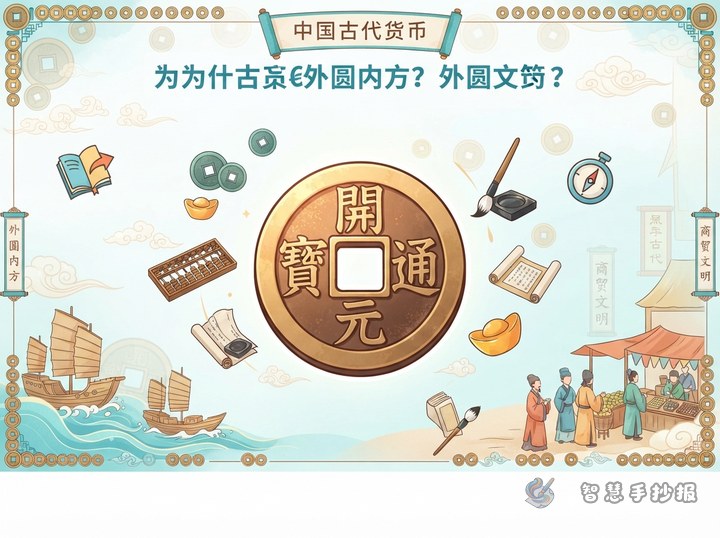
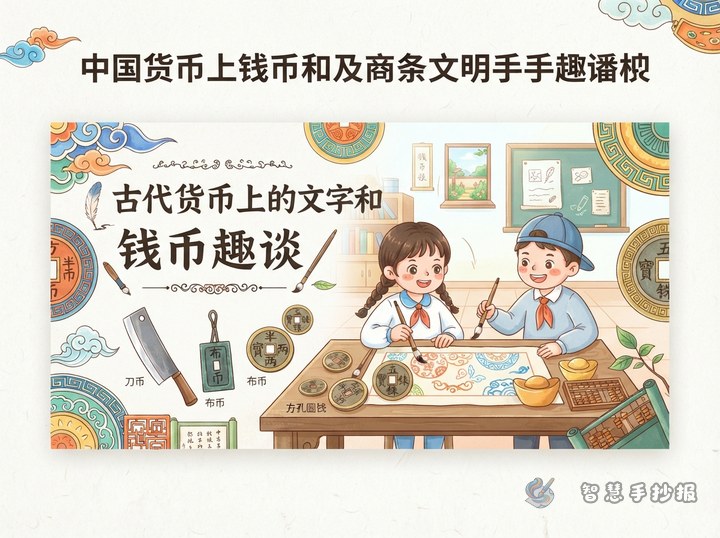
The main title can be placed at the top in the style of an old shop sign. Small sections on both sides and a central drawing of coins, a counter, or an abacus can make the theme stand out right away.
- Place the main title at the top and decorate it with coin patterns.
- Use the left side for currency and trade tools.
- Use the right side for the buying process and market life.
- Add a short conclusion at the bottom about what students learned from ancient commerce.
If the page feels hard to organize by hand, families and teachers can continue shaping the design in the Zhihui Shouchao Bao WeChat mini program.
Decorations and a Good Closing Line
Small decorative elements can include copper coins, an abacus, lanterns, scales, shelves, and scroll borders. Warm yellow, red, and green tones can help create an ancient commercial atmosphere.
A simple closing sentence could be: Ancient currency helped goods circulate, and commercial civilization made markets and cities more prosperous and convenient.