Choose a question that children really want to ask
Instead of starting with a plain definition of the water cycle, this handwritten newspaper can begin with a more curious question: Why can’t we drink seawater, and where does freshwater come from? This makes the topic easier to understand and more interesting to read.
You can use a strong main heading and add a smaller subtitle about evaporation, clouds, rain, freshwater, and water saving.
Main sections to include on the page
1. Why seawater is not drinking water
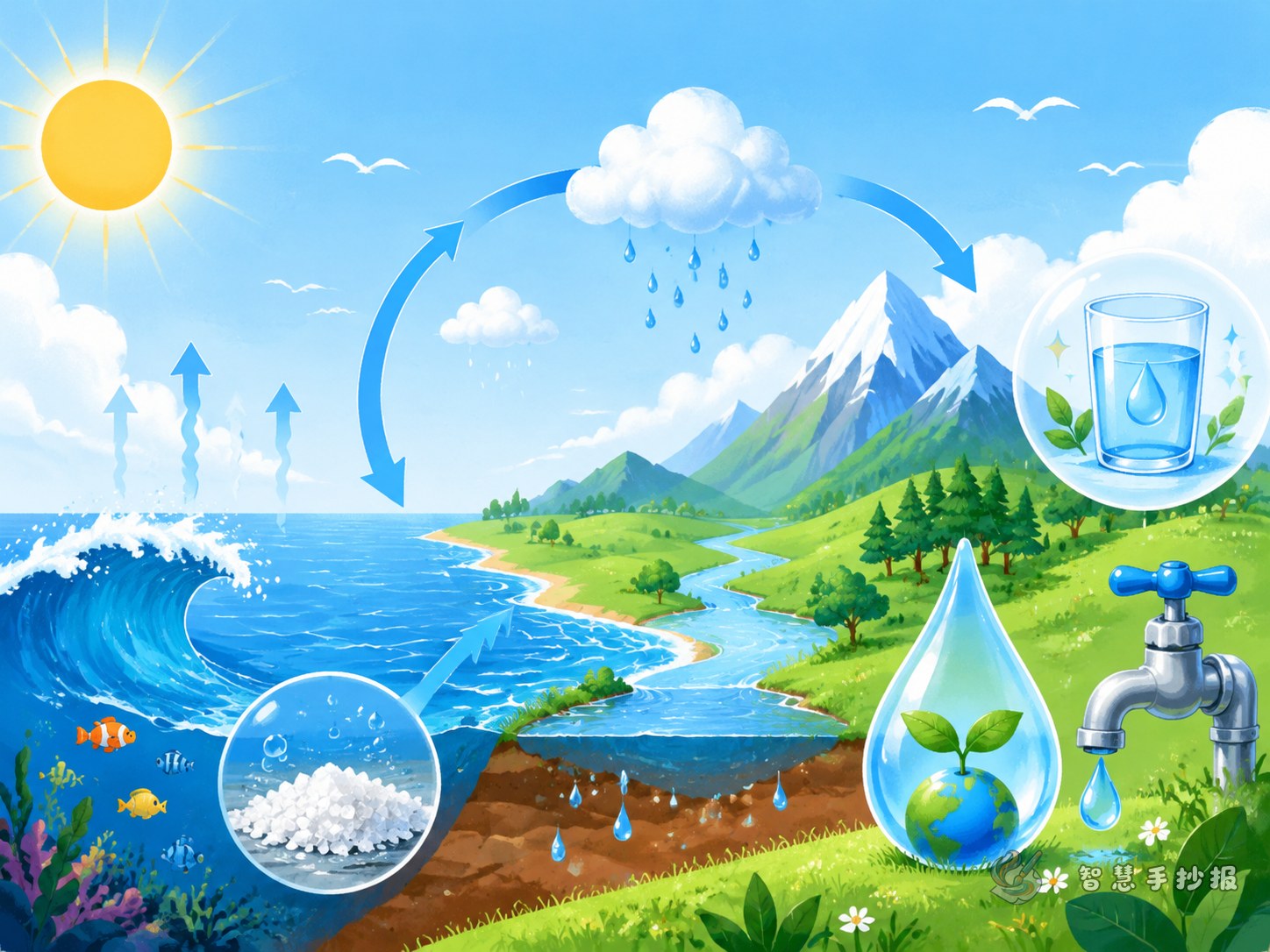
Seawater contains a lot of salt and other substances. Because of that, it is not suitable for people to drink directly like clean freshwater.
2. How freshwater is formed
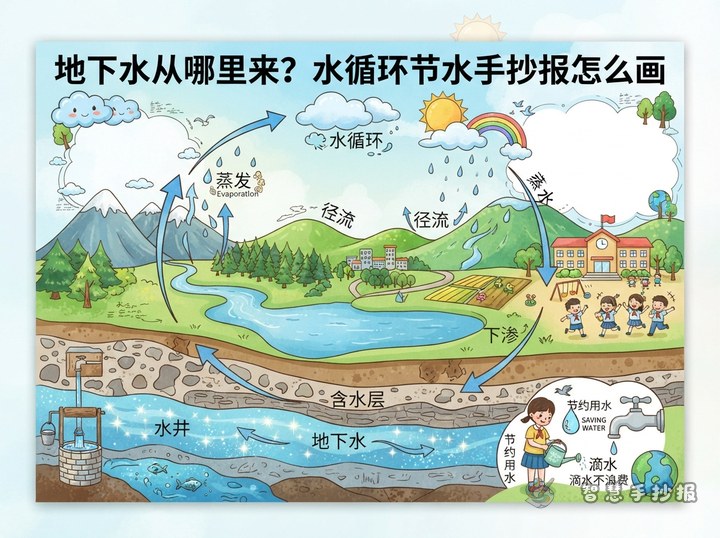
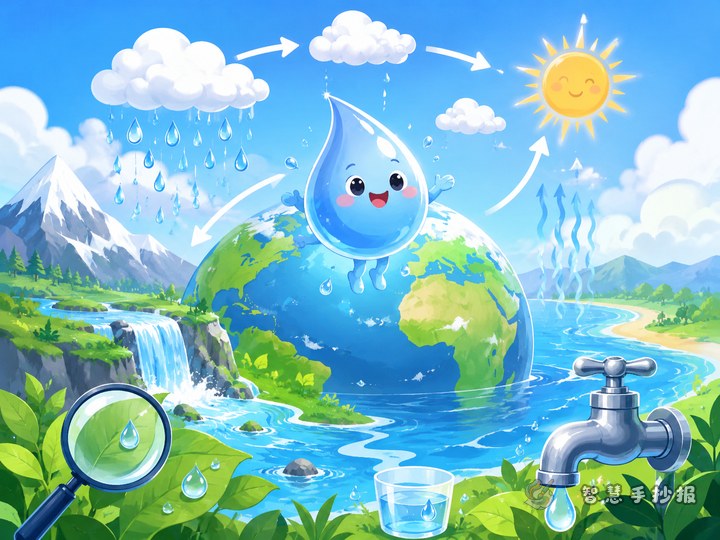
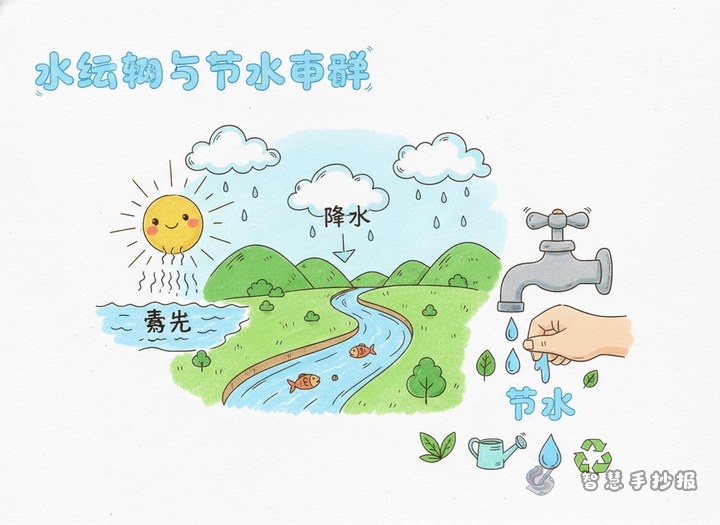
The sun heats water in seas, rivers, and lakes. Some of the water turns into vapor and rises into the air. When the vapor cools, it forms tiny droplets and clouds. Later, the water falls as rain or snow and returns to the land, becoming part of the freshwater we use.
3. Why freshwater is precious
There is a lot of water on Earth, but only a small part is usable freshwater. People, plants, farms, and cities all depend on it, so every drop matters.
Short lines that work well in a handwritten newspaper
- There is plenty of seawater, but freshwater is precious.
- The sun starts the journey, clouds carry the water, and rain brings it back.
- Water keeps moving in a cycle, so we should treasure every drop.
- Saving water means using it wisely, not wasting it.
- Turning off a tap helps protect tomorrow’s water.
These short lines are easy to copy and fit neatly into small text boxes.
Connect science with daily action
A strong handwritten newspaper should not stop at science facts. Add a section called What can we do after learning how precious freshwater is? This helps turn knowledge into action.
- Turn off the tap while soaping your hands.
- Reuse water when possible, such as using vegetable-washing water for plants.
- Report leaking taps to parents or teachers.
- Do not let water run for too long.
- Remind classmates not to waste water at school.
This part makes the page more practical and meaningful.
A layout idea that feels lively and easy to read
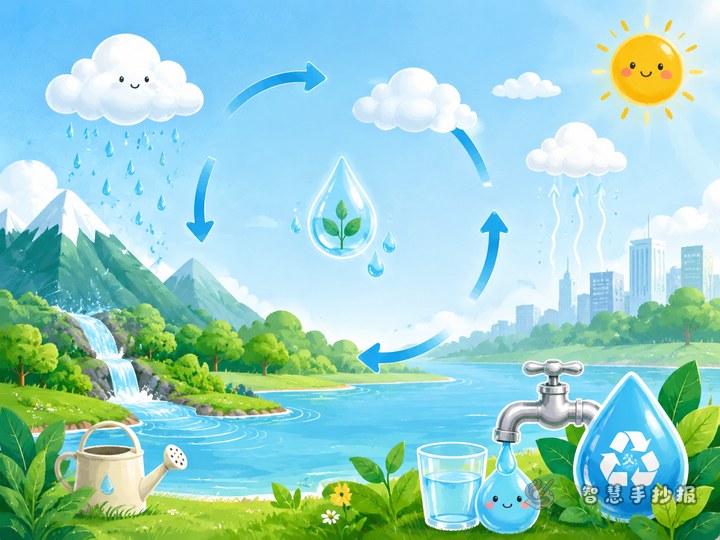
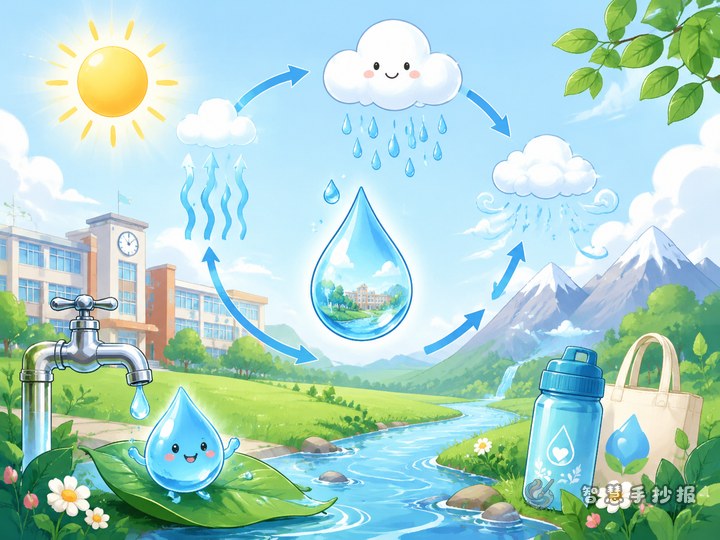
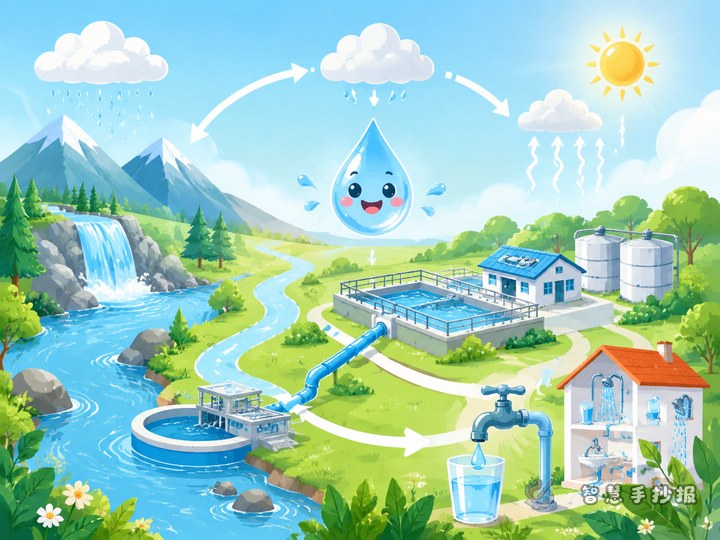
Put the title at the top. In the center, draw a simple path from sea to sun, cloud, rain, and land freshwater, using arrows to show the process. At the bottom, place the water-saving tips in small boxes.
Blue, white, and light green work well as the main colors. A little yellow can represent sunlight. Keep each paragraph short so the page stays clean and suitable for a student project.
A simple ending line for the final touch
You can end with a sentence like this: When we understand the journey of water, we learn why every drop of freshwater should be protected.
If you want to keep improving the title style, layout, and content blocks, you can continue designing your page in the Smart Handwritten Newspaper WeChat Mini Program.