Follow a Day of Travel in an Ancient City
A clear way to organize this poster is to follow the rhythm of one day. In the morning, city gates open and people, carts, and goods enter. During the day, residents travel to markets, offices, temples, and homes. By evening, gates or neighborhood entrances may close. Rules differed across dynasties and cities, so describe these as common historical scenes rather than customs shared by every period.
Four Stops Along the City Route
City Gates
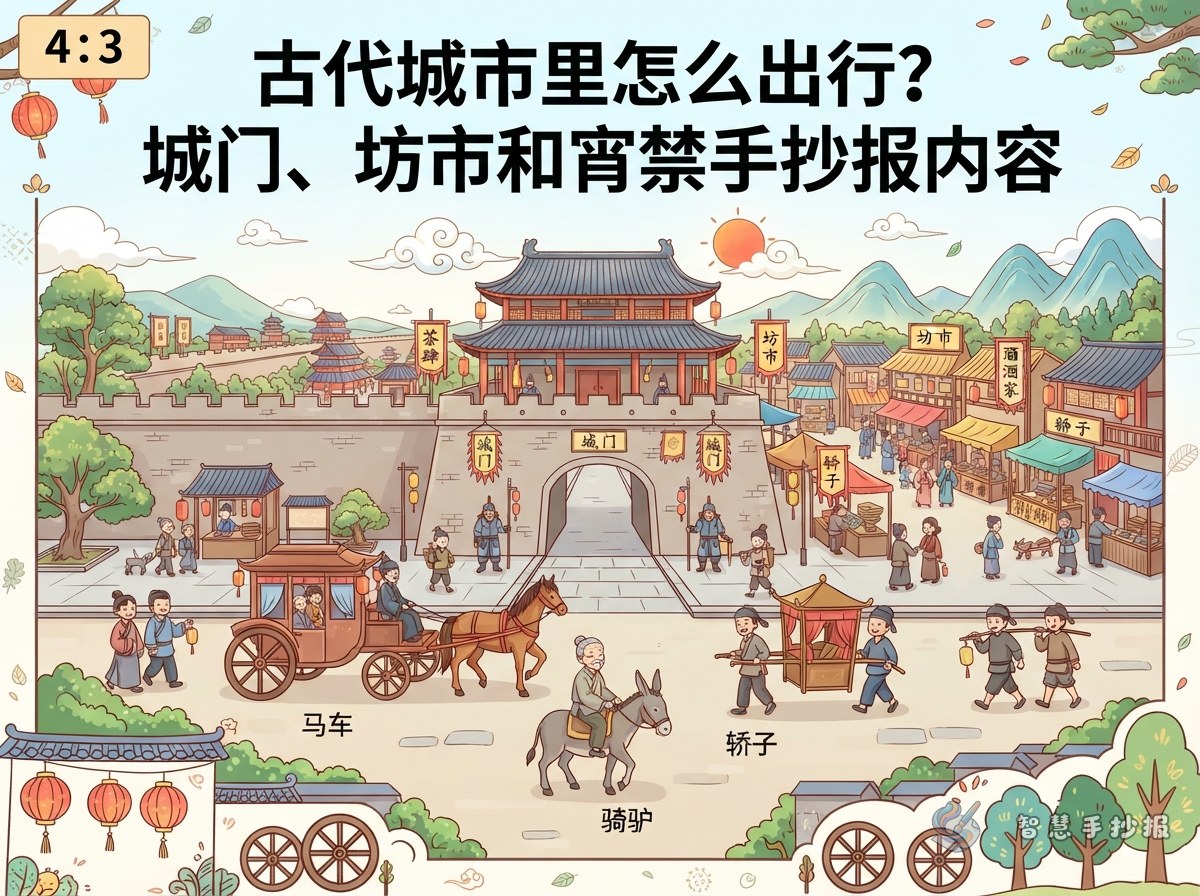
City gates connected roads outside the walls with streets inside. Travelers, merchants, residents, animals, and cargo commonly passed through them. A short caption could say: The city gate was both a transport passage and a boundary for urban management.
Residential Wards and Markets
In some periods, homes and markets were arranged in designated areas. Tang-era Chang'an is well known for its planned streets and ward system. In many Song cities, shops facing the street and evening commerce became more visible. This comparison shows that urban travel and daily life changed over time.
Night Travel
Some dynasties and cities restricted movement at night, but curfew rules varied by time and place. Festivals and urgent duties could also create exceptions. This section helps readers see that transport depended not only on vehicles and roads but also on schedules and city regulations.
Short Text Ready for the Poster
- Main idea: Travel in an ancient Chinese city was shaped by streets, gates, markets, daily routines, and local rules.
- Day and night: Busy daytime streets supported work and trade, while evening signals reminded residents about travel restrictions.
- Historical comparison: Tang Chang'an is remembered for its orderly wards, while many Song cities developed livelier street commerce and nightlife.
- Question box: If you lived in an ancient city, what would you need to consider before leaving the walls or returning after dark?
Turn the Page into a Walled City
Place the title inside the outline of a gate tower. Draw one main street down the center and arrange information panels on both sides. The left side can introduce gates and markets, while the right side explains night rules and changes between dynasties. Small figures carrying baskets or leading animals can make the street feel active.
- Sketch the gate, central street, and text areas lightly in pencil.
- Use brick red, warm yellow, muted gray, and a little dark blue for the night section.
- Decorate borders with bricks, roof tiles, lanterns, or simple signboards.
- Keep paragraphs short and highlight key terms so the reading order is easy to follow.
Check Facts and Visual Connections
Before finishing, make sure the poster does not present one city's rules as universal. Phrases such as “in some periods” and “in certain cities” improve accuracy. Each drawing should also support a nearby fact. To refine the columns, colors, or paper layout, continue creating the poster in the Smart Handwritten Poster WeChat Mini Program.