Begin with a question about moving goods
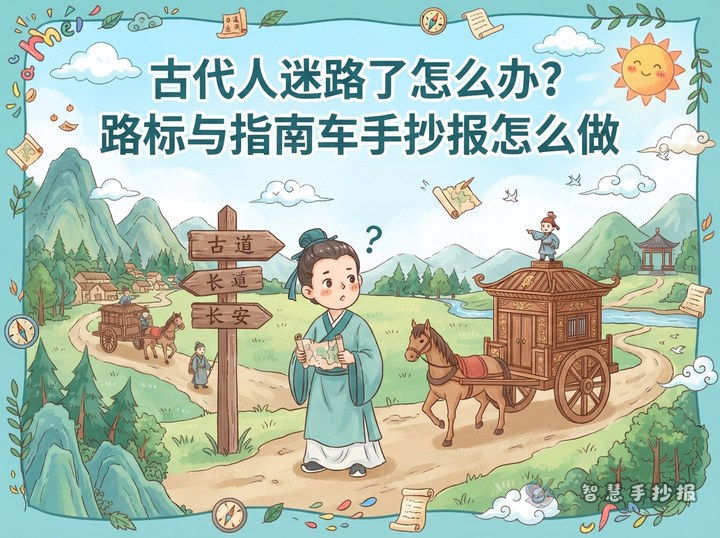
Instead of listing every ancient vehicle, build the handwritten newspaper around one clear question: how did people move heavy goods before engines existed? Use the wheelbarrow and the Wooden Ox and Gliding Horse as the two main subjects. One can be shown as a practical human-powered tool, while the other adds the imagination of an old historical tale.
A suitable heading is “How Did Ancient People Move Goods Farther?” with the subtitle “Transport Ideas in the Wheelbarrow and the Wooden Ox and Gliding Horse.” The opening can explain that transport tools supported daily life and also showed how people understood balance, weight, and local roads.
Give each transport tool its own section
The wheelbarrow: one wheel for carrying loads
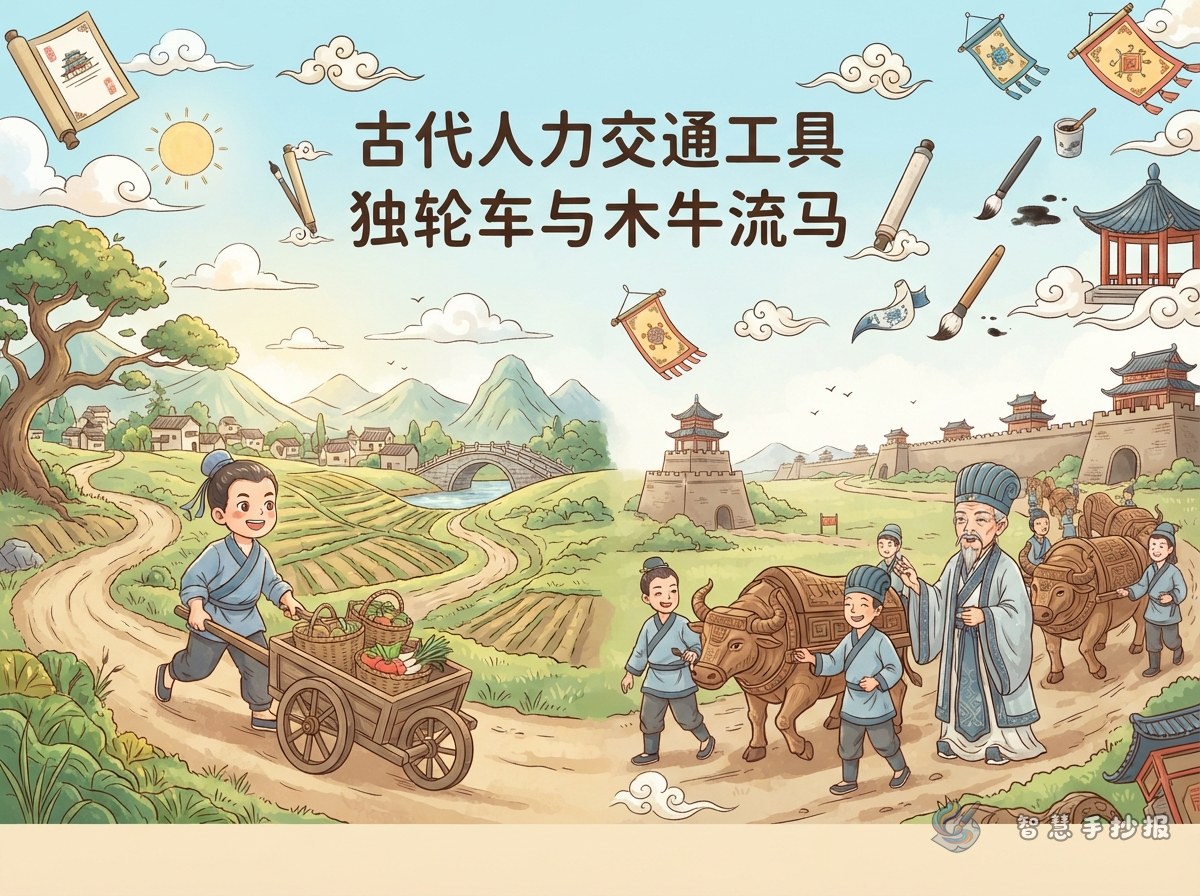
A wheelbarrow can be presented with a wheel, frame, loading platform, and handles. Draw grain bags, vegetables, or pieces of wood on the platform, then label the parts with words such as “load,” “push,” and “balance.” A short passage for the page could say: the wheelbarrow has a simple structure, but placing the load near the wheel allows the person pushing it to share the weight with the wheel and handles. It was useful on country paths and narrow roads.
The Wooden Ox and Gliding Horse: a clever idea from history and legend
The Wooden Ox and Gliding Horse is traditionally connected with Zhuge Liang during the Three Kingdoms period and is often described as a clever way to transport provisions. Historical descriptions and later interpretations do not give exactly the same shape, so write that “different accounts describe its form in different ways.” The drawing can show a wooden transport device with a cargo space and imagined mechanisms. This keeps the story interesting without presenting one unproven design as the only answer.
Build a transport comparison card
Place a small comparison chart or four information cards in the center of the page:
- Power: the wheelbarrow mainly depends on a person pushing it, while the Wooden Ox and Gliding Horse represents an idea of mechanical transport.
- Structure: the wheelbarrow highlights the wheel, frame, and handles; the legendary device highlights wooden construction, cargo space, and imagined mechanisms.
- Purpose: both can be connected with carrying grain and supplies, showing how transport tools served everyday needs.
- Special feature: the wheelbarrow is easier to draw from its visible structure, while the Wooden Ox and Gliding Horse leaves more room for historical storytelling and imagination.
Under the cards, add this summary: the value of an ancient transport tool was not only speed, but also making carrying more orderly and less tiring.
Turn the page into a supply route
A horizontal route layout works well. Draw a small road leaving a village on the left, with a wheelbarrow and grain bags beside it. Use a dotted line to connect the two main sections, adding labels such as “wheel,” “balance,” and “less effort.” On the right, draw an imaginative Wooden Ox and Gliding Horse against a mountain-road background. Put the main title at the top and add an “Ancient Transport Facts” section at the bottom for notes about wheels, weight, and human-powered movement.
For a vertical page, arrange the route from top to bottom: the first stop is the everyday wheelbarrow, the second is the historical story and legend of the Wooden Ox and Gliding Horse, and the third is a reflection on what modern readers can learn. Keep each section to three to five lines and use arrows and small labels beside the drawings.
Use color to separate fact from imagination
Brown, warm cream, and green work well for the wheelbarrow section because they suggest wood, grain, and fields. Add dark blue or orange to the Wooden Ox and Gliding Horse section, using wood-grain lines, gear-like patterns, or small stars to suggest ingenuity without making the drawing too complicated. A border made from wheel tracks, knots, and tiny footprints can unify the page.
After writing and sketching, check the title, spacing, and blank areas with a pencil before adding outlines and color. If you would like to organize the layout, adjust the color plan, or continue making the page, open the WeChat mini program Smart Handwritten Newspaper and develop your own version from these ideas.