Build the Page Around a Trail of Poetry
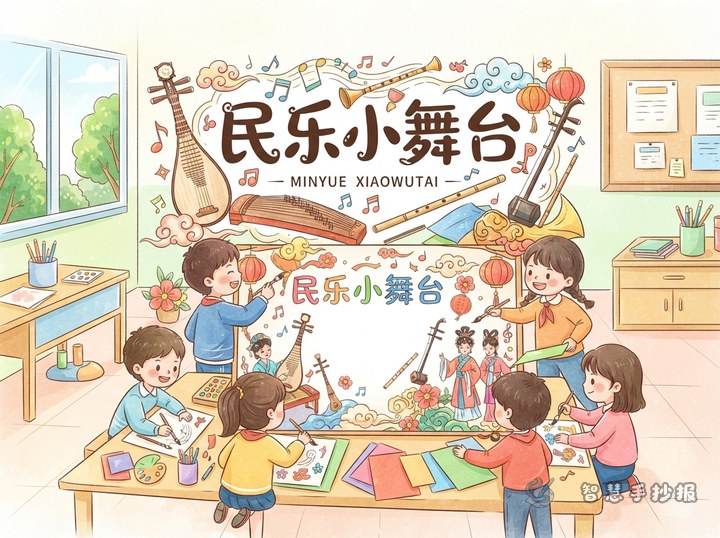
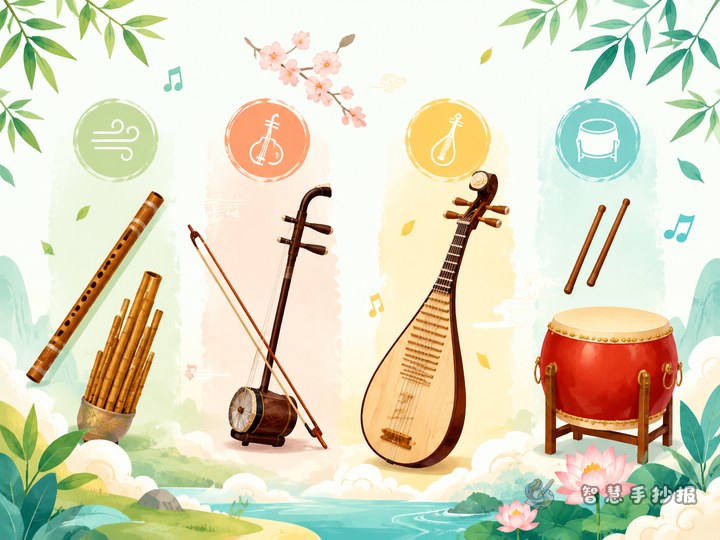
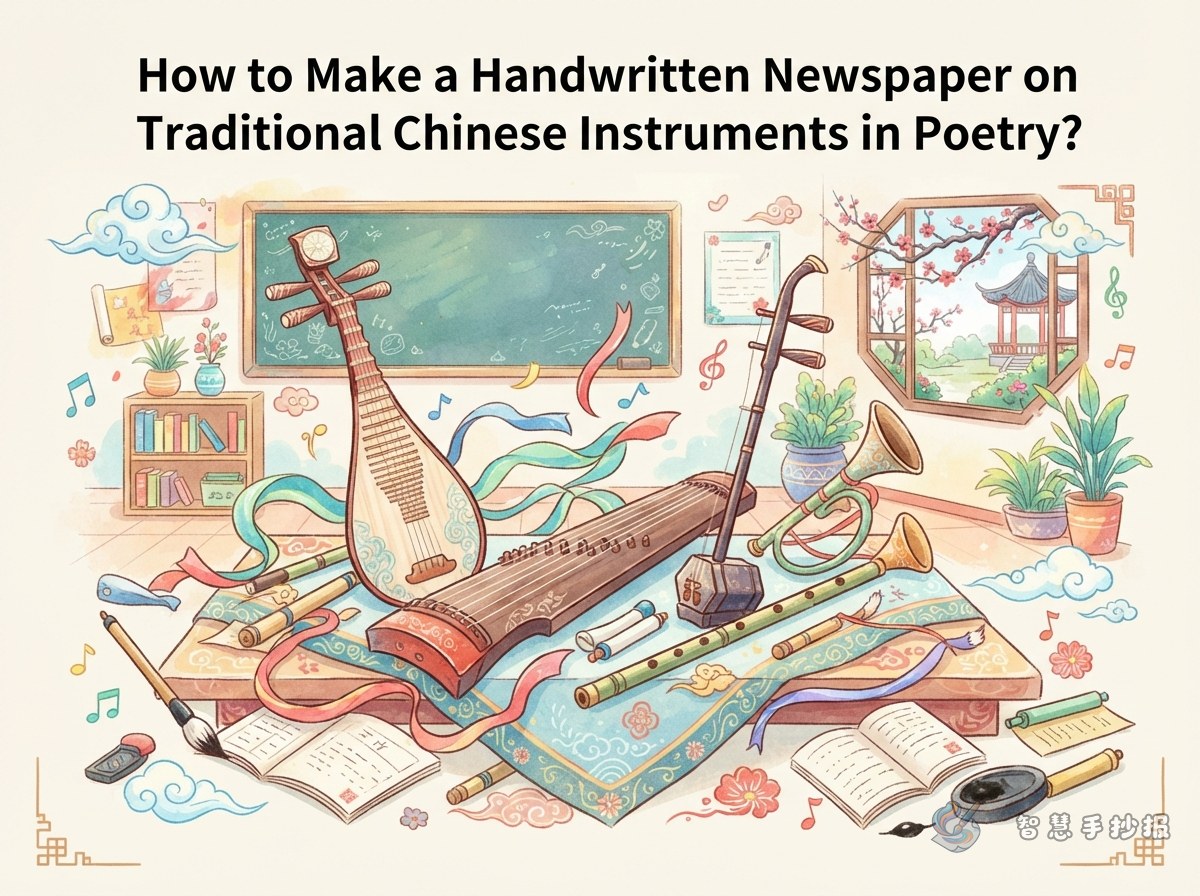
This hand-copied newspaper can explore traditional instruments through classical Chinese poetry. Choose four recognizable instruments, such as the pipa, guqin, dizi, and xiao, then connect each one with a poetic line or scene. This approach turns separate facts into a journey through sound, emotion, and imagery.
A title such as “Music Hidden in Poetry” works well at the top. Add a small open scroll, a moon, and a few restrained musical marks so readers can immediately see the link between poetry and instrumental music.
Four Story-Led Content Panels
The Pipa: Strings Like Rain and Whispers
Use the famous description “The larger strings clattered like sudden rain; the smaller strings murmured like private whispers.” Explain that the poet compares pipa sounds with familiar noises, helping readers imagine music through words. A simple drawing can show its pear-shaped body and playing posture.
The Guqin and the Meaning of Friendship
The guqin is known for its quiet, refined tone and is often associated with self-cultivation and true understanding. Introduce the story of “High Mountains and Flowing Water” as a symbol of finding a friend who genuinely understands another person.
A Dizi Melody and Thoughts of Home
Include a line about a jade flute whose sound drifts through the spring wind. Note that the bright sound of the transverse dizi can carry across a scene and awaken homesickness. A city wall, moving willow branches, and spring wind can complete the panel.
The Xiao Beneath the Moon
The vertically played xiao has a gentle, deep tone that suits calm and distant scenes. A small moonlit illustration can show how an instrument does more than create melody: it also shapes atmosphere and expresses feelings in poetry.
Short Cultural Notes Ready for the Page
- Instruments give poems a voice: lively pipa strings, a quiet guqin, a clear dizi, and a mellow xiao suggest different emotions.
- Poems give instruments a story: music can carry meanings of farewell, homesickness, friendship, or peaceful reflection.
- Sound can become an image: poets compare music with rain, wind, flowing water, and birdsong, all of which can become border motifs.
Arrange It Like a Concert on Paper
Place the main heading at the upper left and use a flowing “melody line” to lead readers through the four instrument panels. Put the cultural summary near the lower right. Give each panel a light, distinct background accent while keeping body text dark and easy to read.
- Mark the heading, four information areas, and summary in pencil before writing.
- Sketch the main outlines of each instrument and make their shapes easy to distinguish.
- Write explanations in black or dark blue, then highlight poetic lines in red.
- Add only a few cloud patterns, bamboo leaves, waves, or moon details, and check every quotation and punctuation mark.
Adjust the Detail for Different Ages
Younger pupils can use two or three sentences for each instrument, while older pupils can add tone qualities, poetic imagery, and cultural meanings. Decide the paper orientation and approximate word count first to prevent overcrowding. Families and teachers can also continue planning headings and layouts in the Zhihui Shouchaobao WeChat Mini Program.