Choose the Storyline First: Turn the Murals into a Timeline
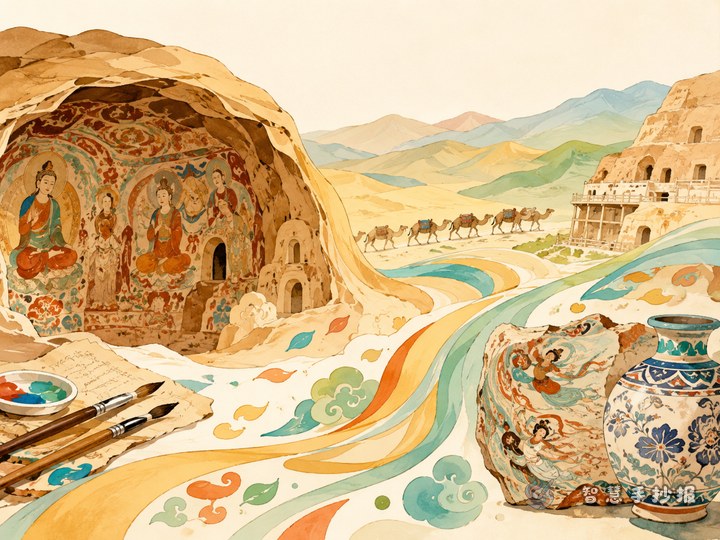
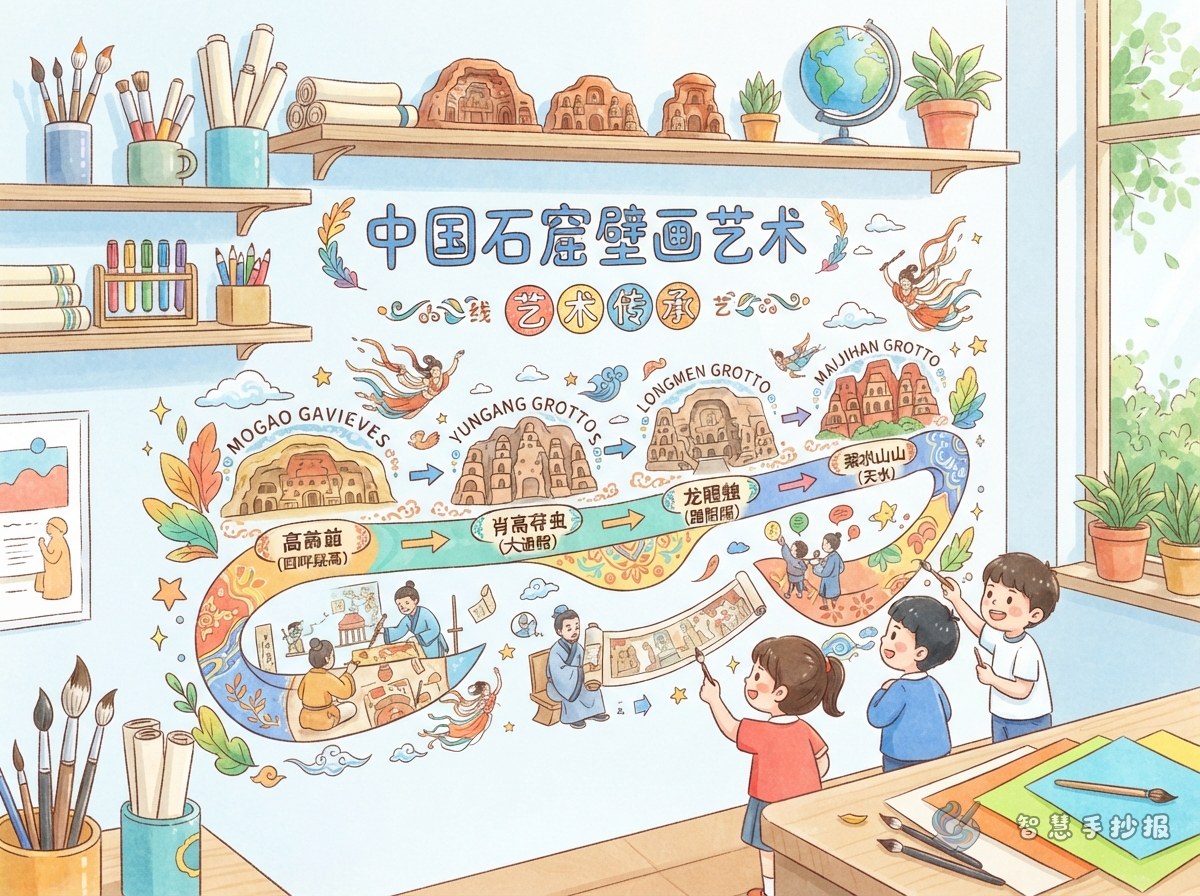
Chinese grotto murals are more than isolated patterns. They are artistic records of beliefs, daily life, stories, and beauty preserved on rock walls. For a handwritten poster, there is no need to fill the page with dates and place names. A storyline from excavation to preservation can help readers understand how grotto mural art began, changed, and continues to be protected today.
- Creation: Grottoes were made in mountains or cliff faces, and murals became an important part of the interior space.
- Painting: Artists used lines, colors, figures, plants, and buildings to express stories and ideas about beauty.
- Exchange: Craftspeople, materials, and artistic styles from different regions influenced one another, creating varied forms.
- Continuation: Research, conservation, and public education help people understand and value these murals today.
Four Useful Sections: Turn Knowledge into Easy-to-Read Cards
Look at the Grotto: Why Were Murals Made There?
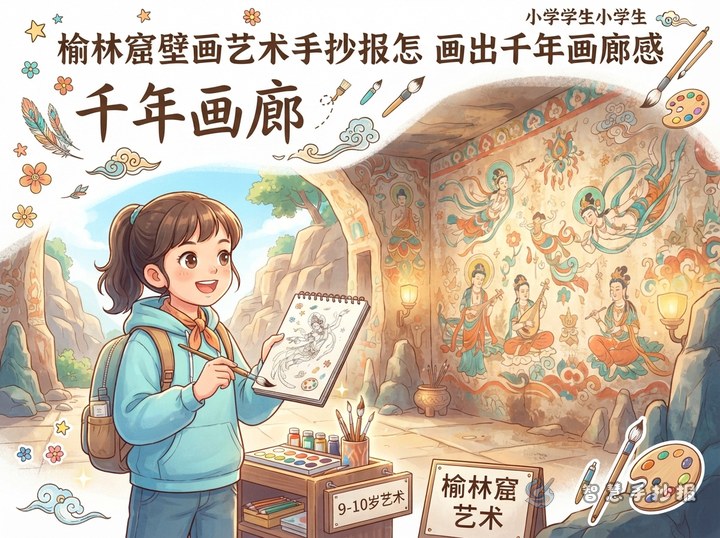
You can write that a grotto is both an architectural space and a place for images to unfold. Walls, ceilings, and areas near the entrance can all carry artistic expression. The images work together with the rock surface, light, and space to create a special viewing experience.
Look at the Images: What Visual Ideas Appear in the Murals?
Briefly introduce lines, color blocks, figure poses, clothing, plants, and buildings. A sentence you can copy is: Grotto murals use flowing lines to organize the picture, vivid colors to tell stories, and small details to record the imagination of people from the past.
Look at the Colors: How Can Old Colors Suggest the Passage of Time?
Use red ochre, earthy yellow, stone blue, dark brown, and warm white as the main palette. Add a small color guide with notes such as “red ochre feels warm and solid,” “stone blue brings calmness,” and “warm white works well for rock surfaces and open space.” Three to five colors are enough to keep the poster unified.
Look at Preservation: What Can We Do Today?
This section can mention protecting cultural heritage, visiting responsibly, avoiding touching murals, and learning more about them. You can finish with this line: Protecting grotto murals means preserving more than a wall; it means caring for artistic memories that have crossed the centuries.
Layout Idea: Build a Rock-Wall Timeline
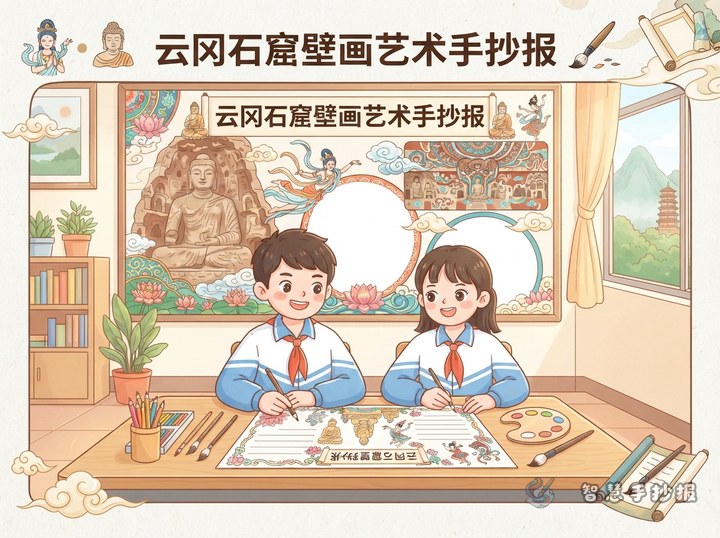
A vertical layout works well. Draw a simplified grotto arch at the top and place the title inside it. In the center, connect four timeline points with a line that changes slightly in thickness. Add a small icon to each point, such as a carving tool, a paintbrush, crossing lines, and a pair of protective hands. Place the sections about visual language and colors on the two sides, then leave a space at the bottom for “What We Can Do Today.” This lets the poster move naturally from history to real-life action.
To create a mural atmosphere, draw an uneven rock outline around the page and use short lines, dotted color blocks, and narrow borders to suggest an aged wall. Do not fill every area with decoration. Leaving some paper blank will make the writing clearer and prevent the composition from feeling crowded.
Easy Decorative Motifs to Draw
- Use a semicircular arch to suggest a grotto entrance, with a few layered lines inside it.
- Decorate section headings with repeated geometric bands, keeping the spacing even.
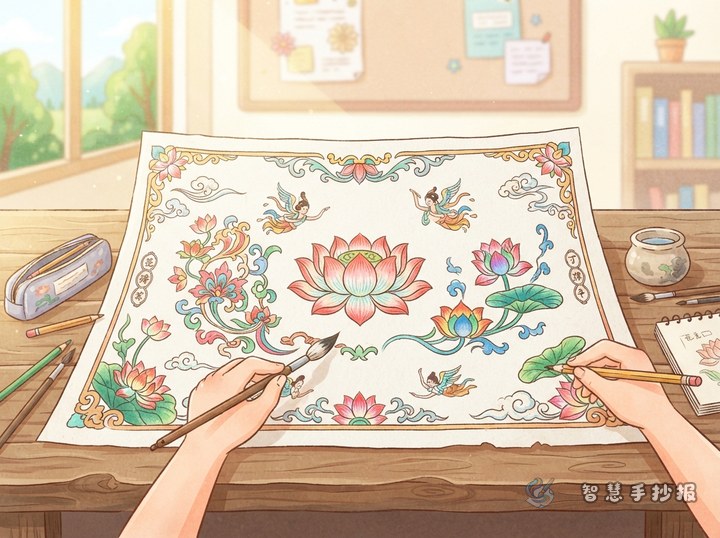
- Draw groups of lines in different lengths to suggest clothing folds, clouds, or building outlines from mural art.
- Make a small “paint palette” from colored blocks and label each color for both decoration and information.
- Add a few tiny worn-looking dots around the main picture, but keep them away from important text and lines.
Final Check: Balance Artistic Style and Useful Information
Before copying the final version, make sure the title is easy to see, the four timeline points are in a clear order, and each section keeps only two or three key sentences. Sketch the large shapes first, add the main colors next, and finish with borders and small details. Check spelling, avoid an overly busy palette, and leave enough space between words and drawings. Once the draft is ready, you can continue arranging it in the 智慧手抄报 WeChat mini program so the theme, text, and decorations work together more smoothly.