Give the poster a storyline: follow one drop of water
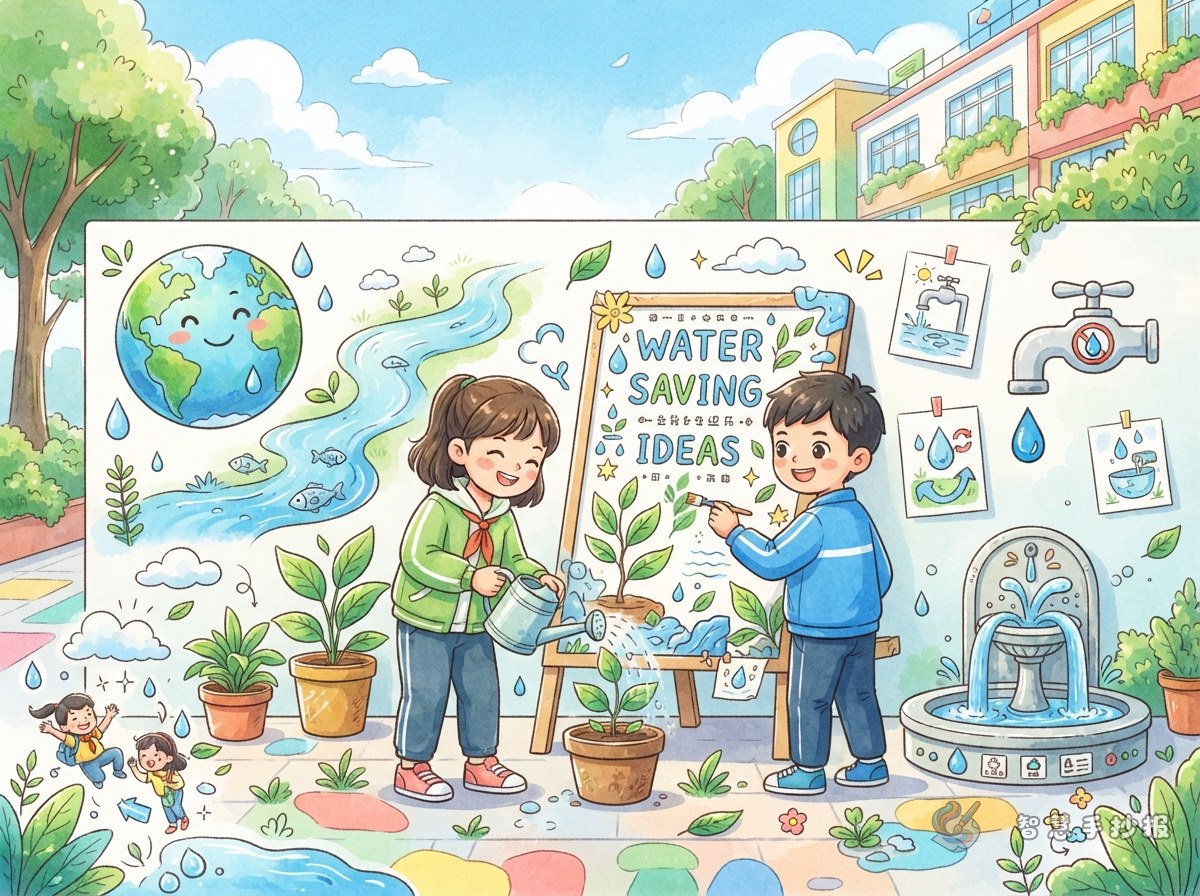
A water conservation handwritten newspaper does not need to be filled with slogans. A more engaging idea is to build the page around “a drop of water’s journey.” Draw a friendly personified drop in the center, then connect it to clouds, a reservoir, a faucet, household use, and green plants. This helps readers see how water reaches daily life and why every use deserves care.
A suitable title is “Treasure Every Drop, Protect Our Green Home,” with a smaller line such as “Start by Turning Off the Tap.” Use blue for clean water, green for healthy living, and a small amount of orange for reminders. The page will feel bright without becoming messy.
Four sections that connect knowledge with action
Where does water come from?
Use a few simple sentences to connect water with clouds, rivers, lakes, and everyday life. For example: “Clean water is collected and treated before it reaches us.” This section pairs well with drawings of clouds, a reservoir, and a stream.
Moments when water is easily wasted
Show familiar situations such as leaving the tap running while brushing teeth, forgetting to turn off the faucet after washing hands, or rinsing something under running water for too long. Write only one or two sentences for each scene and add a small drop or exclamation mark to make the reminders stand out.
Water-saving habits for today
- Turn off the tap while brushing your teeth or washing your face.
- Use a basin when washing items instead of rinsing them under running water for a long time.
- Tell a parent or teacher when you notice a leaking faucet.
- Reuse suitable rice-washing water for watering plants or cleaning.
My promise to protect water
Leave space for the child’s own promise, such as “I will turn off every tap carefully,” “I will remind my family to save water,” or “I will begin with small actions today.” Design this part as a small card or hand shape to make the poster feel personal.
Use flowing water lines to create an open layout
Try a horizontal or vertical flow: place the title and clouds at the top, the largest water-drop drawing in the middle, “Where Water Comes From” on one side, and “Water-Saving Actions” on the other. At the bottom, let a wave line connect the waste reminders with the personal promise. Sections do not have to be boxed into rigid rectangles; drops, leaves, and curved lines can separate them naturally.
Use white or pale-blue panels where there is more text. Write headings in dark blue, and circle key words in green or orange. Small drawings of cups, fish, leaves, towels, or faucets are enough for decoration. Sketch the positions first, then outline, color, and add the writing so the page stays neat.
Check these three things before finishing
- Check the theme: The title, sections, and drawings should all support water conservation and protection.
- Check the reading order: Readers should be able to move from the source of water to waste reminders and then to action promises.
- Check readability: Keep sentences short, write neatly, and leave enough open space around the key information.
If you would like to try more water-drop shapes, section cards, or color combinations, continue in the 智慧手抄报 WeChat mini program and turn this plan into a complete handwritten newspaper layout.