Turn the Theme into a Leaf Detective Journey
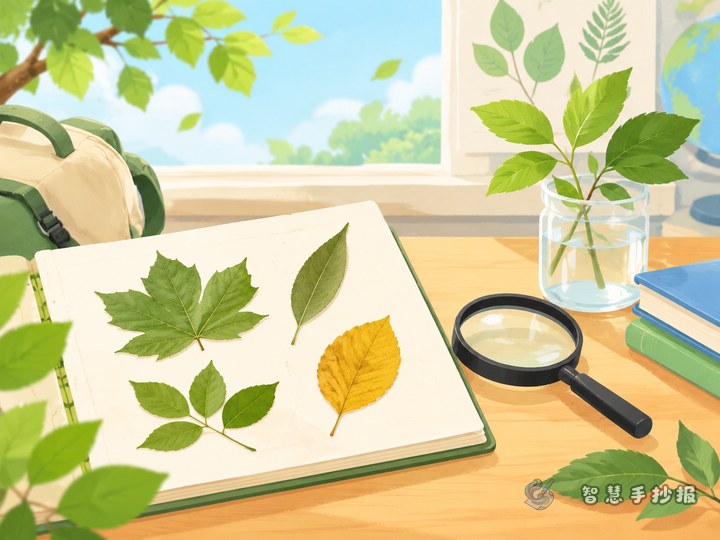
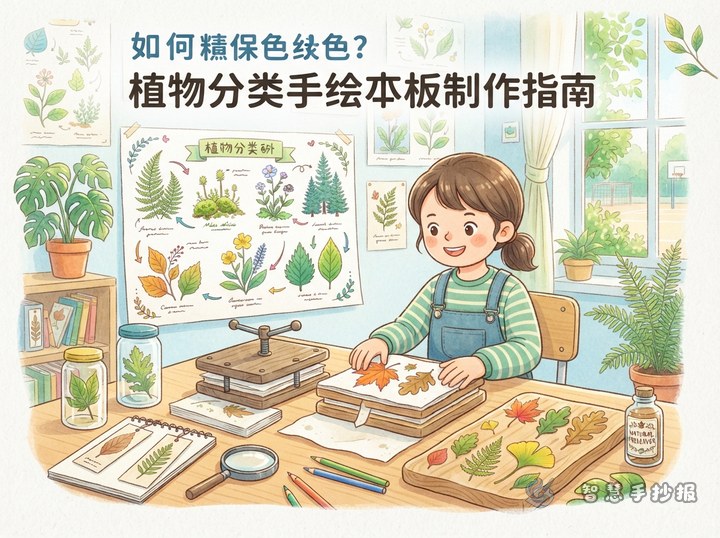
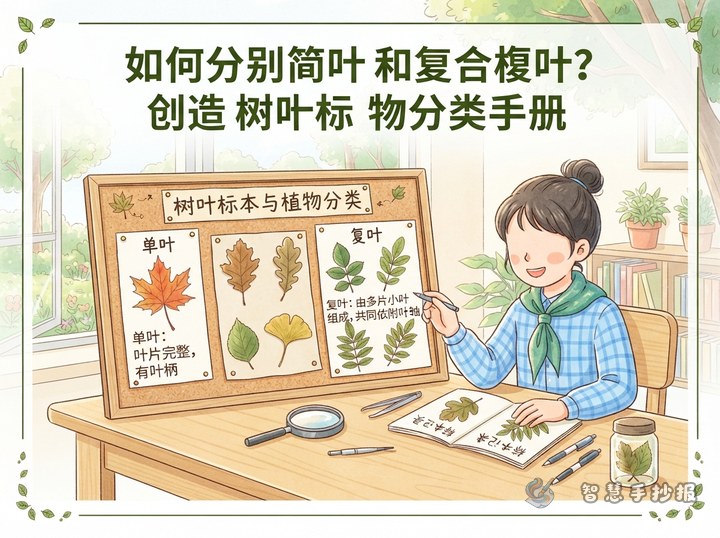
This poster does not need to be only a collection of pressed leaves. A stronger idea is to show how students observe, compare, and sort leaves. The title area can use phrases such as “Leaf Detectives” or “What a Leaf Can Tell Us,” so readers understand that each specimen is part of a classification activity.
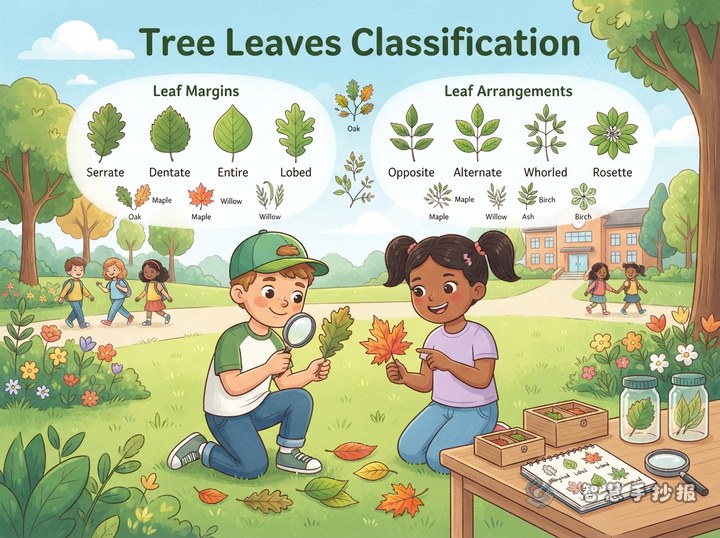
A useful opening paragraph: Leaves are important clues for learning about plants. When we observe a leaf, we can first look at its shape, then check whether the edge is smooth or toothed, and finally notice how it grows on the branch. In this way, a leaf specimen becomes a piece of evidence in plant classification.
Add a Simple Two-Choice Identification Key
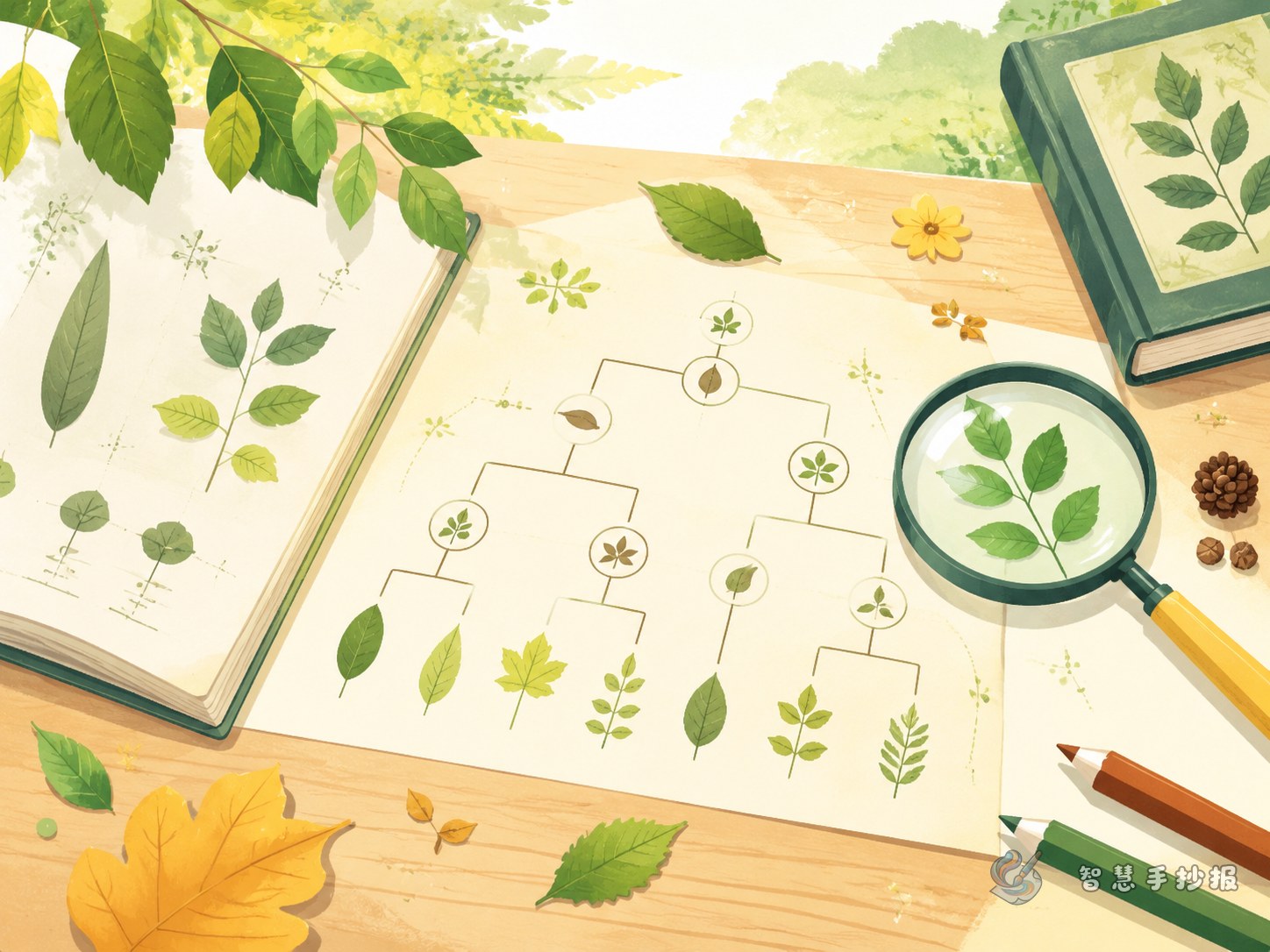
An identification key may sound difficult, but for a school handwritten poster it can be made into a set of simple two-choice questions. Each step asks one clear question and guides the reader to a possible category.
- Is the leaf long and needle-like? Yes: needle leaf. No: go to the next step.
- Does the leaf edge have clear teeth? Yes: toothed leaf. No: go to the next step.
- Is the leaf divided like an open hand? Yes: palmate leaf. No: oval or egg-shaped leaf.
Place this mini key in the center of the poster and add drawings or specimens beside each category. It is a classroom-friendly version, so it does not need to be as complex as a professional plant guide.
Write Evidence Beside Each Specimen
To make the poster feel more scientific, do not write only the plant name. Add two or three pieces of observation evidence next to each leaf.
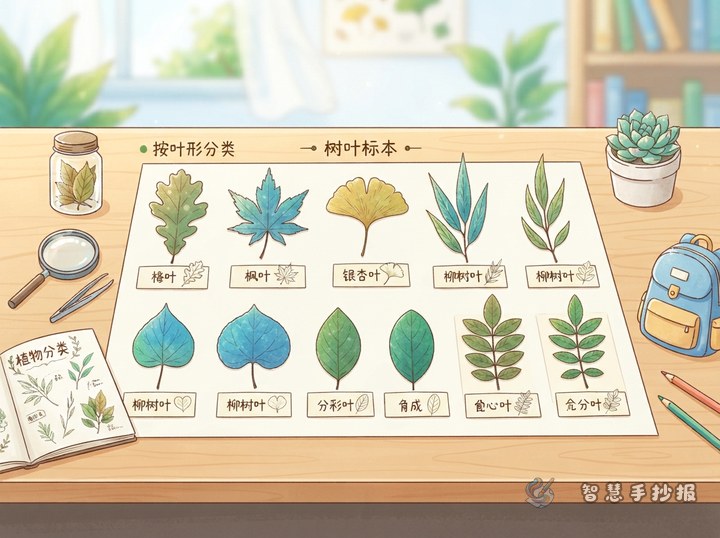
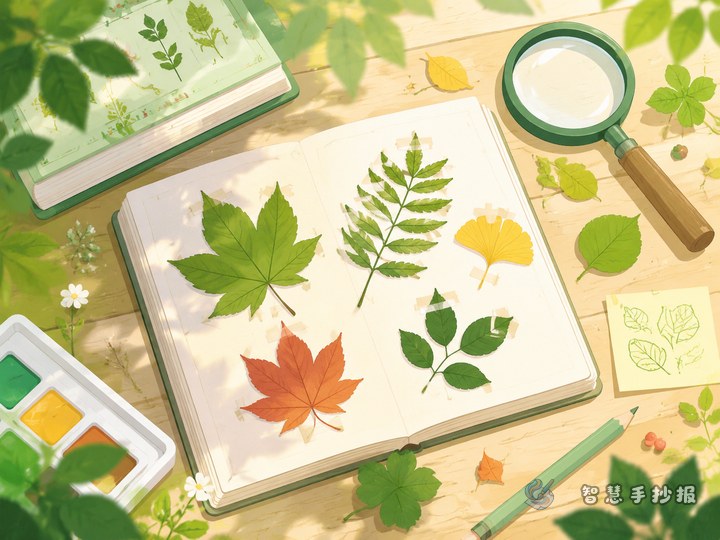
- Ginkgo leaf: fan-shaped blade, veins spreading from the leaf stalk, shallow splits on the edge.
- Maple leaf: palm-like divisions, shaped like an open hand, often changes color in autumn.
- Osmanthus leaf: oval shape, thicker texture, small teeth along the edge.
- Pine needle: narrow, firm, needle-like leaf, suitable for the needle leaf section.
If the exact plant name is unknown, write “leaf to be identified” and record its shape, edge, collection place, and observation date. This is more honest and scientific than guessing.
Design the Page as a Classification Route
A clear layout can move from left to right: collecting and pressing leaves, observing features, and showing classification results. Readers will feel as if they are following a small route to identify the plant.
- Top left: place the main title and one large leaf drawing for a strong first impression.
- Lower left: add tips for making specimens, such as keeping leaves flat and using absorbent paper.
- Center: place the two-choice identification key with arrows.
- Right side: create sections such as needle leaves, oval leaves, palmate leaves, and toothed leaves.
- Bottom: write “My Discoveries” to summarize the easiest features to observe.
Short Writing Materials for the Poster
1. When making a leaf specimen, choose a complete and clean leaf, and record the collection time and place.
2. Plant classification is not based only on color. Leaf shape, edge, veins, and arrangement are more useful clues.
3. Leaves from the same plant may have different sizes, so we should observe several leaves before making a judgment.
4. Protecting plants starts with careful collecting. Pick up fallen leaves when possible, and do not break branches or damage green spaces.
If you want more column titles, border text, and layout ideas, you can continue creating your leaf specimen and plant classification poster in the Zhihui Handwritten Poster WeChat mini program.